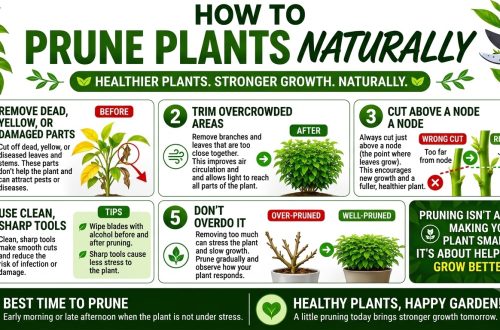
Welcome, fellow garden enthusiasts! We all love the vibrant beauty that flowering plants bring to our gardens. But once those gorgeous blossoms fade, you might wonder what’s next. The secret to ensuring a spectacular show year after year lies in a simple yet crucial step: post-bloom pruning. It’s not just about tidying up; it’s about nurturing your plants for future success!
Why Post-Bloom Pruning is a Game-Changer for Your Garden
Pruning after flowering, often called ‘deadheading,’ is more than just removing spent blossoms. It’s a strategic move that offers a myriad of benefits for your plants and your garden’s overall health:
- Encourages New Blooms: Many plants are tricked into producing more flowers when you remove the spent ones, as they’re no longer putting energy into seed production.
- Promotes Bushier Growth: Pruning can stimulate lateral growth, leading to a denser, more shapely plant.
- Prevents Seed Formation: For plants you don’t want to self-seed, removing spent flowers prevents them from scattering seeds, which can lead to unwanted volunteers.
- Improves Plant Health: Removing dead or dying flowers helps prevent fungal diseases and pest infestations that can take hold in decaying plant matter.
- Enhances Aesthetics: A clean, well-pruned plant simply looks better and contributes to a tidier garden appearance.
General Guidelines for Post-Bloom Pruning
While specific needs vary by plant, these general tips will set you on the right path:
1. Know Your Plant
Before you snip, understand your plant’s flowering and growth habits. Some plants, like hydrangeas, bloom on old wood, while others, like petunias, bloom on new wood. Pruning at the wrong time can remove next year’s flower buds!
2. Use the Right Tools
Always use clean, sharp pruning shears. Clean cuts heal faster and reduce the risk of disease. For larger stems, loppers might be necessary.
3. Cut at the Right Spot
When deadheading, cut the spent flower stalk back to a strong leaf or a side shoot. This encourages new growth and keeps the plant looking neat.
4. Remove Diseased or Damaged Parts
While you’re pruning, take the opportunity to remove any yellowing leaves, dead branches, or signs of disease. This helps maintain overall plant vigor.
Common Plants That Love a Post-Bloom Trim
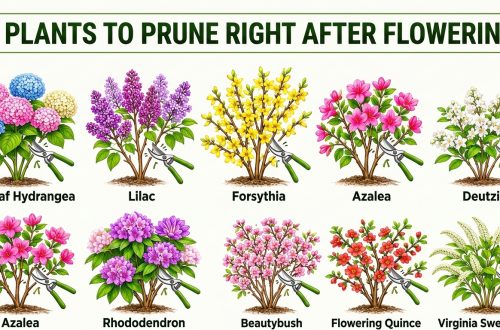
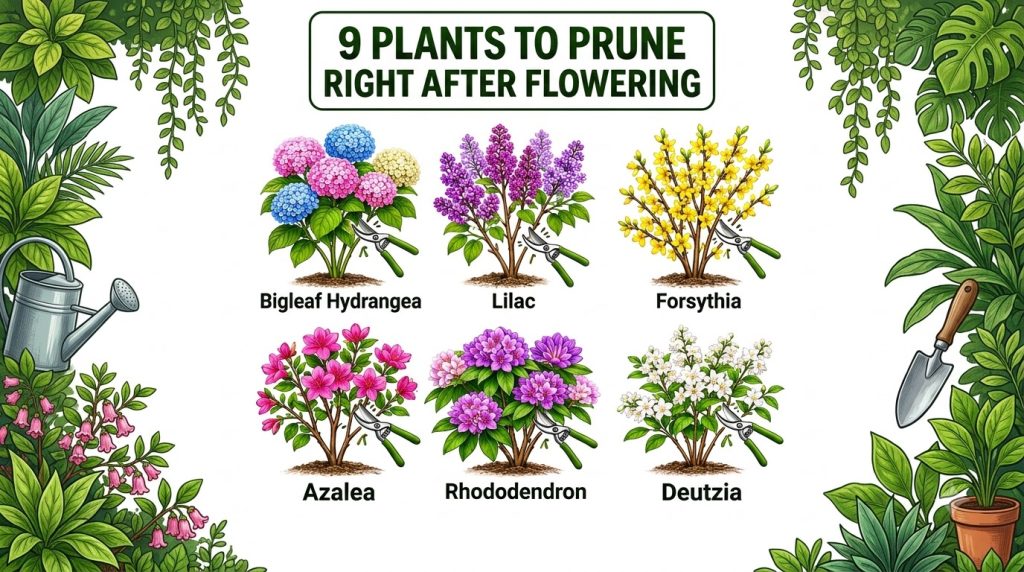
Many popular garden favorites thrive with a little attention after their flowers fade. While our infographic highlights 9 specific plants, here are some common examples that generally benefit:
- Lilacs: Deadhead spent lilac blooms to encourage more flowers the following year and maintain a tidy shape.
- Rhododendrons & Azaleas: Gently snap off spent flower trusses to direct the plant’s energy into developing new buds and foliage.
- Peonies: Remove spent peony blooms to prevent seed formation and redirect energy into root development for stronger plants.
- Perennial Geraniums: Deadheading keeps these prolific bloomers producing flowers all season long.
- Roses: Regular deadheading encourages continuous blooming and maintains the plant’s aesthetic appeal.
- Delphiniums: Cut back spent flower stalks to encourage a second flush of blooms later in the season.
- Lupines: Remove fading lupine spires to prevent self-seeding and promote repeat flowering.
Remember, the goal is to enhance the plant’s natural beauty and health, not to reshape it drastically unless that’s part of its maintenance routine.
The Healing Power of Pruning
Pruning is more than just a chore; it’s an act of care. By understanding your plants and providing them with timely attention, you’re not only fostering a more beautiful garden but also participating in the natural cycle of growth and renewal. It’s a therapeutic process that connects you with nature and helps your plants flourish.
So, grab your clean shears and get ready to give your flowering plants the post-bloom care they deserve. Your garden will thank you with even more stunning displays!