Pruning Perfection: Your April Guide to Bigger Blooms and Healthier Plants!
Welcome, fellow garden enthusiasts! As the days grow longer and the gentle warmth of spring awakens our outdoor spaces, April emerges as a pivotal month for gardeners. It’s not just about planting new seeds; it’s also the perfect time to give your established plants the gift of a good trim. Proper pruning in April can be the secret ingredient to unlocking an abundance of vibrant blooms and ensuring your garden thrives all season long.
Many gardeners hesitate when it comes to pruning, fearing they might harm their beloved plants. But with a little knowledge and the right approach, you’ll discover that it’s an empowering act that promotes stronger growth, enhances flowering, and keeps your plants looking their best. Let’s dive into why April is the ideal time and how you can achieve pruning perfection!
Why April is the Perfect Pruning Month
April is often considered the sweet spot for pruning many shrubs and trees because most deciduous plants are just beginning to emerge from their winter dormancy. This timing offers several key advantages:
- Visibility: Without a full canopy of leaves, it’s easier to see the plant’s structure, identify dead or damaged branches, and plan your cuts.
- Energy Reserves: Plants are still somewhat dormant, so pruning at this stage encourages them to channel their newly awakened energy into developing strong, healthy new growth in the desired direction.
- Disease Prevention: Fresh cuts in cool, drier spring weather are less susceptible to fungal diseases that can thrive in warmer, humid conditions.
- Shaping for Success: You can shape your plants before they put on significant new foliage, leading to a more aesthetically pleasing and structurally sound plant.
Essential Tools and Techniques for Smart Pruning
Before you begin, ensure you have the right tools and know the basic techniques:
- Sharp Pruners: Hand pruners for small branches, loppers for thicker ones, and a pruning saw for anything over 1.5 inches in diameter. Sharp tools make clean cuts, which heal faster and reduce the risk of disease.
- Clean Tools: Always sanitize your tools between plants (especially if you’re dealing with a diseased plant) using rubbing alcohol or a bleach solution to prevent spreading pathogens.
- Cut at an Angle: Make cuts at a 45-degree angle, about 1/4 inch above a bud that faces outwards. This encourages outward growth and prevents water from pooling on the cut surface.
- Remove the Three D’s: Always start by removing any Dead, Damaged, or Diseased branches.
- Thin for Airflow: Remove crossing branches or those growing inwards to improve air circulation, which helps prevent fungal issues.
Your April Pruning Checklist: Specific Plant Tips
While the general rules apply, different plants have different pruning needs. Here are tips for some common garden favorites you might be tending to this month:
Roses (Hybrid Teas, Floribundas, Grandifloras)
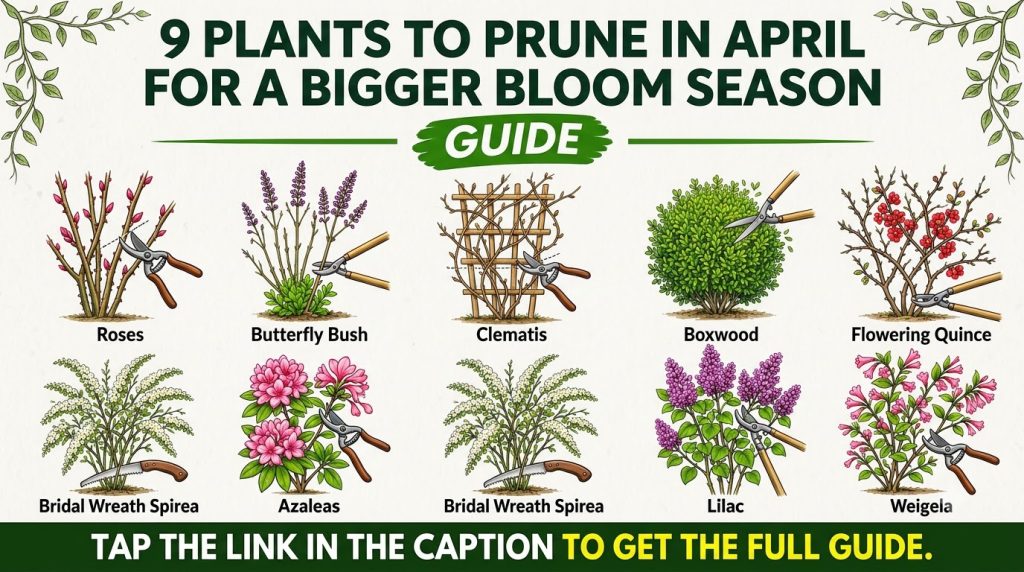
April is prime time for pruning most modern roses. Cut back to strong, outward-facing buds, removing about one-third to one-half of the plant’s height. Eliminate spindly growth, dead wood, and any branches thinner than a pencil. This promotes vigorous new canes and abundant blooms.
Butterfly Bush (Buddleja davidii)
These beauties bloom on new wood, so April is the perfect time for a hard prune. Cut them back severely, often to just 1-2 feet from the ground. This encourages a fresh flush of growth and larger, more numerous flower spikes.
Lilac (Syringa vulgaris)
If your lilacs are overgrown or haven’t flowered well, April is a good time to begin a rejuvenation prune. Remove about one-third of the oldest, thickest stems at ground level each year over a three-year period. For regular maintenance, remove spent flower heads after they fade to encourage more blooms next year, but save that for later in spring.
Clematis (Group 3: Late-Flowering Varieties)
For clematis varieties that bloom in late summer (like ‘Jackmanii’ or ‘Sweet Autumn Clematis’), April is when you prune them back hard. Cut all stems down to about 6-12 inches from the ground, just above a strong pair of buds. They will grow back quickly and flower profusely on new growth.
Azaleas and Rhododendrons
Generally, prune these evergreen shrubs immediately after they finish flowering in late spring or early summer. However, if you need to remove dead, damaged, or diseased branches, you can do this in April without significantly impacting their bloom cycle. For significant shaping or size reduction, it’s best to wait until after they’ve flowered.
The Benefits Beyond Bigger Blooms
Regular and thoughtful pruning offers a bounty of rewards:
- Stronger Plant Structure: It removes weak or crossing branches that can lead to breakage, especially in strong winds or heavy snow.
- Improved Air Circulation: Thinning out dense growth reduces humidity around the plant, minimizing the risk of fungal diseases.
- Enhanced Flowering and Fruiting: By removing old wood, plants can direct energy to producing new, more vigorous flower and fruit-bearing growth.
- Pest Control: Removing dead or diseased wood eliminates potential hiding spots and breeding grounds for pests.
- Aesthetic Appeal: Pruning helps maintain a desirable size and shape, keeping your garden looking tidy and intentional.
Common Pruning Pitfalls to Avoid
- Pruning at the Wrong Time: Knowing whether a plant blooms on ‘old wood’ or ‘new wood’ is crucial. Pruning at the wrong time can remove developing flower buds for the current season.
- Making Improper Cuts: Leaving stubs or cutting too close to the main stem can hinder healing and invite disease.
- Using Dull or Dirty Tools: This can tear plant tissue, making plants more vulnerable to pests and diseases.
- Over-pruning: Removing too much foliage at once can stress the plant and weaken it. Aim to remove no more than one-third of the plant in a single season.
Armed with these tips, you’re ready to tackle your April pruning with confidence! Embrace the opportunity to connect with your plants and nurture them towards their full, magnificent potential. Your efforts this spring will undoubtedly be rewarded with a garden full of health, vitality, and breathtaking blooms. Happy pruning!