Asparagus is one of the most rewarding perennial vegetables you can grow at home. Once it is established, a well-planted bed can produce tender spears for many seasons, which makes planting asparagus crowns a smart investment for any vegetable gardener. With a little preparation and patience, you can set up a productive asparagus patch that feels like a gift that keeps on giving.
Why Choose Asparagus Crowns?
Asparagus is usually planted as one-year-old crowns rather than from seed. Crowns are root clumps with buds, and they give you a head start because they establish faster than seeds. Planting crowns is a practical choice for home gardeners who want to shorten the waiting time before the first harvest.
Choose the Right Spot
Asparagus needs a sunny location that receives at least six to eight hours of direct sunlight each day. It also needs soil that drains well. Heavy, waterlogged ground can cause crown rot, so look for a site with loose, loamy soil and good drainage. Avoid planting in areas where water collects after rain.
Prepare the Soil Before Planting
Good preparation is the foundation of a long-lived asparagus bed. Work the soil deeply, removing stones, weeds, and roots. Mix in plenty of well-rotted compost or aged manure to improve texture and fertility. Asparagus prefers a soil pH between about 6.5 and 7.5, so a simple soil test can help you decide whether any adjustments are needed.
How to Plant Asparagus Crowns Step by Step
-
Dig a trench about 6 to 8 inches deep and roughly 12 inches wide.
-
Spread a few inches of compost along the bottom and mix it lightly with the soil.
-
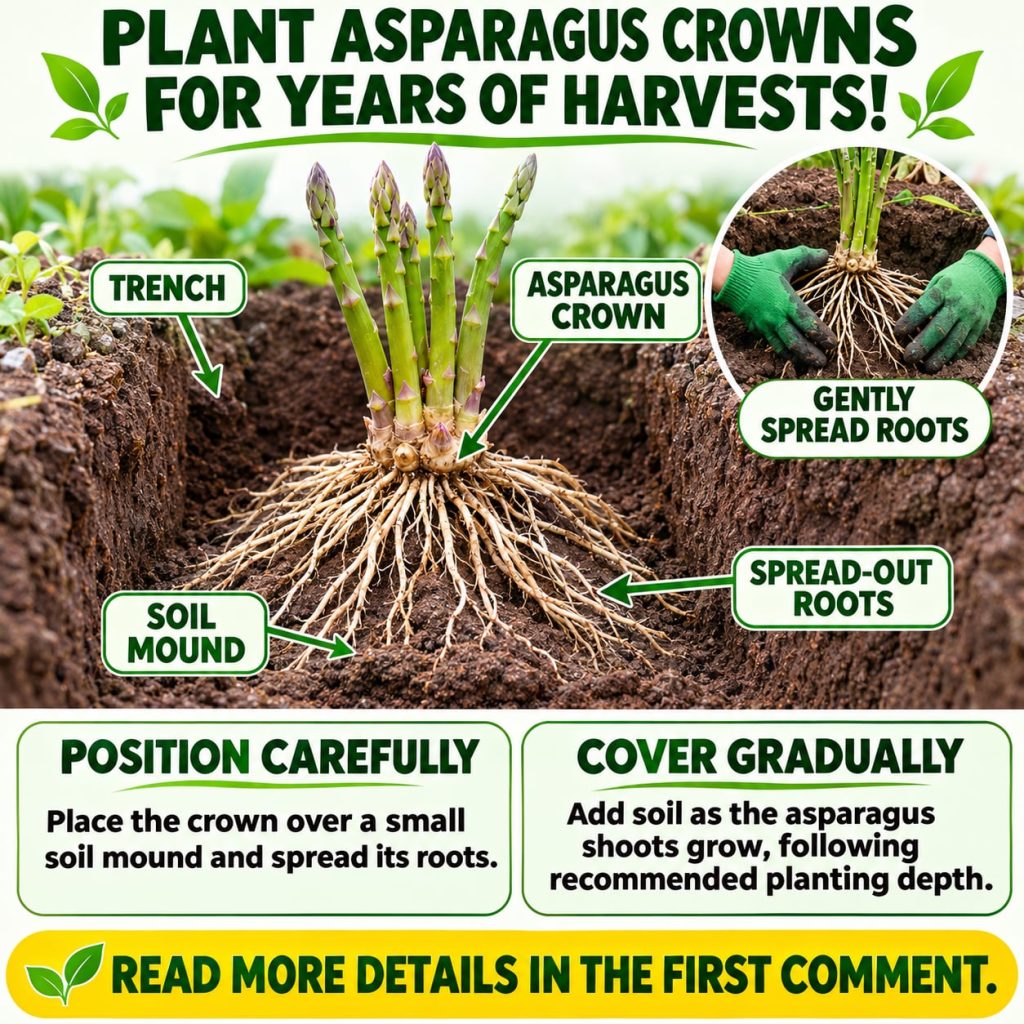
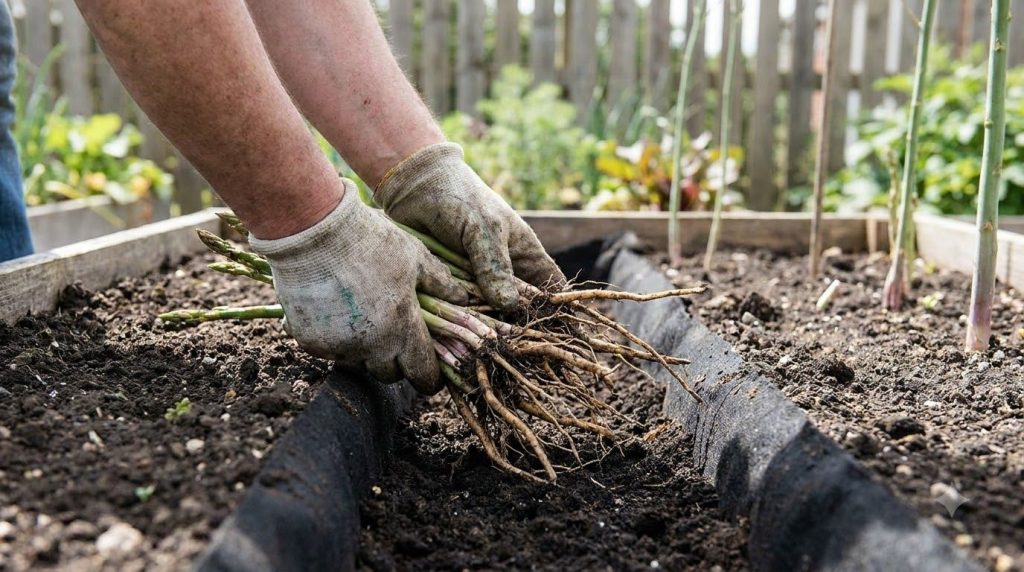
Place crowns about 12 to 18 inches apart with the buds facing upward and the roots spread out over small mounds of soil.
-
Cover the crowns with about 2 inches of soil at first.
-
As the spears grow over the coming weeks, gradually fill the trench until it is level with the surrounding ground.
Leaving the bed slightly lower at the start helps the crowns settle in and makes it easier to add soil as the plants develop.
Spacing and Row Layout
If you plan to grow several rows, leave about 4 to 5 feet between them. This spacing gives the plants room to grow tall and makes harvesting and weeding easier. Good airflow between plants also helps reduce disease pressure.
Caring for Your Asparagus Bed
Patience is important during the first two years. Many gardeners avoid harvesting in the first season so the roots can build strength. In the following years, you can harvest lightly for a few weeks each spring.
-
Water regularly during the first growing season, especially in dry weather.
-
Keep the bed free of weeds, which compete for nutrients and water.
-
Apply a layer of mulch such as straw to conserve moisture and suppress weeds.
-
Feed the bed with compost in spring and again after harvest.
-
Allow the ferny foliage to grow tall in summer, since it feeds the crowns for next season.
Harvesting and Long-Term Care
Once the plants are well established, harvest spears when they are about 6 to 8 inches tall and still tightly closed at the tips. Cut spears at or just below soil level with a sharp knife. In late fall, after the foliage yellows, cut the stems back to the ground and clear away debris to help reduce pests and disease.
Final Thoughts
Planting asparagus crowns takes some care at the beginning, but the effort pays off with a perennial vegetable that can return year after year. Choose a sunny, well-drained spot, prepare the soil well, plant with care, and give your bed the attention it needs. Your patience will be rewarded with fresh, homegrown spears for seasons to come.