
Most people throw orange peels straight into the bin, yet that thick rind holds plenty of bright flavor worth keeping. With a little water, sugar, and patience, those scraps turn into chewy, translucent candied orange peel that works in holiday baking, gift jars, or a simple homemade sweet.
What Is Candied Orange Peel?
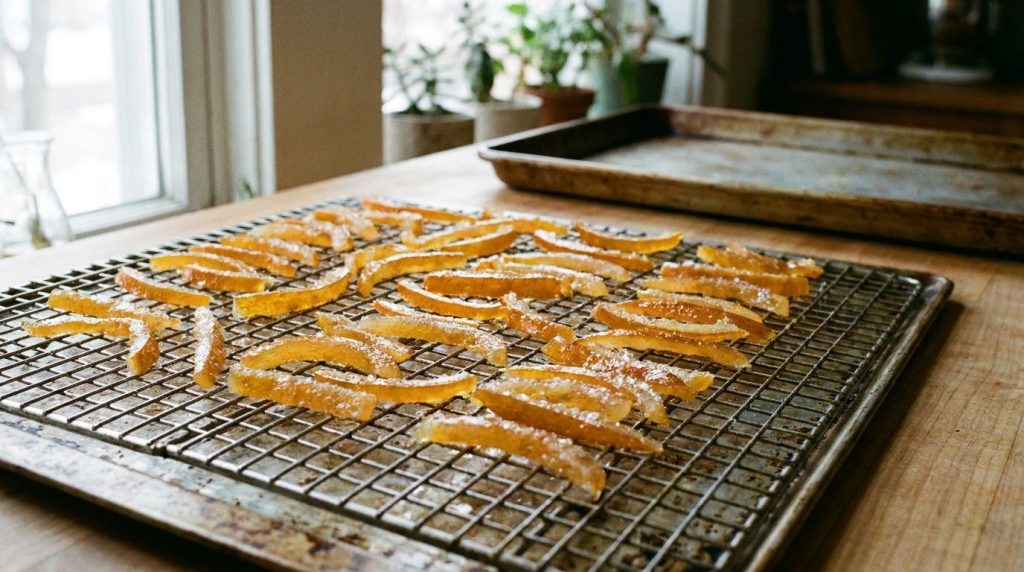
Candied orange peel is citrus rind that has been simmered until tender, then cooked in sugar syrup until it becomes glossy and translucent. Many cooks finish the strips with a sugar coating for a crisp bite. It is a classic addition to fruitcake, biscotti, and dark chocolate bark, and it also works well on its own.
Ingredients
- 2 large oranges with thick, unwaxed peel (navel or Valencia work well)
- 2 cups water, plus extra for blanching
- 1 cup granulated sugar, plus 1/2 cup for coating
- 1 tablespoon lemon juice or 1 tablespoon light corn syrup (optional, helps keep the texture smooth)
Approximate yield: about 1 cup of candied strips.
Step-by-Step Method
- Wash the oranges under warm water with a soft brush. Score the peel into quarters and remove the peel in sections. Save the fruit for juice or another recipe.
- Cut the peel into strips about 1/4 inch wide.
- Blanch the strips: place them in a pot of cold water, bring to a boil, then drain. Repeat this two more times to reduce bitterness.
- Make the syrup: combine 1 cup water and 1 cup sugar in a saucepan over medium heat until the sugar dissolves.
- Add the blanched strips and simmer gently on low for 45 to 60 minutes, until the peel looks translucent and the syrup thickens.
- Lift the strips with tongs onto a wire rack and let them dry for 2 to 4 hours, or overnight for a firmer texture.
- Optional: toss the dry strips in the remaining 1/2 cup sugar for a sugared finish.
Quick Tip: Keep the heat low during simmering. A rolling boil turns the strips tough and can make the syrup crystallize.
How to Use Candied Orange Peel
Chop the strips finely and fold them into scone, cookie, or quick bread batter. Dip one end in melted dark chocolate and let it set for a simple treat. For gifts, layer the strips in a small glass jar with parchment between layers and add a tag. Read more: our guide to homemade citrus syrups for drinks.
How Often to Use It
Treat candied peel as an occasional sweet rather than a daily snack. A few strips per serving is enough for baking or dessert plating. Because it is sugar-heavy, it fits best as a small indulgence.
Quick Reference: Choosing the Right Version
| Version | Best For | Shelf Life |
|---|---|---|
| Moist syrup-soaked strips | Snacking, cake topping | About 1 week at room temperature, 2 weeks refrigerated |
| Sugar-coated dry strips | Gift jars, chocolate dipping | About 2 to 3 weeks in an airtight container |
| Leftover peel syrup | Drizzling on yogurt or pancakes | About 2 weeks refrigerated |
How to Choose Oranges
Pick firm, heavy fruit with thick, bright skin and no soft spots. Thick-skinned varieties give more usable peel. If possible, choose unwaxed or organic oranges, since you are eating the rind.
Storage
Store dry strips in an airtight jar in a cool, dry place away from sunlight. Layer them with parchment paper so they do not stick together. Keep moist strips refrigerated and use them within two weeks. Always check for mold or off smells before eating.
Practical Tips
- Save the syrup. It makes a flavorful base for tea or sparkling water.
- Cut strips evenly so they dry at the same rate.
- Use a candy thermometer if you want a firmer, crystallized finish, aiming for about 225 to 230 F in the syrup.
Common Mistakes
- Skipping blanching, which leaves the peel bitter.
- Boiling the syrup too hard, which makes the strips tough.
- Storing damp strips in a closed jar, which encourages mold.
- Cutting strips too thin, which causes them to fall apart during simmering.
- Using waxed or treated peels without washing them thoroughly.
Common Mistake to Avoid: Rushing the drying step. Sticky strips clump together and lose their texture in storage.
Cautions and Who Should Avoid It
Candied peel is high in sugar, so people managing blood sugar, diabetes, or sugar intake should limit portions or skip it. Citrus can irritate sensitive stomachs when eaten in large amounts. Avoid it if you have a known citrus allergy. This recipe is a food preparation, not a medical treatment.
Quick Summary
Best preparation: blanch three times, simmer gently in sugar syrup, then dry on a rack. Best use: baking, chocolate dipping, or gift jars. Storage: airtight, cool, and dry, with moist strips refrigerated. When to use: holidays and occasional treats. What to avoid: rolling boils, damp storage, and large portions if you limit sugar.
Frequently Asked Questions
Can I use fresh or dried orange peel?
Use fresh peel for the best flavor and texture. Dried peel does not soften well in syrup and usually tastes flat.
How long does candied orange peel last?
Dry sugared strips keep about 2 to 3 weeks in an airtight container. Moist strips last about 1 week at room temperature or 2 weeks in the refrigerator.
Can I refrigerate it?
Yes, moist strips do well in the refrigerator. Dry sugared strips can also be refrigerated, but keep them sealed to avoid moisture.
Can I freeze candied orange peel?
Yes, freeze dry strips in a sealed container with parchment between layers. Thaw at room temperature before using.
Can I reuse the leftover syrup?
Yes. Strain it and use it in tea, sparkling water, or drizzled over desserts within two weeks.
Which part of the orange is best?
The thick outer peel, without the white pith underneath, gives the best texture and flavor.
Conclusion
Candied orange peel turns a common kitchen scrap into a bright, practical treat for baking and gifting. Start with thick-skinned oranges, blanch carefully, and keep the simmer gentle for the best results.
You may also like: our guide to zero-waste citrus recipes. See the full guide: homemade sugar-free citrus snacks. Continue with: holiday baking ideas that use everyday pantry staples.