Ants, roaches, and other small pests often find their way in through the gaps around pipes under sinks and behind appliances. A copper mesh barrier is a simple, chemical-free way to block those entry points so you aren’t relying only on traps or sprays.
Why Copper Mesh Works as a Barrier
Copper mesh is a fine woven screen that most small insects can’t chew through or squeeze past. It doesn’t release anything into your home, which makes it a good fit for kitchens and bathrooms where you’d rather avoid harsh chemicals. Keep in mind that it’s a physical block, not a repellent, so it works best when you use it to seal gaps you can actually find.
What You’ll Need
Materials
- Fine copper mesh, about 2 to 3 feet for most under-sink jobs
- Silicone or acrylic caulk (optional, for sealing the edges)
- Rubbing alcohol and a clean rag for wiping surfaces
Substitute: Fine-gauge stainless steel mesh works in place of copper mesh. Avoid regular steel wool, because it rusts quickly in damp cabinets.
Tools
- Heavy-duty scissors or snips
- Flashlight
- Tape measure
- Putty knife or a flat tool for pressing mesh into gaps
- Caulk gun (only if using caulk)
- Work gloves
How to Make It
- Empty the cabinet and clear out any items blocking your access to the pipes.
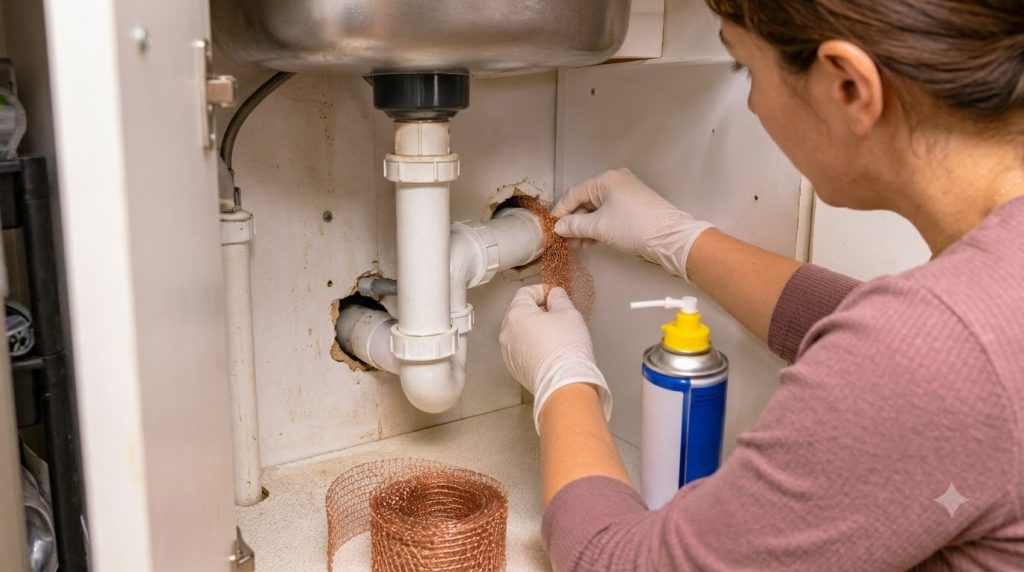
- Use a flashlight to find every opening where pipes or hoses enter the wall or floor, including gaps behind the dishwasher and refrigerator water lines.
- Measure each gap, then cut a piece of mesh about 1 inch larger on every side.
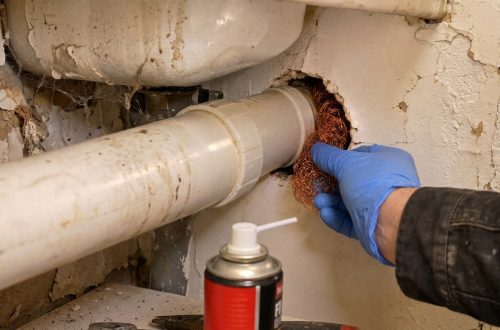
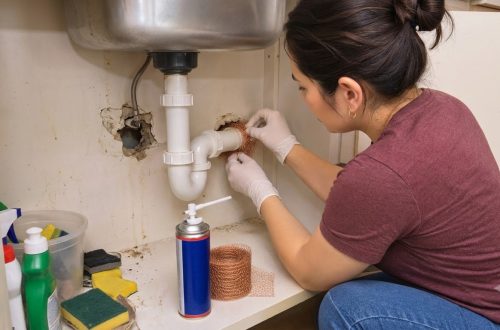
- For a small round gap, roll the mesh into a tight plug. For a larger opening, fold the mesh into a pad that covers the full gap with some overlap.
- Press the mesh into the gap with your putty knife so it sits flush against the wall and around the pipe.
- If you want extra hold, run a thin bead of caulk along the edges of the mesh. Smooth it with a wet finger or tool, then let it cure for the time listed on the label.
- Check that the pipes can still move slightly and that nothing is pinched or blocked.
How to Use It
Focus on the places where pests most often enter: openings around supply and drain pipes under sinks, gaps behind dishwashers and refrigerators, and holes near water lines that run through cabinet walls. Use enough mesh to fill the gap completely, but don’t force it so tightly that it bends or pinches a pipe.
Wipe the surface around the gap with rubbing alcohol and let it dry before adding caulk, since dust and moisture can keep caulk from sticking. Allow the caulk to cure fully before you put items back in the cabinet, usually several hours, and keep the area dry during that time.
What to Expect
This barrier blocks new entry through the openings you seal. It won’t remove pests that are already inside, and it won’t fix the reasons they showed up in the first place, such as food crumbs or damp spots. Check the mesh every month or two, and reseal any spot that has loosened or been pushed out of place.
Helpful Tips
- Take a photo of each gap before you start so you can track which spots you’ve sealed.
- Cut mesh with heavy-duty snips and keep the edges tucked in to avoid scratches.
- Combine this barrier with regular cleaning, since pests are drawn to crumbs and standing water.
- Keep a small piece of spare mesh in the cabinet for quick repairs.
Important Notes and Safety
- Wear work gloves. Cut copper mesh can have sharp edges.
- Never block drain traps, shutoff valves, water heater access, or any gas line or vent.
- Fix any leak before sealing a gap. Mesh and caulk won’t stop water damage.
- Keep mesh away from electrical outlets, wiring, and junction boxes.
- Ventilate the room when using caulk or cleaning products, and never mix cleaners.
- Store leftover mesh and caulk in a dry place, out of reach of children and pets.