Overnight oats are one of the easiest healthy breakfasts you can prepare ahead of time. You simply combine oats and liquid, leave them in the fridge, and wake up to a ready-to-eat meal. But which oat should you use? The answer depends on the texture you enjoy, and the difference between rolled oats and quick oats is bigger than most people expect.
Here is a clear look at how these two oats compare, how each one behaves overnight, and how to make a simple recipe that works for your morning routine.
What Is the Difference Between Rolled Oats and Quick Oats?
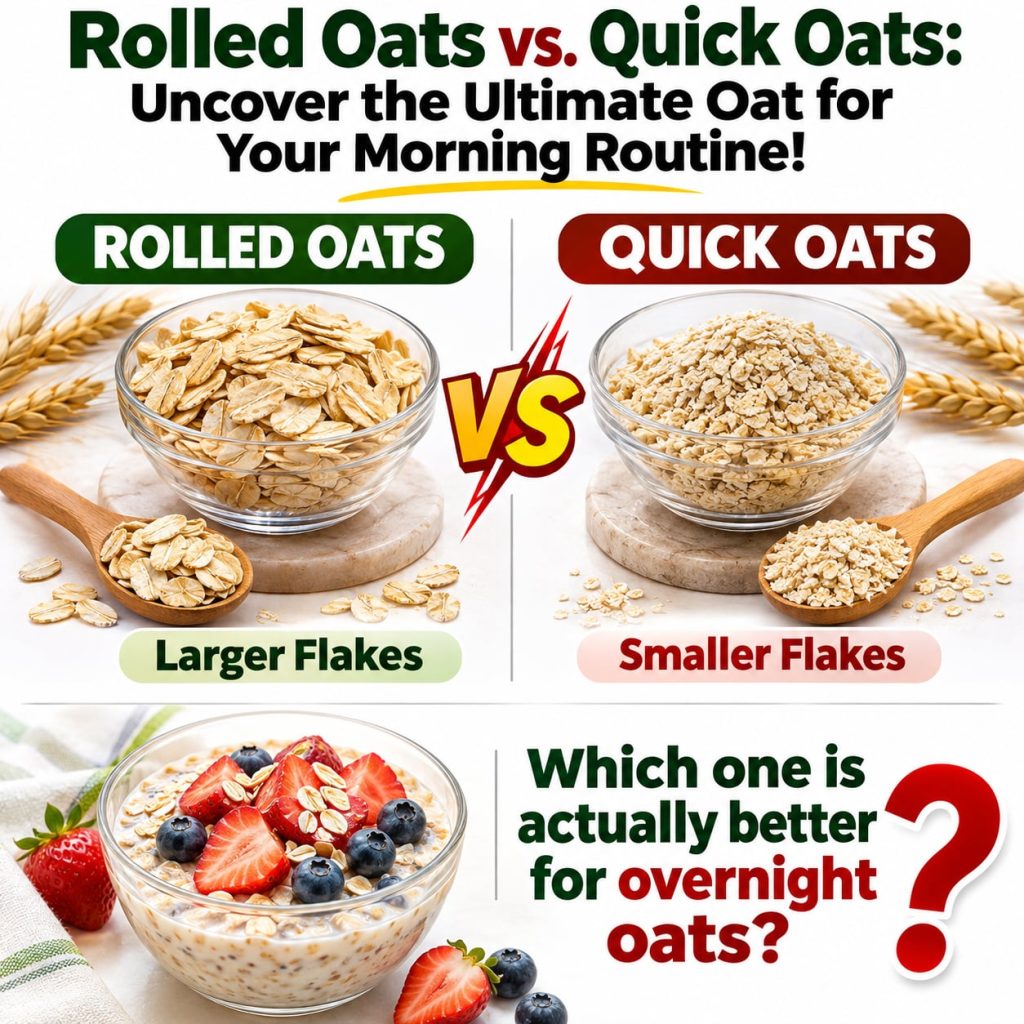
Both rolled oats and quick oats start from whole oat groats. The main difference is how they are processed. Rolled oats are steamed and then flattened into thicker flakes. Quick oats are steamed for a longer time, then cut into smaller pieces and rolled thinner. That extra processing is what makes them cook faster.
Because of this, the two oats look and feel different in the jar. Rolled oats keep their shape and a noticeable chew. Quick oats break down more easily and blend into a softer, creamier mixture.
Which Oat Works Better for Overnight Oats?
For most people, rolled oats are the better choice for overnight oats. They hold their structure during soaking and give you a satisfying, slightly chewy bite in the morning. They also suit a meal you plan to eat cold straight from the fridge.
Quick oats can work well if you prefer a smoother, pudding-like texture. Just be aware that they soften quickly and can turn mushy if you leave them soaking for too long or use too much liquid.
Quick Tips for Choosing the Right Oat
- Choose rolled oats if you want chewy texture and a more filling bite.
- Choose quick oats if you prefer a soft, creamy consistency.
- Avoid instant oat packets with added sugar and flavorings if you want a simpler, more balanced breakfast.
- Check labels and look for plain oats with no added ingredients.
Are Rolled Oats and Quick Oats Nutritionally Different?
Both types are whole grain and contain similar amounts of fiber, including beta-glucan, a soluble fiber that is commonly associated with heart health when part of a balanced diet. Calorie and carbohydrate content are very close per serving. The biggest differences are usually texture and how quickly the oats absorb liquid, not nutrition. Oats are naturally gluten-free, but many brands are processed in facilities that also handle wheat, so look for certified gluten-free labels if needed.
Simple Overnight Oats Recipe with Rolled Oats
Servings: 1
Prep time: 5 minutes, plus at least 6 hours to chill
Ingredients:
- 1/2 cup rolled oats
- 1/2 cup milk of your choice
- 1 teaspoon honey, or to taste
- 1/2 small banana, sliced
Instructions:
- Add the rolled oats to a clean jar or container with a lid.
- Pour in the milk and stir in the honey until the oats are evenly coated.
- Seal the jar and refrigerate for at least 6 hours, or overnight.
- In the morning, stir the oats, add a little extra milk if you prefer a looser texture, and top with banana slices.
Storage tip: Overnight oats keep well in the refrigerator for up to 3 days, which makes them a practical option for meal prep.
Final Thoughts
When you compare rolled oats vs. quick oats for overnight oats, rolled oats usually give the best balance of texture and structure, while quick oats offer a softer, creamier option. Both are whole grain choices that can fit well into a healthy breakfast routine. Pick the one that matches the texture you enjoy most, and enjoy the convenience of starting your day with a ready-made meal.
This article is for general information only and is not a substitute for advice from a qualified healthcare professional. If you have a medical condition or dietary concerns, speak with your doctor or a registered dietitian before making changes to your diet.