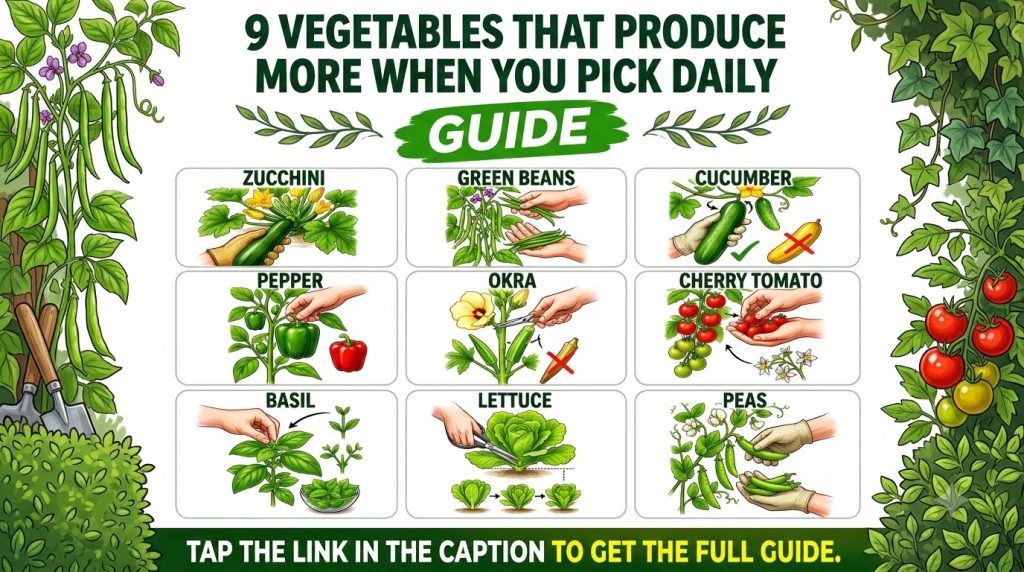
Growing vegetables is rewarding, but many gardeners miss out on the full harvest their plants can produce. One of the simplest habits that keeps plants productive is picking your vegetables regularly. Many crops keep producing new fruit when they are harvested on time, while overripe produce can slow the plant down. This guide shares practical harvesting tips inspired by a visual overview of common garden vegetables.
Why Regular Harvesting Matters
Picking vegetables at the right time signals many plants to keep flowering and setting fruit. Leaving mature produce on the vine for too long can reduce the plant’s energy for new growth. Regular harvesting also keeps your garden tidy, reduces the chance of pests and rot, and gives you fresh food at its best flavor and texture.
Harvesting Tips for Common Vegetables
Zucchini and Summer Squash
Check zucchini every day or two during peak season. Pick fruit when it is young and tender, usually at around 15 to 20 cm long. Use a sharp knife or pruners to cut the stem rather than twisting the fruit off the plant.
Green Beans
Pick green beans often, ideally every two to three days. Gently hold the stem and pull the pod away, or snip it with scissors. Beans that are picked young are more tender, and frequent picking encourages the plant to produce more pods.
Cucumbers
Harvest cucumbers when they are firm, deep green, and well sized for their variety. Check the vines often, since cucumbers can grow quickly in warm weather. Cutting the fruit from the vine helps avoid damaging the plant.
Peppers
Sweet and hot peppers can be picked when they reach their mature color and feel firm. Cut the stem with clean pruners. Picking peppers regularly can help the plant keep setting new fruit through the season.
Okra
Okra pods are best when small and tender, typically a few inches long. Pods left too long become tough and fibrous. Check plants daily during the growing season and cut pods with a sharp blade, wearing gloves if the plant has fine hairs that can irritate the skin.
Cherry Tomatoes
Pick cherry tomatoes once they are fully colored and slightly soft to the touch. Gently twist or snip the fruit from the cluster. Regular picking helps prevent splitting and reduces the risk of fruit being damaged by pests.
Basil
Harvest basil by pinching or cutting the stem just above a pair of leaves. Removing the top sections encourages bushier growth. Avoid stripping the plant bare, and remove flower buds when you see them to keep the leaves flavorful for longer.
Lettuce
You can pick lettuce by taking the outer leaves first, which allows the center to keep growing. Alternatively, harvest the whole head once it is full and crisp. Cut in the cooler part of the day for the freshest leaves.
Peas
Pick peas when the pods are plump and bright green but before the seeds become hard. Check plants every day or two, since peas can mature quickly. Hold the stem with one hand and pick the pod with the other to avoid breaking the vine.
Best Practices for a Productive Garden
- Check your plants every one to three days during the growing season.
- Use clean, sharp tools to make clean cuts and reduce plant stress.
- Harvest in the cool morning hours when produce is crisp and full of water.
- Keep a basket nearby so you can pick as you walk through the garden.
- Remove any damaged or diseased produce to help keep the rest of the plants healthy.
Enjoy the Fruits of Your Garden
Picking your vegetables daily is a simple habit that can make a noticeable difference to your harvest. With a regular routine and a few gentle techniques, you can enjoy fresher food and a more productive garden all season long. Save this guide for your next harvest, and share it with fellow gardeners who want to grow more.