If you have noticed a white, dusty coating spreading across your zucchini leaves, you are not alone. Powdery mildew is one of the most common problems gardeners face with squash and zucchini plants, especially as the weather warms and humidity rises. The good news is that it is usually manageable when you catch it early and take a few simple steps to protect your plants.
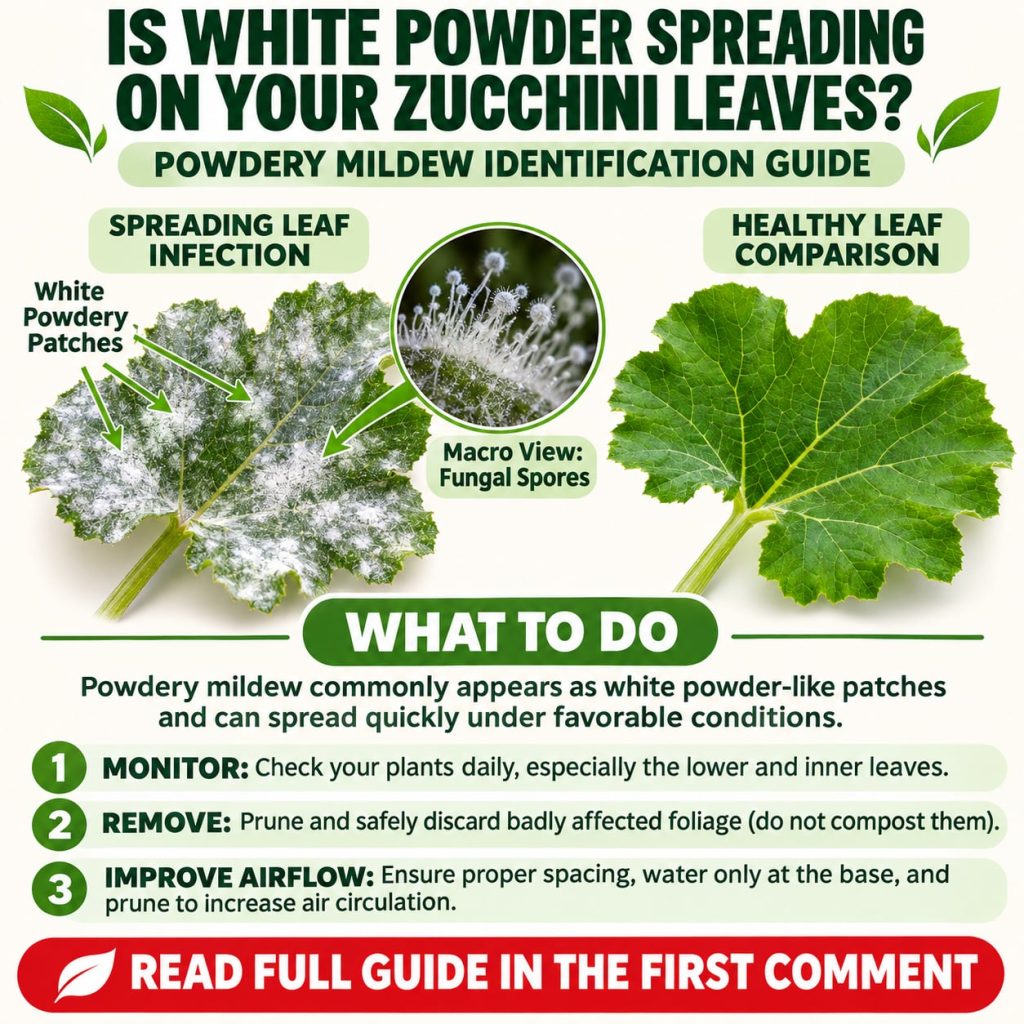
What Does Powdery Mildew Look Like?
Powdery mildew usually starts as small, white or greyish spots that look like someone dusted the leaves with flour. Over time, the spots can spread to both sides of the leaves, stems, and sometimes the fruit stalks. Older leaves tend to be affected first, but the disease can move quickly through a crowded plant.
Look for these common signs:
- White or grey powder on the upper surface of leaves
- Yellowing or browning leaves that dry out early
- Reduced growth and fewer flowers or fruits
Why Does It Happen?
The fungus behind powdery mildew thrives in warm days, cool nights, and humid conditions. It spreads easily when leaves stay crowded and damp, and when air does not move freely between plants. Stressed plants, such as those short on water or nutrients, can also be more vulnerable.
Simple Steps to Prevent Powdery Mildew
Prevention is the most reliable approach, and it does not require special products. Try these habits in your garden:
- Check your plants regularly. A quick look every few days helps you spot early spots before they spread.
- Give plants enough space. Good airflow helps leaves dry faster after rain or watering.
- Water at the base. Keep water off the foliage and water in the morning so leaves dry during the day.
- Remove affected leaves. Trim badly infected leaves with clean scissors and dispose of them in the trash rather than the compost pile.
- Choose resistant varieties. When you plant next season, look for zucchini varieties labeled as mildew resistant.
A Gentle Baking Soda Spray Option
Many organic gardeners use a diluted baking soda spray as a mild, home-based option for managing early powdery mildew. A common mixture combines about one teaspoon of baking soda, a few drops of mild liquid soap, and one liter of water. Shake well and spray the leaves in the early morning or evening.
Keep in mind that results vary depending on weather, how advanced the infection is, and your plant’s overall health. No home spray can guarantee a cure, so use it as one part of a broader care routine. Always test the mixture on a single leaf first and wait a day or two to check for any damage before treating the whole plant.
Caring for Your Zucchini Through the Season
Healthy plants are better able to handle stress. Keep the soil evenly moist, add a layer of mulch to reduce splashing, feed your plants with compost, and harvest regularly to encourage new growth. Clean up fallen leaves at the end of the season so the fungus has fewer places to overwinter.
With regular checks and good airflow, most gardeners can keep powdery mildew under control and enjoy a steady zucchini harvest. Start with observation, make small changes to your watering and spacing, and your plants will thank you.