Why Fiber Deserves a Spot on Your Plate
Fiber is one of those nutrients that quietly does a lot of work. It helps keep digestion regular, adds bulk to meals so you feel satisfied longer, and helps your energy levels stay steady between meals. Most people fall short of the daily goal, which is roughly 25 grams for women and 38 grams for men under age 50, according to U.S. Dietary Guidelines.
The good news is that you do not need special products to get more. Many everyday foods already contain plenty of fiber. This guide walks through the best options, how much they offer, and simple ways to add them to your meals.
Everyday High-Fiber Foods to Know
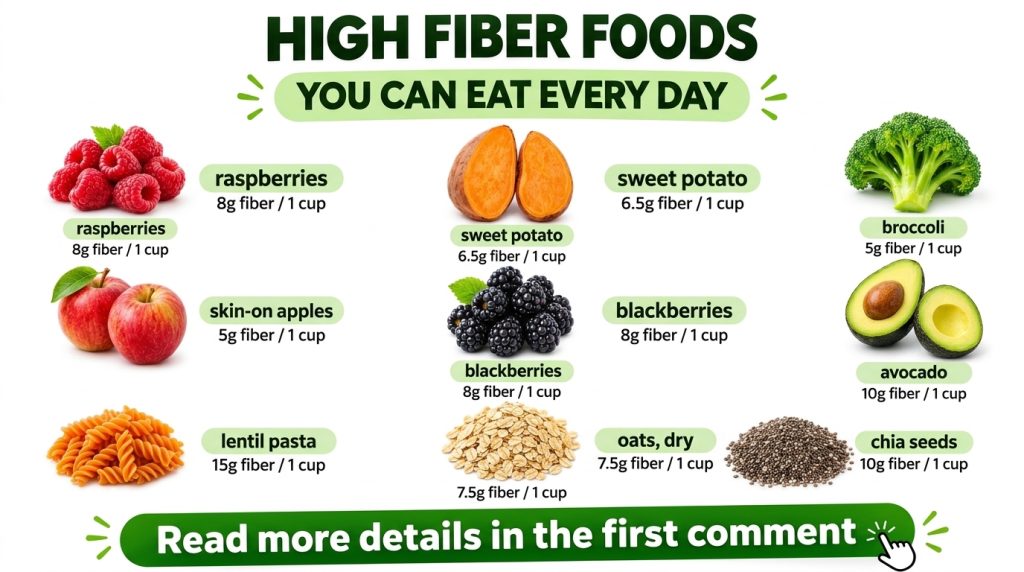
Here are some of the easiest foods to work into daily meals. The amounts below are approximate and can vary by brand, size, and preparation.
| Food | Serving | Approx. Fiber | Main Benefit |
|---|---|---|---|
| Chia seeds | 2 tablespoons | About 10 g | Very concentrated fiber, easy to add to drinks |
| Raspberries | 1 cup | About 8 g | Fiber plus vitamin C |
| Blackberries | 1 cup | About 7 to 8 g | Fiber plus antioxidants |
| Lentils, cooked | 1/2 cup | About 8 g | Fiber and plant protein |
| Avocado | Half of a medium fruit | About 5 g | Fiber and heart-healthy fats |
| Broccoli, cooked | 1 cup chopped | About 5 g | Fiber and vitamin K |
| Oats, dry | 1/2 cup | About 4 g | Soluble fiber for steady energy |
| Sweet potato, baked | 1 medium, with skin | About 4 g | Fiber and vitamin A |
| Apple, with skin | 1 medium | About 4 g | Fiber and convenient snacking |
Berries and Fruit
Berries are among the most fiber-rich fruits you can buy. Eating the skin of apples and pears adds even more. Frozen berries work well in smoothies and oatmeal, and they are often more affordable than fresh.
Whole Grains and Legumes
Oats, barley, brown rice, and lentils bring fiber along with plant protein. Beans and lentils are especially useful because they fill you up and work well in soups, salads, and stews.
Vegetables
Broccoli, sweet potatoes, carrots, and leafy greens are easy to roast, steam, or toss into meals. Keeping the skin on sweet potatoes and potatoes boosts their fiber content.
Easy Ways to Add More Fiber
- Start your day with oatmeal topped with berries and a spoonful of chia seeds.
- Add a cup of cooked lentils or beans to soups, pasta sauce, or tacos.
- Swap white rice for brown rice, quinoa, or barley a few times a week.
- Snack on an apple with the skin, or pair fruit with a handful of nuts.
- Stir chia seeds into yogurt, smoothies, or overnight oats.
- Fill half your plate with vegetables at lunch and dinner.
Practical Tips for Building More Fiber Slowly
- Increase fiber gradually over a few weeks to reduce bloating and gas.
- Drink enough water, since fiber works best with adequate fluids.
- Choose whole fruits over juice to keep the fiber intact.
- Read labels and look for whole grain as the first ingredient.
- Keep frozen vegetables and canned beans on hand for quick meals.
Common Mistakes to Avoid
Many people add a fiber supplement and expect instant results, but whole foods offer fiber along with vitamins, minerals, and other helpful compounds. Another common mistake is jumping from very low to very high fiber in one day, which can cause discomfort. Small, steady changes tend to work best.
Frequently Asked Questions
How much fiber should I eat each day?
Most adults should aim for about 25 to 38 grams daily, depending on age and sex. Your needs may vary, so check with a healthcare professional if you have specific concerns.
Can fiber help with feeling full?
Yes. High-fiber foods are often more filling, which may make it easier to manage portions during meals and snacks.
Are berries a good source of fiber?
Yes. Raspberries and blackberries are among the higher-fiber fruits, especially when eaten with the seeds and skin.
Is it better to get fiber from food or supplements?
Whole foods are generally the best source because they provide a mix of nutrients. Supplements can be useful in some cases, but it is wise to talk with a healthcare professional first.
Can I eat too much fiber?
Very large sudden increases can cause gas, bloating, or constipation. Increasing slowly and drinking plenty of water helps your body adjust.
Do chia seeds need to be soaked?
Not always, but soaking them in liquid for 10 to 15 minutes makes them easier to digest and gives them a pleasant texture.
Conclusion
Fiber is a simple, practical way to support digestion and keep your energy steady. Oats, berries, lentils, vegetables, and chia seeds make it easy to build more fiber into your day without complicated recipes. Start with one or two changes this week and build from there.
If you enjoyed this guide, you may also like these related articles:
- High Protein Breakfast Ideas
- Healthy Smoothie Recipes
- Best Foods for Gut Health
- Easy Meal Prep Ideas for Busy Weeks
This content is for educational purposes only and should not be considered medical advice. Consult a qualified healthcare professional for personalized dietary recommendations.