
Have you ever soaked your nuts before snacking or adding them to a recipe? It is a simple kitchen habit that many home cooks and wellness fans have started using. Soaking is an easy way to change how nuts feel to eat, and some people believe it makes them easier to digest.
This guide explains why people soak nuts, the typical soaking times for popular varieties, and how to do it at home. You will also learn what the research says so you can decide if this routine fits your eating style.
Why People Soak Nuts
Nuts are naturally rich in healthy fats, protein, fiber, and minerals. Soaking them in water softens their texture, which can make them creamier in smoothies, sauces, and homemade nut milks.
Many people also soak nuts because they may feel lighter on the stomach. Some research suggests that soaking can reduce phytic acid, a natural compound that can slightly limit how well the body absorbs certain minerals. The effect appears modest, though, and a balanced diet already includes plenty of minerals from other foods.
Typical Soaking Times at a Glance
These times are common guidelines from home cooks and nutrition writers. Actual times can vary depending on the size of the nut and the room temperature.
| Food | Typical Soaking Time | Main Benefit |
|---|---|---|
| Almonds | 8 to 12 hours (overnight) | Softer skins and creamy texture for milk and butter |
| Walnuts | 2 to 4 hours | Milder flavor and softer bite |
| Cashews | 2 to 4 hours | Smooth texture for dairy-free sauces |
| Pistachios | 1 to 2 hours | Easier blending into dips and spreads |
| Hazelnuts | 6 to 8 hours | Easier to peel skins after soaking |
| Dried Figs | 30 minutes to 2 hours | Plumper, juicier texture for snacks and oatmeal |
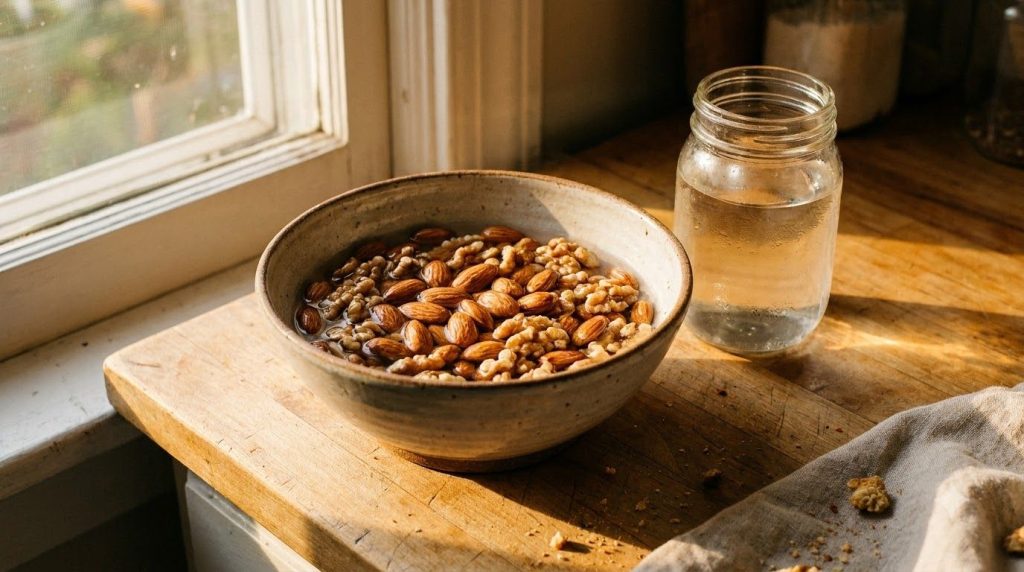
How to Soak Nuts at Home
- Measure about one cup of raw nuts or dried figs into a bowl.
- Cover them with clean water. The water should sit about one inch above the nuts.
- Add a small pinch of salt if you like, which some cooks use to help soften the skins.
- Let them soak for the recommended time, then drain and rinse well.
- Use them right away, or dry them and store them for later.
Possible Benefits and Important Limits
Soaking may make nuts more comfortable to eat for some people and can add a creamy texture to recipes. It is also a fun way to get more nuts into your routine. However, the health benefits of nuts come mostly from their overall nutrition, not from soaking alone.
- Soaked nuts still contain the same calories, so portion size still matters.
- Soaked nuts spoil faster than dry ones and should be eaten or refrigerated soon.
- People with digestive conditions or specific medical needs should talk with a healthcare professional before making big changes.
Practical Tips for Soaking Nuts
- Start with almonds or cashews, since they are easy to soak and blend.
- Keep a jar of soaked nuts in the fridge for up to two days for quick snacks.
- Dehydrate or lightly toast soaked nuts if you want a crunchy texture again.
- Use soaked cashews to make creamy dressings, dips, and dairy-free sauces.
- Pair soaked figs with yogurt or oatmeal for a naturally sweet breakfast.
Frequently Asked Questions
Do I need to soak nuts every time I eat them?
No, soaking is optional. Dry nuts are healthy and convenient, so choose whatever fits your routine best.
Can I soak nuts in warm water to save time?
Warm water can speed up softening, but it may also encourage spoilage. Room temperature or cool water is usually the safer choice.
How long can soaked nuts stay fresh?
Store soaked nuts in the refrigerator and use them within about two days. Drying them afterward can extend their shelf life.
Should I throw away the soaking water?
Many cooks discard it because it can carry compounds that were released during soaking. Always rinse nuts well before eating or blending them.
Are soaked nuts better than roasted nuts?
Neither is strictly better. Soaked nuts are softer and easier to blend, while roasted nuts have a crunchy, toasted flavor that many people enjoy.
Conclusion
Soaking nuts is a simple, low-cost habit that can make them creamier, easier to blend, and possibly more comfortable to digest. Start with almonds or cashews, follow the typical soaking times, and enjoy them in snacks, breakfasts, or sauces. If you want more ideas, explore our guides on healthy breakfast ideas, homemade nut milk, and easy gut-friendly snacks.
This content is for educational purposes only and should not be considered medical advice. Consult a qualified healthcare professional for personalized dietary recommendations.