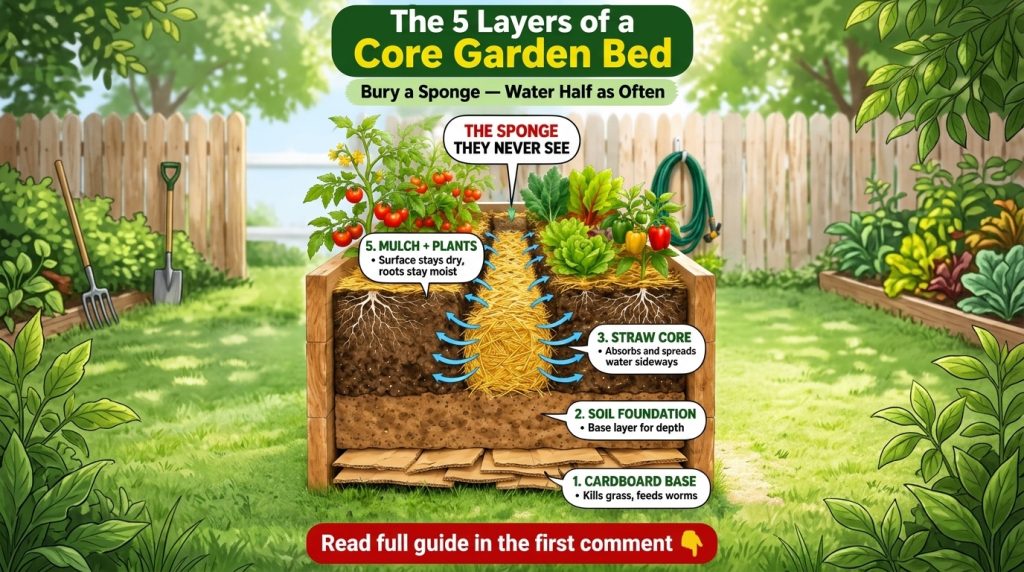
Raised garden beds are one of the most rewarding ways to grow vegetables, herbs, and flowers at home. Yet many gardeners find that their beds dry out quickly, settle over time, or need constant watering. The good news is that a little smart layering can make a noticeable difference. This guide walks through the concept shown in a clear cross-section infographic and explains how each layer can support healthier plants.
Why Layering Matters in a Raised Bed
A raised bed gives you control over soil quality, drainage, and warmth, but the materials you put inside it matter just as much as the frame. Layering uses different organic materials at different depths, so each one can do a specific job. Some layers hold moisture, some feed the soil as they break down, and others protect the surface from drying out or weeds.
The Main Layers Explained
1. Cardboard Base
A layer of plain cardboard at the bottom helps suppress grass and weeds underneath the bed. Choose cardboard without glossy coatings or heavy tape, and overlap the pieces so there are no open gaps. Over time it breaks down and adds organic matter to the soil below.
2. Straw or Organic Core
A central core of straw or similar dry plant material creates air pockets and helps water move through the bed rather than pooling at the surface. Straw is lightweight, widely available, and gradually decomposes, enriching the soil. Many gardeners water this core directly so moisture reaches the roots below the surface.
3. Soil and Compost Foundation
The main growing medium should be a well-balanced mix of garden soil and compost. This is where roots spread and absorb nutrients, so it deserves the most attention. Loose, crumbly soil drains well while still holding enough moisture for vegetables such as tomatoes and peppers.
4. Mulch and Top Layer
A top layer of mulch, such as shredded leaves, wood chips, or finished compost, keeps the soil surface cool and reduces evaporation. It also helps limit weed seeds from sprouting. Keep mulch a few centimeters away from plant stems to prevent rot.
Tips for Building Your Own Layered Bed
- Water the core area thoroughly after assembling the bed so the materials settle evenly.
- Use compost generously in the top soil to give young seedlings a steady supply of nutrients.
- Plant heavy feeders like tomatoes and peppers in the richest soil, and place leafy greens where they can enjoy the moisture held near the surface.
- Check moisture by pressing a finger into the soil. Add water only when the top few centimeters feel dry.
- Refresh mulch and compost each season to keep the bed productive.
Realistic Expectations
Layered beds are not magic, and results still depend on sunlight, climate, plant choice, and regular care. What layering offers is a practical way to build healthier soil structure and reduce how often you need to water. Observe your bed through each season, take notes on what works in your yard, and adjust your materials over time.
Final Thoughts
Building a layered raised bed is a satisfying project that combines sustainable materials with simple gardening practices. With a sturdy frame, a careful mix of organic layers, and attentive watering, you can create a space where vegetables and herbs have the best chance to thrive. Start small, learn from each harvest, and enjoy the process of growing your own food.