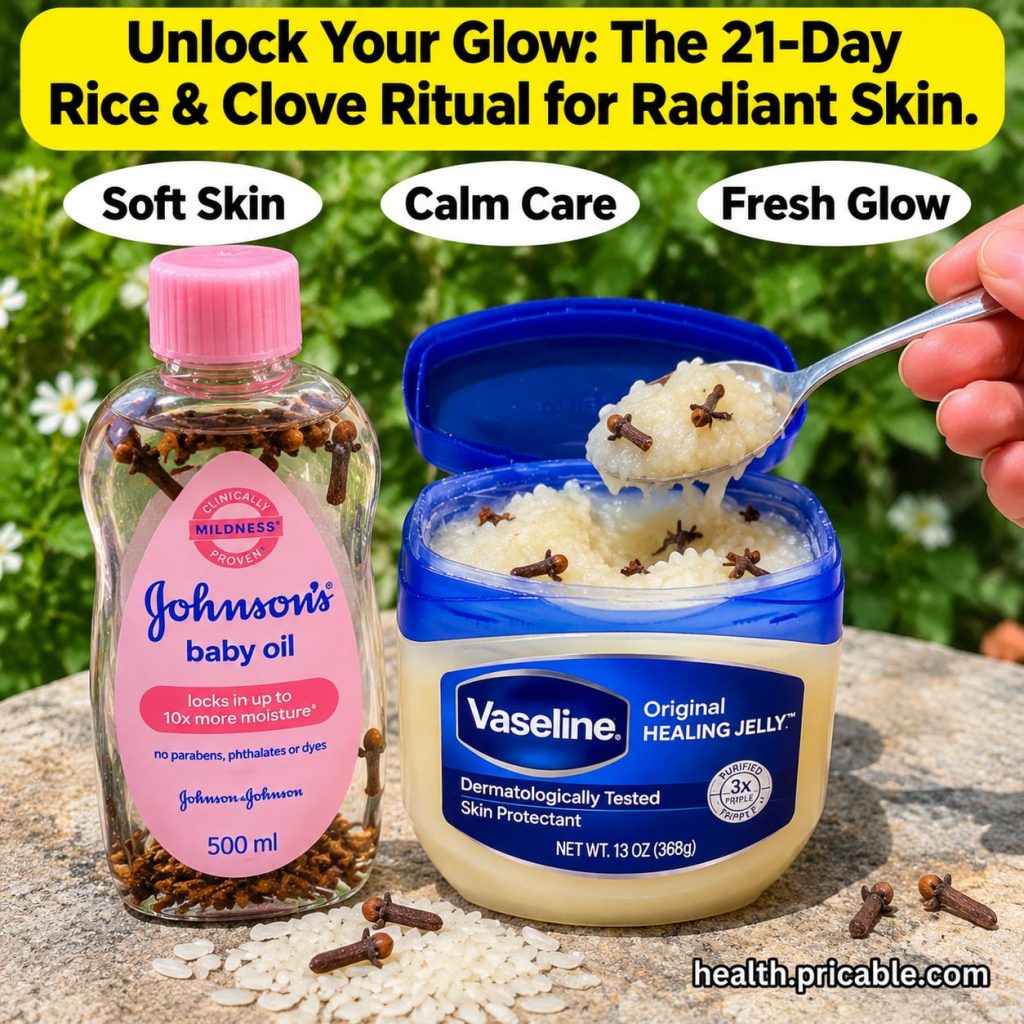
This rice and clove face mask is a gentle, three-times-a-week routine designed to help skin feel softer and look more refreshed over 21 days. Mix a small batch, patch test, and follow the steps below.
Quick Recipe
Prep time: 5 minutes
Best for: dull-looking skin, rough texture, and a fresher-looking complexion
Use type: mask (paste)
Main ingredients:
- White rice flour
- Ground clove (a very small pinch)
- Rose water or plain water
Ingredients
- 1 tablespoon finely ground white rice flour
- 1/16 teaspoon ground clove (a very small pinch only)
- 1 to 2 teaspoons rose water or plain water, added slowly
- 1 teaspoon raw honey (optional, for a softer feel)
How to Make It
- Grind plain white rice in a clean dry coffee grinder until it becomes a fine powder, or use ready-made rice flour.
- In a small glass bowl, combine the rice flour and the tiny pinch of ground clove. Stir well so the clove is evenly distributed.
- Add the rose water or plain water a little at a time, stirring until you reach a smooth, spreadable paste. Add honey if using.
- Use the mask right away, as fresh pastes are best. Discard any leftovers after one use.
How to Use It
- Cleanse your face with a gentle, non-foaming cleanser and pat dry, leaving the skin slightly damp.
- Apply a thin, even layer to your face, avoiding the eye area and the lips.
- Leave the mask on for 5 to 8 minutes. Do not let it dry hard, and do not scrub while it is on your skin.
- Rinse gently with lukewarm water using your fingertips, then pat dry and follow with your usual moisturizer.
How Often to Use It
For the 21-day ritual, use this mask no more than three times per week, with at least one rest day between applications. After 21 days, take a break for a week or two before deciding whether to continue. Because clove is quite strong, more is not better here.
Why These Ingredients Are Used
White Rice Flour
Rice flour is a mild, finely textured powder traditionally used in home beauty routines. It can help the surface of the skin feel smoother and more comfortable when used as a gentle paste.
Ground Clove
Clove has a warming, aromatic character and is often included in traditional home remedies for a refreshed-looking complexion. Only a tiny amount is used here, because clove can irritate sensitive skin.
Rose Water
Rose water adds a light, hydrating liquid base that makes the paste easier to spread and can leave skin feeling soft after rinsing.
What Results to Expect
This mask is best thought of as a gentle routine rather than a dramatic treatment. Many people notice that skin may feel softer and look a little more even and refreshed over several weeks of consistent use. Results vary with skin type, climate, and daily habits, and no particular outcome is guaranteed.
Safety Notes
- Patch test first for topical remedies. Apply a small amount to the inner forearm or behind the ear and wait 24 hours before using it on your face.
- Use gently and avoid rubbing vigorously.
- Avoid irritated, sunburned, or broken skin, and do not use near open cuts or active acne.
- Clove is a strong irritant. Never increase the amount, and never use clove essential oil in this mask.
- Stop using it if redness, itching, burning, or discomfort occurs, and rinse thoroughly with cool water.
- If you have sensitive skin, rosacea, eczema, or a known allergy to spices, consult a dermatologist before trying this remedy.
FAQ
Can I leave the mask on overnight?
No. Leaving a clove-based mask on overnight increases the risk of irritation, so keep it on for only 5 to 8 minutes.
Can I use more clove for a stronger effect?
It is better not to. A very small pinch is enough, and more clove can cause stinging or redness without offering extra benefit.
What if my skin feels tight after rinsing?
Apply a simple, fragrance-free moisturizer right away. If tightness or irritation continues, stop using the mask and seek advice from a skin care professional.
Final Thoughts
A simple rice and clove mask can be a pleasant, budget-friendly addition to a home beauty routine. Keep the portion small, follow the 21-day schedule, and listen to your skin. If you enjoyed this recipe, save this page for later and check back on our site for more practical DIY beauty ideas.