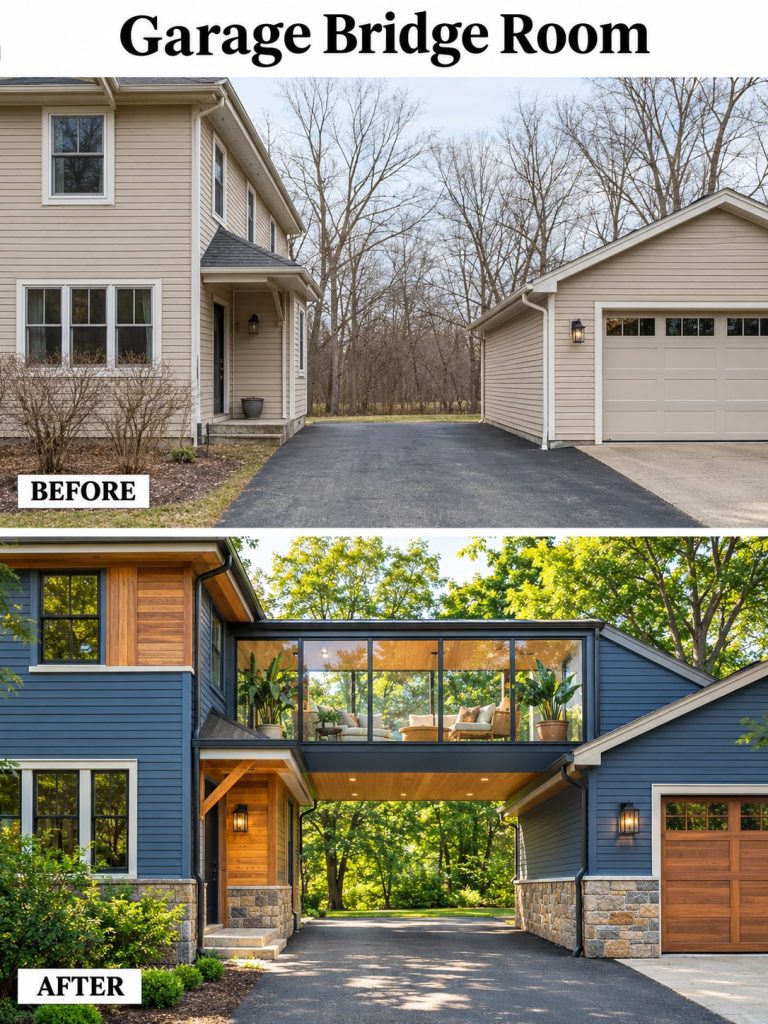
Most homes have a forgotten strip of space between the house and the garage. It collects leaves, puddles, and stray tools, and it rarely feels like part of the home. A covered glass bridge can change that. It turns the gap into a bright, warm room that can hold a reading nook, a small plant shelf, or even a compact home office, all while cars keep moving underneath. If you love gardening, this kind of room can become a year-round greenhouse-style space where you grow plants that struggle in cold, dim corners of the house.
This guide walks through the planning, the plant choices, and the mistakes to avoid so your new room feels comfortable for people and plants alike.
Why the Space Between Buildings Matters
Usable square footage is valuable, especially on smaller lots. A connecting passage that stays open to daylight adds living space without cutting into the yard or driveway. Because it sits between two structures, it often receives light from both sides, which makes it a surprisingly good spot for plants that need bright conditions but are sensitive to cold drafts.
The Core Principle: Light, Heat, and Airflow
Glass rooms are wonderful for light and terrible for temperature control. Sunlight passing through glass can push the room well above outdoor temperatures on a clear day, even in winter. Plants respond to that heat by drying out faster and sometimes by growing soft, stretched stems if light is uneven. Plan for three things before you choose a single plant: how many hours of direct sun the room receives, how the temperature swings from morning to afternoon, and whether air can move freely through the space.
Planning the Glass Bridge Before You Build
- Check local building codes and zoning rules. Connecting a structure to a house can change how it is classified, and setbacks may apply.
- Ask a structural engineer to confirm that the frame can support the roof load, snow in colder regions, and wind exposure.
- Confirm vehicle clearance. Measure the height of your largest vehicle and leave room for the glass, framing, and any gutters.
- Choose low-emissivity glass or tinted panels to reduce summer heat gain and UV damage to furniture and plants.
- Plan vents or operable windows at high and low points so warm air can escape and cooler air can enter.
- Install drainage under any planting beds or containers so water does not pool against the house or garage foundation.
Choosing Plants for a Bright Glass Passage
Plants that enjoy filtered or bright indirect light usually perform best in a glass room. Start with a few reliable options, then expand as you learn how the space behaves through the seasons.
Pothos (Epipremnum aureum)
Pothos is one of the most forgiving trailing plants. It grows well in bright indirect light and tolerates a range of humidity levels. Hang it near the glass but out of direct afternoon sun, which can scorch the leaves. Let the top inch of potting mix dry before watering again. Yellowing leaves with soggy soil usually mean overwatering, while limp, crispy leaves often point to heat stress or underwatering.
Snake Plant (Dracaena trifasciata)
Snake plants handle bright light, warm temperatures, and dry air well, which makes them a good fit for a sunny passage. Use a pot with drainage holes and a fast-draining cactus or succulent mix. Water only when the soil is completely dry, often every two to four weeks depending on light and temperature. Leaves that feel mushy at the base signal too much water.
Peace Lily (Spathiphyllum wallisii)
Peace lilies prefer bright indirect light and consistently moist but not waterlogged soil. They droop noticeably when thirsty and usually recover within hours after a drink. Keep them away from hot glass during summer. If the room gets very dry in winter, group the pot with other plants or place a shallow tray of pebbles and water beneath it.
Basil (Ocimum basilicum)
Basil is an annual in most of the United States, grown outdoors after the last spring frost when nights stay above about 50 degrees Fahrenheit. In a glass room, it can provide fresh leaves through cooler months if it receives at least six hours of bright light, ideally supplemented with a grow light in winter. Pinch the growing tips regularly to keep the plant bushy and to delay flowering. Avoid placing it directly against cold glass at night, which can chill the roots.
Practical Setup for Containers
Use containers at least 8 to 10 inches wide for most houseplants, and choose pots with drainage holes. Place heavier containers on a stable shelf or a floor tray that can hold water. Space plants so leaves do not touch the glass, which keeps foliage from burning and improves airflow. If you plan to grow herbs or small vegetables, a row of containers on a rolling cart makes it easy to move plants toward the light during winter and away from heat during summer.
Common Mistakes and How to Avoid Them
- Ignoring summer heat. Install shade film, a reflective shade cloth, or operable vents before the first hot season.
- Overwatering because the room feels warm. Warm air dries soil, but plants that rest in winter need less water. Check soil moisture with a finger or wooden skewer before watering.
- Placing sun-loving plants in a dim corner. If plants stretch toward the light or drop leaves, move them closer to the brightest section.
- Forgetting ventilation. Stagnant, humid air encourages fungus gnats and powdery mildew, so keep air moving with a small fan or open vents.
- Crowding the pots. Give each plant enough space for airflow, and remove dead leaves promptly to discourage pests and rot.
Regional Considerations Across the United States
Climate changes how a glass passage performs. In USDA zones 3 through 5, winter cold and snow loads matter most, and supplemental heat may be needed to keep plants above their minimum temperatures. In zones 6 through 8, summer heat often matters more than winter cold, so shading and ventilation become priorities. In zones 9 through 11, the glass room may stay warm year-round, which can suit tropical plants but also increases the risk of pests and overheating. USDA zones measure winter cold tolerance only. They do not account for summer heat, humidity, rainfall, or the strong microclimates created by glass. Your local cooperative extension office can offer guidance on frost dates, building considerations, and plants that perform well in your area.
Start Small and Let the Room Teach You
A glass bridge is an exciting opportunity, but the best results come from observing how light, temperature, and airflow change across the day and the seasons. Begin with two or three forgiving plants, track how they respond for a month, and adjust their position as needed. Once you understand the room’s rhythms, you can expand into herbs, flowering houseplants, or a small propagation station near the brightest window. Your new room can become a place where you grow more than square footage: it can grow confidence, patience, and a stronger connection to the seasons.