Introduction
Many people think of vegetables as a side dish, not a source of protein. Yet several everyday vegetables contain a meaningful amount of protein, especially when eaten in larger portions. This guide walks through which vegetables lead the pack and how to work them into your meals.
If you follow a plant-based eating pattern, or simply want to add more protein to your plate, this chart is a useful starting point. You will learn which vegetables rank highest, how they compare, and easy ways to enjoy them.
Food Chart: Protein in Common Vegetables
The values below are approximate per 1 cup, cooked unless noted. Exact numbers vary by variety, brand, and cooking method.
| Vegetable | Calories | Protein | Carbs | Fat | Fiber | Main Benefit |
|---|---|---|---|---|---|---|
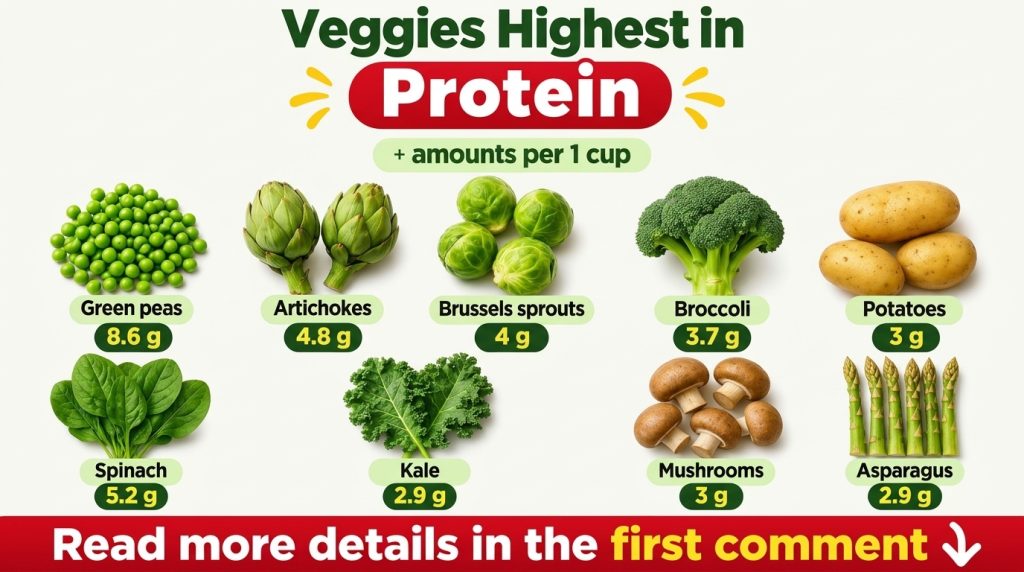
| Green peas | 134 | 8.6 g | 25 g | 0.4 g | 8.8 g | Protein and fiber for steady energy |
| Spinach | 41 | 5.4 g | 6.8 g | 0.5 g | 4.3 g | Iron, folate, and vitamin K |
| Artichoke hearts | about 90 | about 4.5 g | about 20 g | about 0.3 g | about 10 g | Fiber and plant compounds |
| Potato (baked flesh) | 161 | 4.3 g | 37 g | 0.2 g | 3.8 g | Potassium and filling carbs |
| Asparagus | 40 | 4.3 g | 7.5 g | 0.5 g | 3.6 g | Folate and light, fresh flavor |
| Brussels sprouts | 56 | 4 g | 11 g | 0.8 g | 4.1 g | Vitamin C and fiber |
| Broccoli | 55 | 3.7 g | 11 g | 0.6 g | 5.1 g | Vitamin C and vitamin K |
| Mushrooms | 43 | 3.4 g | 6.8 g | 0.5 g | 2.2 g | B vitamins and savory flavor |
| Kale | 36 | 2.9 g | 7.3 g | 0.5 g | 2.6 g | Vitamin A, vitamin C, and calcium |
Nutrition Comparison
Green peas stand out as the strongest protein source on this list. A single cup delivers more protein than most other vegetables, along with plenty of fiber.
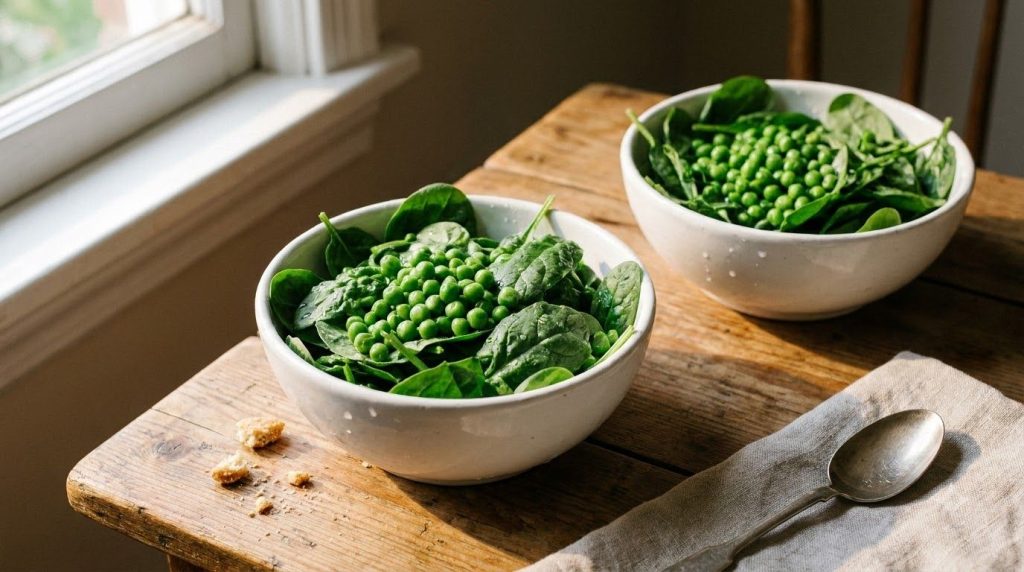
Spinach comes next and is easy to add to nearly any meal. Its protein is modest on its own, but it adds nutrients that many people under-eat.
Leafy greens like kale offer less protein per cup, yet they still contribute vitamins and minerals. Think of them as supporting players in a protein-rich meal, not the main event.
Serving Suggestions
- Stir peas into pasta, rice, or grain bowls for a sweet, satisfying bite.
- Blend spinach into smoothies, soups, or bean dips.
- Roast Brussels sprouts or broccoli with olive oil and garlic for a crisp side.
- Add sliced mushrooms to lentil or bean chili for extra savory depth.
- Grill asparagus and top with a sprinkle of nuts or seeds.
Who Should Eat More of These Vegetables
People who eat mostly plant-based meals, athletes looking for extra protein from whole foods, and families wanting to boost vegetable intake may all benefit. Older adults who need more protein in smaller meals may also find these options helpful.
Practical Tips
- Pair protein-rich vegetables with beans, tofu, eggs, or Greek yogurt for a more complete protein boost.
- Keep frozen peas and spinach on hand. They are affordable and retain nutrients well.
- Eat a variety of vegetables across the week rather than relying on one favorite.
- Use cooking methods you enjoy, such as steaming, roasting, or sautéing, to keep vegetables appealing.
- Track portions loosely. Protein from vegetables adds up when you eat larger servings.
FAQs
Can vegetables really provide meaningful protein?
Yes, some vegetables provide a helpful amount of protein, especially peas. Most people still need protein from several food groups throughout the day.
Which vegetable has the most protein per cup?
Green peas typically rank highest among common vegetables, followed by spinach and artichoke hearts.
Is spinach a good source of protein?
Spinach contains a moderate amount of protein per cup, and it is rich in other nutrients like iron and folate. It works well as part of a balanced meal.
Do I need to eat vegetables raw to get the protein?
No. Cooking does not remove protein. Many vegetables are easier to eat in larger amounts once cooked.
Can I rely only on vegetables for my protein needs?
It can be done with careful planning, but combining vegetables with beans, grains, nuts, seeds, or dairy often makes meals more satisfying.
Are frozen vegetables as nutritious as fresh?
Frozen vegetables are often picked and frozen at peak freshness, so they can be just as nutritious as fresh options.
How much protein do adults need daily?
Needs vary by age, body size, and activity level. A registered dietitian or healthcare professional can help you find the right amount for you.
Conclusion
Vegetables like green peas, spinach, and artichokes can add useful protein to your meals while delivering fiber and vitamins. Mix them with other protein sources for balanced plates. Explore more healthy food ideas on our site to keep building meals you enjoy.
This content is for educational purposes only and should not be considered medical advice. Consult a qualified healthcare professional for personalized dietary recommendations.