Why Your Wooden Cutting Board Needs a Deeper Clean
Wooden cutting boards are one of the most useful tools in any kitchen, but they also absorb everything you put on them. Onion juice, garlic, raw meat residue, and spices can leave stains and odors in the grain that regular dish soap rarely lifts. This simple salt and lemon method gives your board the natural deep clean it deserves, using just two everyday items.
What You Need
- Coarse white salt, about 2 to 3 tablespoons
- One fresh lemon, cut in half
- A clean, dry cloth or paper towel
Step-by-Step: Salt and Lemon Board Cleaning
- Wash the board first with warm water and mild dish soap, then rinse and pat it dry. This removes loose debris so the salt can work on the stained surface.
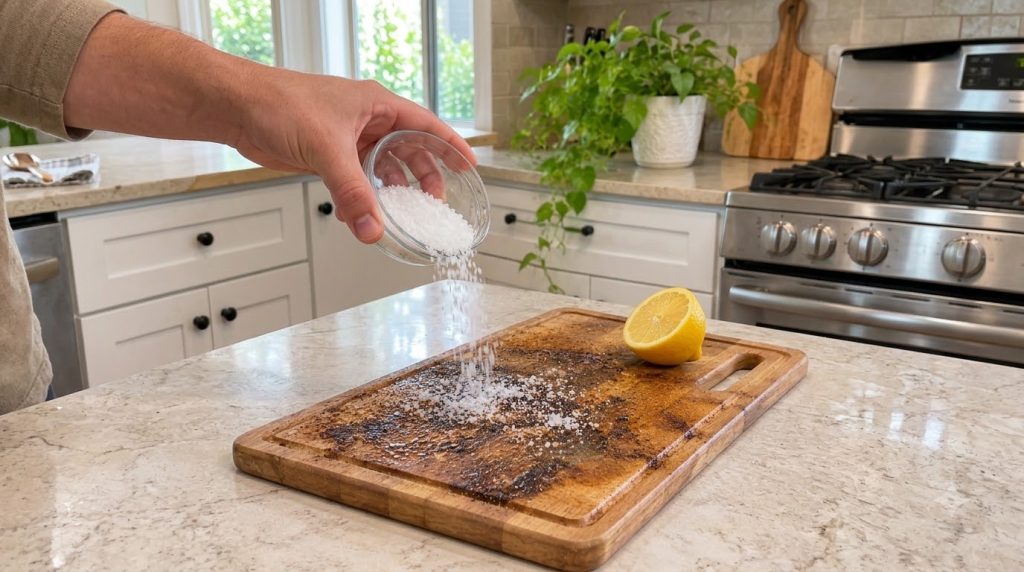
- Sprinkle coarse salt generously over the entire surface of the board, paying extra attention to stained or heavily used areas.
- Take one lemon half and cut-side down, scrub the salt across the board in small circles. The salt acts as a gentle abrasive, and the lemon juice helps loosen stains and odor particles.
- Let the mixture sit on the board for about 5 minutes so the lemon juice can soak into the discolored spots.
- Rinse the board with warm water, then wipe away any remaining salt residue.
- Dry the board completely, standing it on its edge or laying it flat in a well-ventilated area.
Why This Method Works
Coarse salt provides gentle friction that lifts food particles from the wood fibers without cutting deeply into the surface. Lemon juice contains citric acid, a mild natural acid that helps break down some stains and leaves behind a fresh citrus scent. Together, they make a practical option for routine maintenance between more thorough treatments.
Safety Tips and Best Practices
- Use this method on solid wood boards only. Avoid soaking bamboo or composite boards, and never submerge any wooden board in water.
- Do not leave lemon juice sitting on the wood for long periods, as excess acid may dull the finish over time.
- If you have cuts or sensitivity on your hands, wear gloves while scrubbing.
- Always dry the board thoroughly to prevent warping and mold growth.
How Often Should You Clean Your Board This Way?
For most households, using this salt and lemon routine once a week or after handling strong-smelling foods is a good starting point. Boards that cut raw meat or fish may need it more often. Regular cleaning keeps your kitchen fresher and helps your board last for years.
Final Thoughts
A wooden cutting board that smells fresh and looks clean is easy to maintain with ingredients you already have at home. Try this salt and lemon hack after your next busy cooking session and see the difference for yourself.