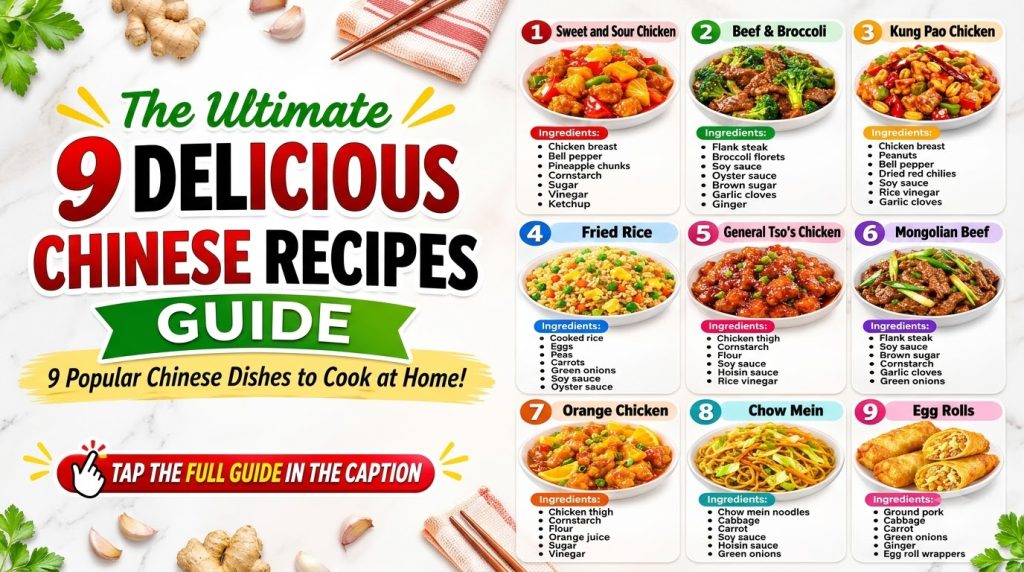
Craving Chinese food tonight? Chinese home cooking offers a wide range of dishes that fit well into a weeknight dinner, from quick stir-fries to comforting bowls of rice and noodles. This guide walks you through the basics so you can choose a dish, gather your ingredients, and cook with confidence.
Why Chinese Home Cooking Works for Busy Weeknights
Many Chinese dishes come together in under an hour once your ingredients are prepped. Most rely on a small set of pantry staples and a few simple techniques, which makes them easy to repeat and adapt.
- Most dishes cook quickly over medium-high heat.
- Many recipes combine protein, vegetables, and a simple sauce in one pan.
- Leftovers often reheat well for lunch the next day.
- Ingredients can be swapped based on what you already have at home.
Pantry Staples to Keep On Hand
A few basic ingredients appear in many Chinese recipes. Stocking them will make it much easier to cook any dish in this guide.
- Soy sauce: The base seasoning for most savory dishes. Light soy sauce is used for seasoning, and dark soy sauce is mainly used for color.
- Rice vinegar: Adds gentle acidity to sauces and dipping mixtures.
- Cornstarch: Thickens sauces and helps create a light coating on meat.
- Fresh garlic, ginger, and scallions: The aromatic foundation of many stir-fries and braises.
- Neutral oil: Vegetable, canola, or peanut oil works well for high-heat cooking.
- Jasmine or long-grain white rice: A common side for nearly every dish.
Core Techniques Behind Most Chinese Dishes
You do not need professional equipment to cook Chinese food at home. These techniques will help you get consistent results.
Prep Everything First
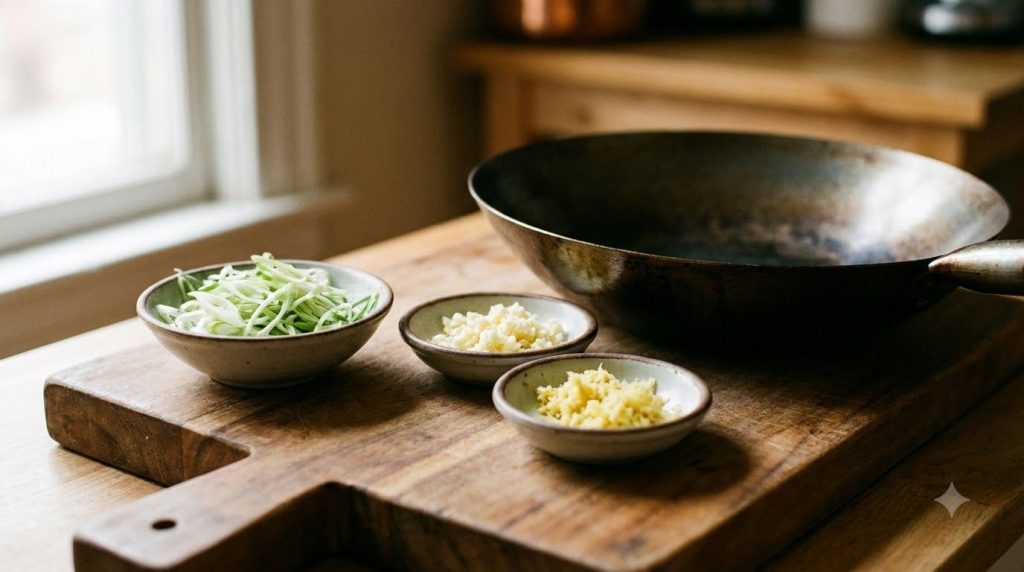
Chinese stir-frying moves fast, so measure your sauce, chop your vegetables, and set everything near the stove before you turn on the heat. This habit, often called mise en place, prevents overcooked food and stress.
Stir-Frying Over High Heat
Heat your pan until it is very hot, then add a thin layer of oil. The oil should shimmer and move easily across the pan. Cook in small batches so the food sears instead of steaming.
Gentle Steaming and Simmering
Steaming and simmering produce tender textures and clean flavors. Keep the heat low enough that liquids bubble gently rather than boil hard, which helps proteins stay tender.
How to Choose Your Dish Tonight
- Check how much time you have. Stir-fries are usually the fastest option.
- Look at what you already have in the fridge and pantry.
- Decide whether you want a saucy dish with rice or a lighter dish with vegetables.
- Read the ingredient list and confirm you can find each item before you start.
- Prep all ingredients before turning on the stove.
Tips for Getting Better Results
- Use a large skillet or wok so ingredients have room to cook evenly.
- Pat meat and vegetables dry before frying to reduce splatter and help browning.
- Mix your sauce in a small bowl before cooking so you can add it quickly.
- Cut meat and vegetables into similar sizes so they finish cooking together.
- Taste and adjust seasoning near the end, since soy sauce and salt levels vary by brand.
Common Mistakes to Avoid
Most problems with Chinese home cooking come from a few avoidable habits.
- Overcrowding the pan: Too much food lowers the temperature and leads to soggy results. Cook in batches.
- Adding sauce too early: Sugar in sauces can burn quickly. Add liquid sauces near the end of cooking.
- Skipping the prep: Waiting to chop ingredients while something cooks often leads to burned aromatics.
Frequently Asked Questions
Do I need a wok to make Chinese dishes at home?
No. A large heavy skillet works well for most stir-fries. A wok is helpful but not required.
Can I make these dishes ahead of time?
Many dishes can be partly prepared ahead, such as chopping vegetables or mixing sauces. Cooked dishes are best served fresh, though many reheat reasonably well.
What can I use instead of Shaoxing wine?
Dry sherry is a common substitute. You can also use a small amount of dry white wine if needed.
How do I keep meat tender in stir-fries?
Slice meat thinly against the grain and toss it with a small amount of cornstarch and soy sauce before cooking. Cook it quickly over high heat.
Which dish should I try first?
Start with a simple stir-fry that uses ingredients you already have. Once you feel comfortable with the basic techniques, try the more involved dishes.
Final Thoughts
Chinese home cooking becomes much easier once you know the basic techniques and stock a few key ingredients. Choose one dish from the guide, prep everything ahead, and enjoy a satisfying dinner made at home.