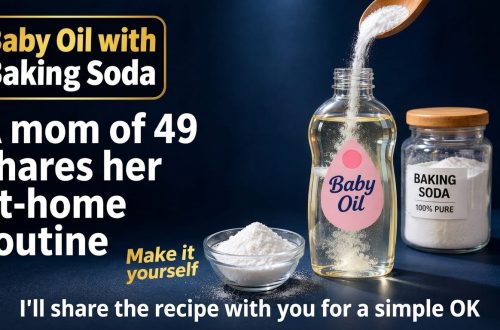
If you have scrolled past a post promising that a simple mix of baby oil and baking soda can make you look decades younger, you are not alone. These viral graphics spread quickly because they combine a bold promise, familiar household products, and a personal story. This article takes a closer look at what the claim says, what is actually known about the ingredients, and how to think about DIY beauty trends before you try one.
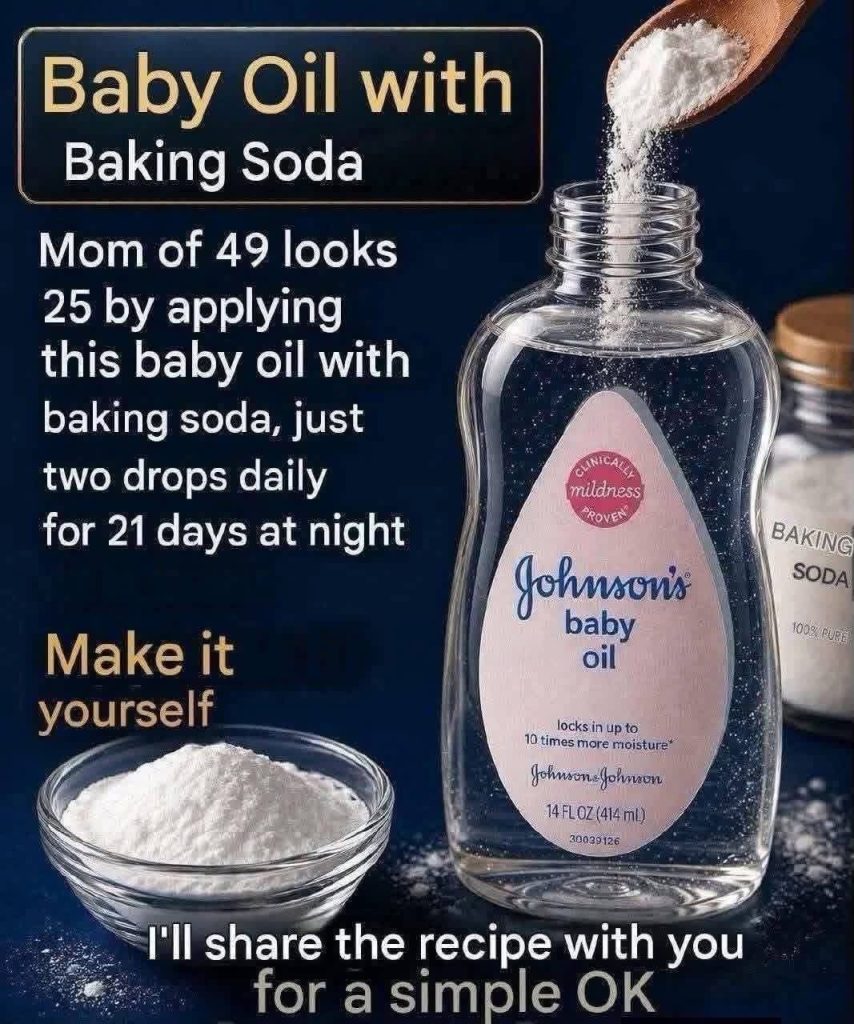 A viral graphic that combines two household products with a bold claim.
What the Viral Post Claims
The post describes a mother of 49 who says she looks 25 after applying two drops of baby oil mixed with baking soda each night for three weeks. The image adds a promise of a simple recipe. However, there is no source, no before-and-after documentation, and no information about how the result was measured. A single personal story is not scientific evidence, and social media photos are easily edited or affected by lighting, makeup, and skin tone.
What Baby Oil Actually Is
Baby oil is typically a mineral oil, often with added fragrance. Mineral oil is a common ingredient in moisturizers because it forms a barrier on the skin that helps reduce water loss. This means it can make skin feel softer and look more hydrated in the short term. It does not reverse aging, rebuild collagen, or remove wrinkles at a deeper level. Visible smoothness from an occlusive oil is a surface effect, and it fades when the oil is no longer applied.
What Baking Soda Does on Skin
Baking soda, or sodium bicarbonate, is alkaline and has a gritty texture. It is sometimes used in cleaning and occasionally in exfoliating scrubs, but its pH is much higher than the skin’s natural slightly acidic surface. Repeated exposure to alkaline products can disrupt the skin barrier, leading to dryness, redness, stinging, or irritation, especially for people with sensitive skin, eczema, or rosacea. Baking soda also does not dissolve in oil, so mixing the two creates a gritty paste that may scratch the skin rather than gently soothe it.
Safety Concerns to Keep in Mind
- Baking soda mixed into oil is not a standardized product, so there is no reliable way to know the concentration or consistency.
- Applying it near the eyes, on broken skin, or on freshly treated skin can cause pain or injury.
- Using it nightly for 21 days without a patch test could trigger a reaction that takes time to appear.
- Products labeled as baby products are not automatically safe for every adult skin type or condition.
How to Test a New DIY Skincare Idea Safely
If you are curious about a home remedy, approach it the way a dermatologist would. Start with a small area, such as the inner forearm or jawline, and observe it for at least 24 to 48 hours. Avoid combining several new ingredients at once, because it becomes impossible to tell which one caused a problem. Stop immediately if you notice burning, itching, swelling, or a rash. For ongoing concerns about wrinkles, dark spots, or dryness, a board-certified dermatologist can recommend approaches with proven results, such as daily sunscreen, gentle retinoids, and consistent moisturizing.
A Smarter Way to Use the Trend
The appeal of this kind of post is understandable. Many people want quick, affordable routines and a sense of control over their skin. You can get that same satisfaction with steps that have better support. A simple, fragrance-free moisturizer applied to damp skin, daily sunscreen, and a gentle cleanser form a routine that protects the skin barrier and supports a healthy appearance over time.
The Bottom Line
The viral claim about baby oil and baking soda is unverified, and the mixture carries real irritation risks. Baby oil may leave skin feeling softer for a while, but it does not reverse aging, and baking soda is not a gentle skincare ingredient. Read beauty claims with curiosity and caution, look for sources, and choose routines that protect your skin. What is your experience with viral beauty hacks? Share your thoughts in the comments, and remember to talk with a healthcare professional before trying a new treatment on sensitive skin.