That low, mat-forming plant creeping between your tomatoes and along the garden path may look like an unwelcome intruder, but many experienced gardeners quietly let it thrive. Purslane is one of the few leafy plants that handles heat, drought, and neglect with ease while producing thick, slightly lemony leaves that work beautifully in salads, soups, and sautés. Learning to recognize it, harvest it safely, and preserve it means you can turn a common weed into a dependable, low-effort crop that carries into the cooler months.
This guide walks you through how to identify purslane with confidence, how to tell it apart from its toxic look-alike spotted spurge, how to grow it on purpose, and how to store your harvest so you can enjoy it long after the garden goes quiet. Along the way you will find practical steps you can use this season, plus the mistakes that trip up beginners.
Why Purslane Deserves a Place in Your Garden
Purslane (Portulaca oleracea) is a warm-season annual succulent. Its fleshy stems and leaves store water, which is why it keeps looking fresh during dry spells that wilt lettuce and spinach. It is commonly grown as a leafy vegetable in many parts of the world, and it contains notable amounts of omega-3 fatty acids and vitamin C for a leafy green. Nutritional content varies with growing conditions and plant age, so treat it as a nourishing addition to a varied diet rather than a cure-all.
How to Identify Purslane Correctly
Before you harvest anything, confirm your identification. Purslane has several reliable features:
- Smooth, thick, reddish or green stems that spread flat across the soil
- Paddle-shaped, fleshy leaves that are somewhat wedge-like and grow in clusters at stem joints
- Small yellow flowers opening in the middle of the day on sunny mornings
- A slightly sour, lemony taste and a crisp, juicy texture when you snap a leaf
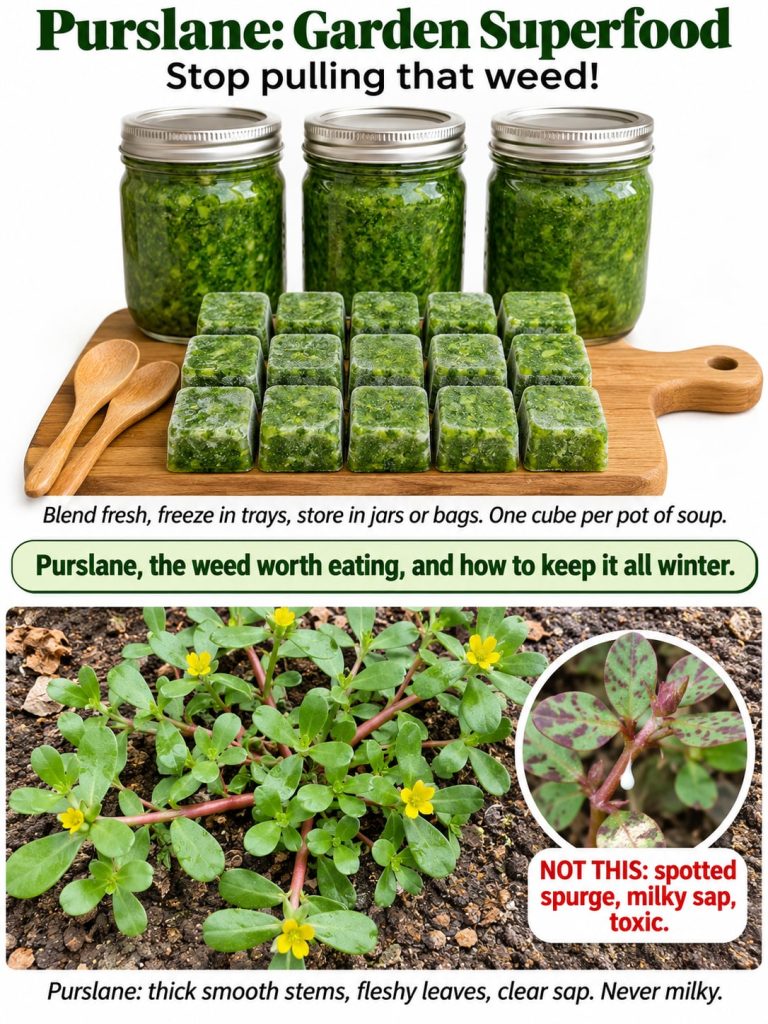
Purslane is safe to eat only after you are certain it is not spotted spurge. Spotted spurge (Euphorbia maculata) is a low, mat-forming weed with small reddish-purple spots on its leaves and stems, and its leaves are usually smaller and less fleshy. The key warning sign is sap. Break a stem of spotted spurge and you will see a milky white latex. Spurge sap can irritate skin and eyes and is harmful if eaten. Purslane stems produce clear, watery sap instead. If you see any milky sap, do not eat the plant.
Growing Purslane on Purpose
Purslane thrives in full sun and loose, well-drained soil. It is happiest when soil temperatures are warm, so sow seed directly outdoors after the last spring frost, once nights stay above about 50 degrees Fahrenheit. Scatter seed on the surface and press it lightly into the soil, since it needs light to germinate. Keep the soil lightly moist until seedlings appear, usually within one to two weeks in warm conditions.
Once established, water deeply but infrequently. Purslane tolerates drought better than most leafy greens, and overwatering is a more common problem than thirst. To check, push a finger two inches into the soil. If it feels dry, water; if it feels damp, wait. Space plants about 6 to 8 inches apart or let them spread as a groundcover in a dedicated bed. Containers work well too, provided the pot has drainage holes and a sunny location.
Harvesting for Continued Growth
Harvest by pinching or cutting stems about 3 to 4 inches from the tips, leaving at least a few inches of stem and leaves on the plant. This encourages branching and extends your harvest. Regular picking keeps plants compact and prevents them from setting too much seed, which can make the plant spread uncontrollably in the garden. Harvest in the morning, when stems are most crisp and full of moisture.
Preserving Purslane for Winter
Fresh purslane does not keep long, so preservation is the key to enjoying it through colder months. Here are three methods that work well:
- Refrigerate fresh: Rinse stems, pat dry thoroughly, and store them in a loosely closed container lined with a paper towel. They typically keep for about one week in the refrigerator.
- Blanch and freeze: Plunge stems into boiling water for about 30 seconds, then transfer them immediately to ice water. Drain, dry well, and freeze in portioned bags. Frozen purslane is best used in cooked dishes such as soups, stews, and stir-fries, because freezing softens its texture.
- Pickle or dehydrate: Quick-pickling in a vinegar brine gives you a tangy topping for sandwiches. Dehydrating leaves until crisp creates a shelf-stable powder you can stir into soups or sprinkle on eggs.
Common Mistakes to Avoid
- Harvesting without confirming identity. Always check for milky sap and compare leaf shape before eating anything.
- Overwatering. Soggy soil invites rot. Let the top inch dry between waterings.
- Letting plants go to seed unchecked. A single mature plant can produce thousands of seeds. Pinch off flowers if you want to limit spread.
- Eating large amounts raw. Purslane contains oxalates, so people prone to kidney stones should enjoy it in moderation and consult a healthcare provider if they have concerns.
Adapting Purslane Care Across U.S. Climates
Purslane is an annual, so it does not survive frost. In USDA zones 3 to 5, plant after frost danger has passed and expect a shorter harvest window. In zones 6 to 8, you can sow in spring and harvest through summer, then sow again in late summer for a fall crop. In zones 9 to 11, purslane can grow nearly year-round in mild winters, though it may slow during cool spells. Always confirm frost dates with your local cooperative extension service, because microclimates, rainfall, and humidity can shift timing significantly.
Bringing It All Together
Purslane rewards gardeners who take the time to look closely. Confirm the identity with the milky-sap test, grow it in warm, sunny, well-drained soil, harvest regularly, and preserve your extra harvest by refrigerating, freezing, or drying it. Start with a small patch this season, and you may find that the plant you once pulled becomes one of the most useful greens in your garden.