Most homemade ginger beer fails for one reason: the bottles are sealed too tight, too early, or left in the wrong place. Get the timing right and you end up with a sparkling, zesty drink that tastes far better than most store-bought sodas.
What Is Homemade Ginger Beer?
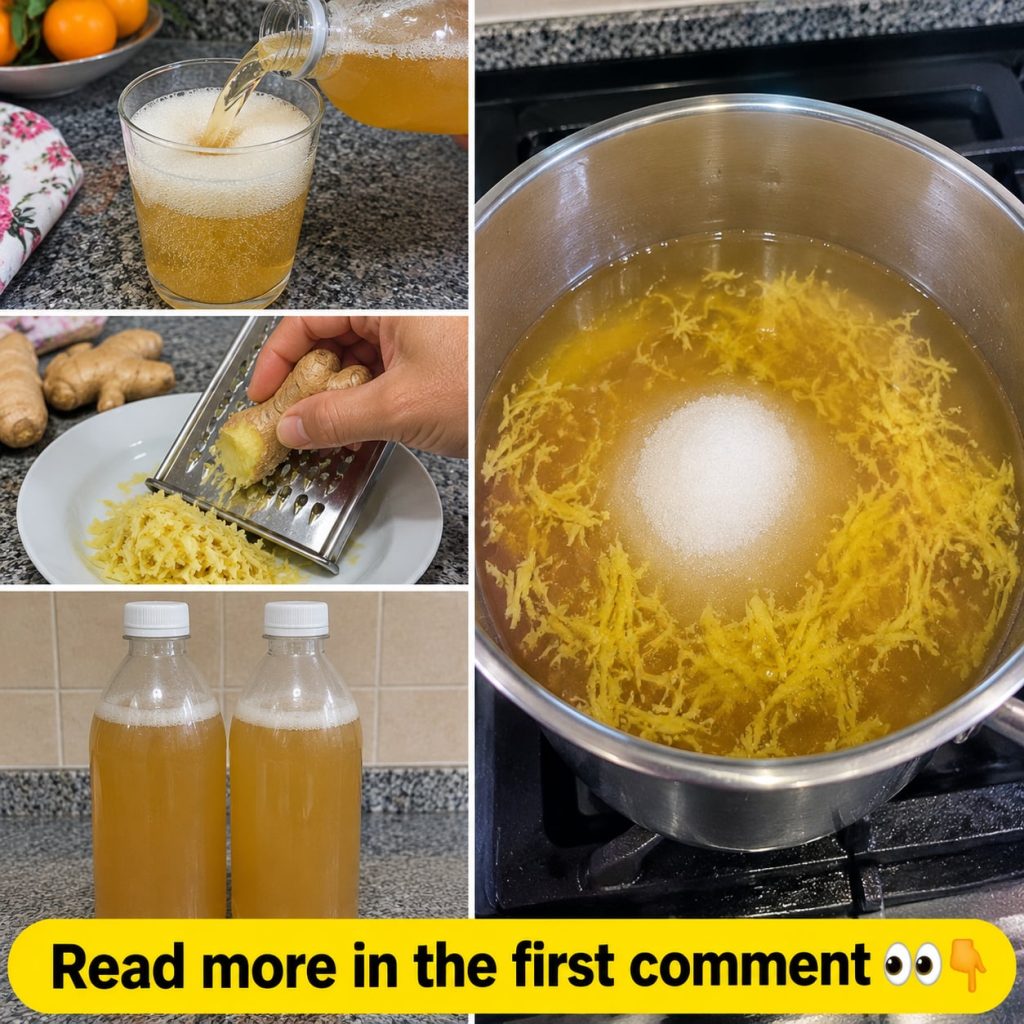
Ginger beer is a lightly sweet, spicy, carbonated drink made from fresh ginger, sugar, lemon juice and water. Traditional versions use a natural starter called a ginger bug, which brings wild yeasts and bacteria that produce gentle fizz over a few days. It is not the same as ginger ale, which is usually flavored syrup mixed with soda.
Ingredients
- 1 liter (about 4 cups) filtered water, divided
- 150 g (3/4 cup) white sugar, plus 2 tsp for the starter
- 50 g (about 2 oz) fresh ginger, peeled and grated for the starter
- 4 cm (1.5 inch) piece fresh ginger, thinly sliced for the brew
- Juice of 2 lemons (about 80 ml)
- Swing-top glass bottles with rubber seals
Formula and Starter Recipe
The ginger bug takes about 3 to 5 days to become active. Combine 2 tablespoons grated ginger, 2 teaspoons sugar and 60 ml water in a clean glass jar. Stir once or twice a day and add the same amount of ginger and sugar each day. When the mixture bubbles and smells tangy, it is ready to use.
Step-by-Step Method
- Bring 500 ml water to a simmer with the 150 g sugar, stirring until dissolved. Remove from heat.
- Add the sliced ginger and let it steep for 20 minutes.
- Pour in the remaining 500 ml cool water and lemon juice.
- Cool the liquid to room temperature. Hot liquid will kill the starter.
- Strain out the ginger, then stir in 60 to 120 ml of active ginger bug.
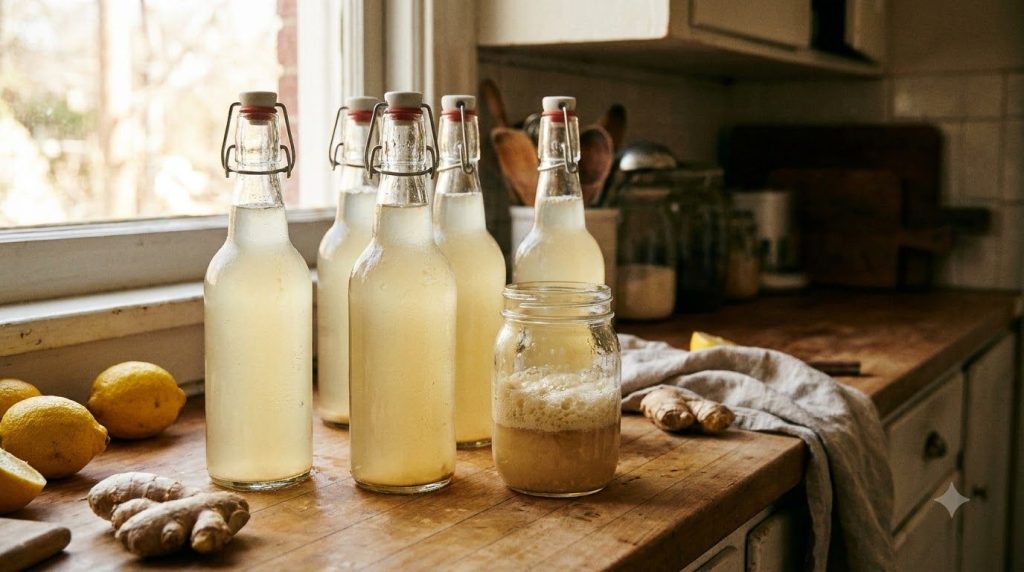
- Pour into clean swing-top bottles, leaving about 3 cm (1 inch) of headspace.
- Seal and leave at room temperature, away from direct sun, for 2 to 3 days.
- Refrigerate once it tastes lightly fizzy and pleasantly sharp.
Quick Tip: Open bottles over a sink or in a bowl. Pressure can build quickly in warm weather.
How to Use and How Often to Drink It
Serve chilled over ice with a squeeze of lime or a few mint leaves. A common approach is one glass a day as a refreshing non-alcoholic drink. Because it is naturally fermented, start with a small serving if your digestion is sensitive.
How to Choose Ingredients
Choose firm ginger with thin, smooth skin and no soft spots. Young ginger is juicier and milder. Use fresh lemons rather than bottled juice for a brighter flavor. Filtered or dechlorinated water helps the starter stay active.
Storage
Keep bottles at room temperature for 2 to 3 days, then move them to the refrigerator. Cold storage slows fermentation and keeps carbonation under control. Use within 2 weeks for the best flavor and fizz. Store the ginger bug in the fridge and feed it weekly if you are not brewing often.
Fresh vs Dried Ginger
| Option | Flavor | Best For | Notes |
|---|---|---|---|
| Fresh ginger | Bright, spicy, lively | Ginger bug and brew | Recommended for fizz |
| Dried ginger powder | Earthy, muted | Quick flavor boost | Does not support a starter well |
| Ginger syrup | Sweet, mild | Simple no-starter version | Adds less natural bite |
Practical Tips
- Use a clean jar and clean utensils to avoid unwanted mold.
- Keep bottles away from direct sunlight and heaters.
- Burp bottles once a day during fermentation if they feel very tight.
- Taste a small amount before refrigerating to judge sweetness and fizz.
Common Mistakes
- Adding hot liquid to the starter, which can kill the yeast.
- Sealing bottles too early before the brew is cool.
- Leaving bottles fermenting for too long, which can cause pressure build-up.
- Using moldy ginger or metal containers for the starter.
- Skipping the cooling step before bottling.
Cautions and Who Should Avoid It
Homemade ginger beer can become quite fizzy and strong in flavor. Avoid it if you are pregnant, have ulcers or reflux, or are sensitive to fermented foods, unless you have checked with a healthcare professional. Children and anyone with a history of digestive discomfort should start with very small servings. Always watch bottles closely to prevent bursting.
Quick Summary
- Best preparation: Ginger bug plus fresh ginger brew.
- Best use case: Refreshing chilled drink or mocktail base.
- Storage: Room temperature 2 to 3 days, then refrigerate for up to 2 weeks.
- When to use: Warm days, after meals, or as a lively non-alcoholic option.
- What to avoid: Hot liquid in the starter, overly tight bottles, and moldy ingredients.
FAQ
Can I use fresh or dried ginger?
Fresh ginger works best because it contains the natural compounds that support a lively starter. Dried powder is not recommended for the ginger bug.
How long does homemade ginger beer last?
Refrigerated bottles usually stay good for about 2 weeks. Taste and smell before drinking, and discard any bottle that smells off or looks moldy.
Can I refrigerate it right away?
You can, but it may stay slightly sweet and less fizzy. Most people let it ferment at room temperature for 2 to 3 days first.
Can I freeze ginger beer?
Freezing is not recommended because bottles can burst as the liquid expands. Store it in the refrigerator instead.
Can I reuse the ginger bug?
Yes. Keep the starter alive by feeding it daily or weekly with ginger and sugar. Strain it before adding it to a new batch.
How often should I drink it?
One small to medium glass a day is a reasonable starting point. Introduce it slowly and stop if you notice discomfort.
Read more: how to make a simple ginger bug starter
You may also like: fresh ginger tea recipes for everyday sipping
See the full guide: homemade fizzy drink basics for beginners
Conclusion
Homemade ginger beer is simple once you understand the starter, the cooling step and safe bottling. Start with a small batch, keep your bottles at room temperature for a few days, and refrigerate once the fizz feels right. With a little practice, you will have a zesty, bubbly drink ready whenever you need one.