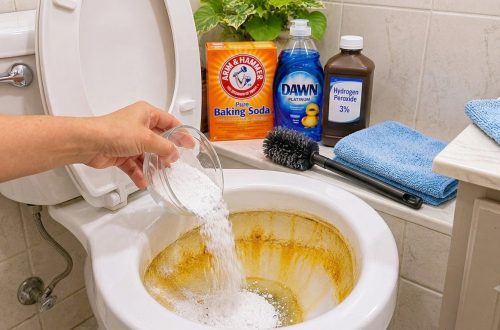
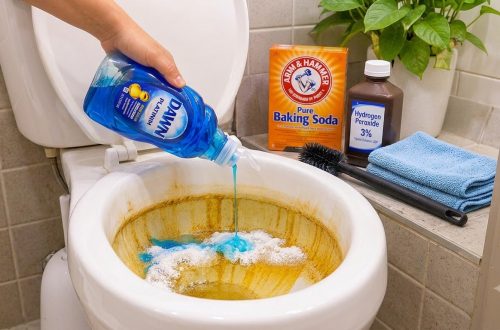
Stubborn stains and rings in the toilet bowl are one of those chores most people put off. Light mineral buildup and rust-colored streaks can make a clean bathroom look dingy, and scrubbing hard usually isn’t the answer. This simple combination of baking soda and 3% hydrogen peroxide is a practical, low-cost way to loosen everyday bowl stains before you do any scrubbing.
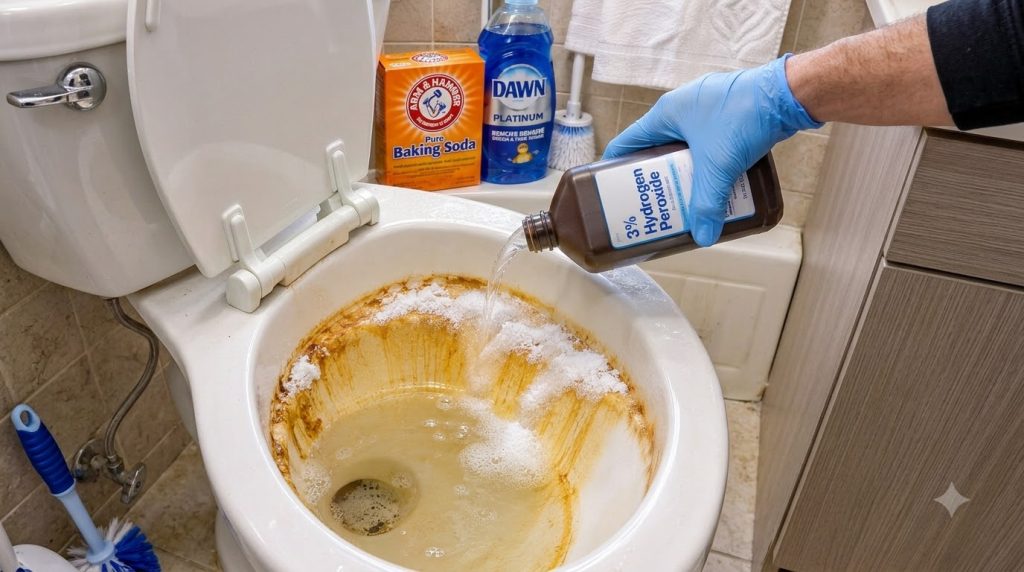
What You’ll Need
Cleaning ingredients
- Baking soda (plain, pure baking soda works best)
- 3% hydrogen peroxide (from a drugstore, in a brown or opaque bottle)
Tools
- Rubber cleaning gloves
- A toilet brush
- A small cup or bowl for mixing, if you prefer making a paste
- A clean dry towel
Why This Method Can Help
Baking soda is a mild alkaline powder that helps lift loose grime and surface buildup without the sharp fumes of many cleaners. Hydrogen peroxide is a gentle oxidizer that can help break down some staining and discoloration. Used together, they create a light bubbling action that helps loosen residue so the brush can do less work. This method works best on surface stains and light buildup, not on heavy, old deposits that have been sitting for months.
How to Make It
- Put on your gloves and make sure the toilet is not in use. Flush once to lower the water level slightly, then turn off the water supply if your toilet tank allows it.
- Sprinkle a generous layer of dry baking soda around the rim and directly onto the stained areas of the bowl.
- In a separate small cup, pour a small amount of 3% hydrogen peroxide. If you prefer a paste, mix a little baking soda with just enough peroxide to make a spreadable consistency.
- Keep the peroxide and baking soda in separate containers until you are ready to use them, so you can control how much fizzing happens.
How to Use It
- Slowly pour or drizzle the hydrogen peroxide over the baking soda on the rim and stained spots. You should see gentle fizzing and bubbling. Pour slowly so the mixture stays on the stains instead of running down the bowl.
- Let the mixture sit for about 15 to 30 minutes. Light stains may loosen sooner, while heavier rings may need more time.
- Scrub the bowl with your toilet brush, focusing on the waterline and the stained areas under the rim.
- Flush to rinse away the loosened residue. If stains remain, repeat the process once more before trying a different method.
- Wipe the seat and the outside of the bowl with a clean cloth and rinse your brush before storing it.
What to Expect
This method is best for light staining, surface discoloration and soft buildup. You may notice the bowl looking brighter after one application, but very old or set-in rust and hard mineral rings may take several rounds or may need a specialized stain remover. The fizzing is mild and mostly a sign that the ingredients are reacting on the surface, so don’t expect instant or perfect results every time.
Helpful Tips
- Clean the bowl regularly, even once a week, to prevent stains from building up in the first place.
- Apply the mixture at night and let it sit while you sleep for a more thorough treatment.
- Use a pumice stone designed for toilets only if stains remain, and always wet the surface first to avoid scratching the porcelain.
- If you have hard water, consider a separate descaling routine every few weeks, since mineral rings can be stubborn.
- Keep the cleaning area ventilated and avoid leaving the cleaner on the bowl for many hours.
Important Notes and Safety
- Never mix hydrogen peroxide with vinegar or any other cleaning product. Combining peroxide with vinegar can form peracetic acid, which can irritate the skin, eyes and lungs.
- Do not combine this method with bleach or ammonia-based cleaners. Mixing these chemicals can produce dangerous fumes.
- Wear gloves and eye protection if you are concerned about splashing, especially when pouring peroxide.
- Test on a small hidden area first if you are unsure how your toilet finish will react.
- Store hydrogen peroxide in its original opaque bottle, away from heat and direct sunlight, and keep it out of reach of children and pets.
- Rinse thoroughly after cleaning and avoid leaving residue sitting in the bowl.