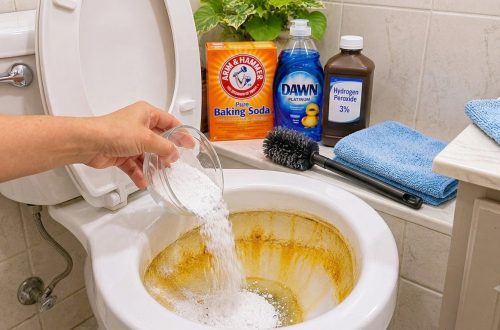
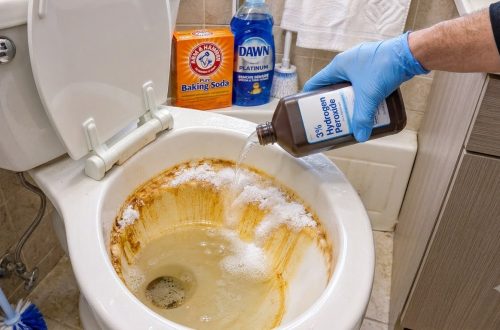
A stubborn ring or yellow-brown staining in the toilet bowl can make even a quick clean feel like a chore. Before you reach for strong commercial products, try this simple mix of baking soda, blue dish soap, and hydrogen peroxide. Together they create a gentle fizzing action that helps loosen buildup so you can scrub less and rinse more easily.
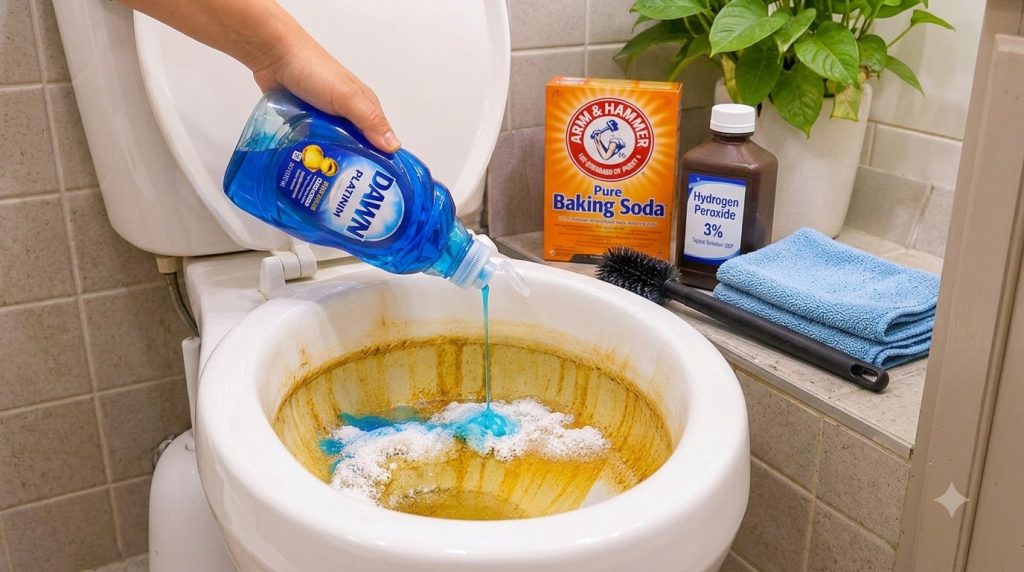
What You’ll Need
Cleaning Ingredients
- Baking soda, about 1/2 cup
- Blue dish soap, about 1 tablespoon
- Hydrogen peroxide (3% drugstore strength), about 1/2 cup
The original recipe does not list exact ratios, so treat these amounts as a practical starting point. You can adjust them slightly for a larger bowl or a heavier stain.
Tools
- Toilet brush with firm bristles
- Rubber gloves
- Small disposable cup for measuring
- Old cloth or paper towel for wiping the rim and seat
Why This Combination Can Be Useful
Baking soda is a mild abrasive that helps lift light residue from porcelain without the harshness of many heavy-duty cleaners. Dish soap cuts through grease and helps the mixture cling to the sides of the bowl instead of running straight down into the water. Hydrogen peroxide is a common disinfecting agent that can help loosen organic buildup and lighten some stains over time. The result is not an instant fix, but a method that works with gentle contact time and less scrubbing.
How to Make It
- Flush the toilet once, then use a cup to remove most of the standing water so the mixture can cling to the bowl surface.
- Sprinkle about 1/2 cup of baking soda evenly around the inside of the bowl, paying extra attention to the waterline and under the rim.
- Squeeze about 1 tablespoon of blue dish soap in a ring over the baking soda.
- Slowly pour about 1/2 cup of 3% hydrogen peroxide over the top. You should see a light fizzing as the ingredients react.
- Let the mixture sit undisturbed. Do not flush during this time.
How to Use It
Allow the treatment to sit for about 10 to 15 minutes. For heavier rings, you can let it work for up to 30 minutes. Then scrub the bowl with your toilet brush, focusing on the waterline where buildup usually collects. Flush to rinse away the loosened residue, and wipe the seat, rim, and exterior with a cloth as needed.
What to Expect
This method works best on light to moderate staining and everyday buildup. You should notice that the ring loosens more easily and that scrubbing takes less effort. Very old or deeply set stains may need a second application or a dedicated stain remover. Results vary depending on water hardness, how often you clean, and the condition of the porcelain.
Helpful Tips
- Clean the bowl regularly, even once a week, so buildup never has time to harden into a stubborn ring.
- Keep the mixture on the bowl surface rather than letting it wash away quickly. Lowering the water level first helps.
- Use a fresh bottle of hydrogen peroxide. Older bottles lose strength over time.
- Store hydrogen peroxide in its original dark bottle, away from heat and direct sunlight.
- Mix and apply the ingredients one at a time in the bowl rather than pre-mixing a large batch, since the fizzing action is best when freshly applied.
Important Notes and Safety
- Never mix hydrogen peroxide with vinegar or any acidic cleaner. Combining them can create peracetic acid, which is harmful to breathe and irritating to skin and eyes.
- Never combine this mixture with bleach or ammonia-based cleaners. Mixing these products can release dangerous fumes.
- Wear rubber gloves and keep the bathroom ventilated by opening a window or running the exhaust fan.
- Hydrogen peroxide can lighten colored surfaces. Test the treatment on a hidden spot of the bowl or on a small area of the seat before using it widely.
- Rinse the bowl thoroughly after cleaning, and wipe away any residue around the rim.
- Keep all cleaning products out of reach of children and pets.