Growing new houseplants for free is one of the most rewarding parts of gardening. With a few simple tools, a glass of water, and a little patience, you can turn a single healthy leaf or stem cutting into a brand-new plant. This guide walks you through how leaf and cutting propagation works, which houseplants are most likely to succeed, and how to avoid the common mistakes that cause cuttings to rot.
How Leaf and Cutting Propagation Works
Propagation means encouraging a part of a plant to grow roots and become a complete, independent plant. Some plants can regrow from a single leaf, while others need a stem section that includes a node, the small bump where a leaf or aerial root emerges. Nodes contain the cells that develop roots, so a cutting with a node often roots faster than a leaf alone.
It helps to know which method your plant prefers before you start. Leaf propagation works best for plants such as African violets, peperomia, and jade plants, which can produce new plantlets at the base of the leaf. Stem cuttings are more reliable for trailing plants like pothos and philodendron.
Plants That Are Good Candidates for Propagation
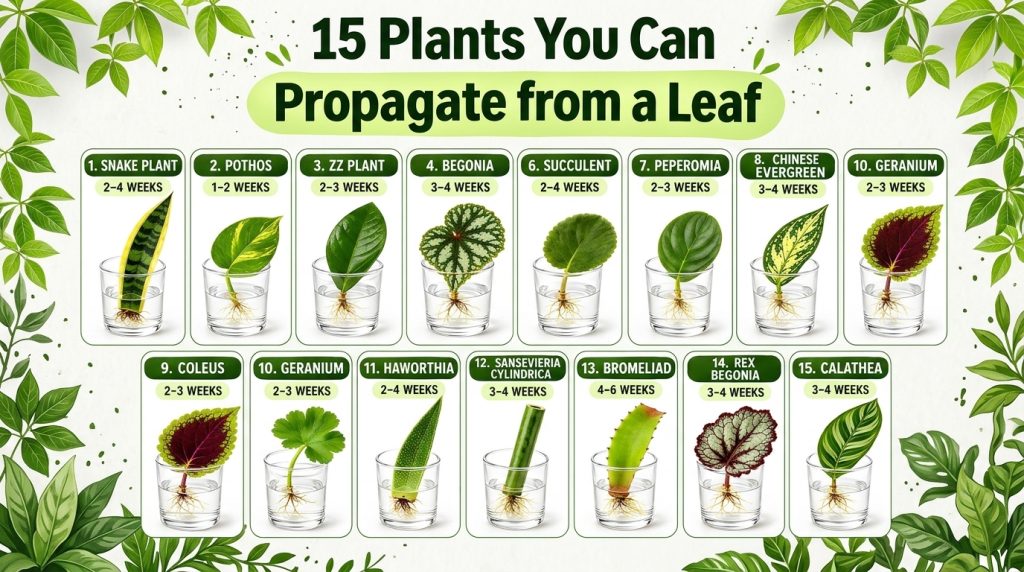
Many popular houseplants are forgiving enough for beginners. Here are some common options that gardeners often try first:
- Pothos: Stem cuttings with at least one node root easily in water, often within a few weeks.
- African violet: Healthy leaves with a short stalk can root in water or moist soil and produce new plantlets.
- Peperomia: Many varieties grow well from leaf or stem cuttings in a light, airy medium.
- Jade plant: Plump leaves can root in dry or lightly moist soil after they have callused over for a day or two.
- Snake plant: Leaf sections can root in soil or water, but the process is slow and takes patience.
Rooting times vary widely, from a few weeks to several months, depending on the plant, the season, and the amount of light it receives.
A Simple Step-by-Step Method
- Choose a healthy parent plant with firm, unblemished leaves and stems.
- Use clean, sharp scissors or a knife to take your cutting, ideally just below a node.
- Remove the lowest leaves so that no foliage sits below the waterline.
- Place the cutting in a clean glass of room-temperature water, positioned where it gets bright, indirect light.
- Change the water every few days to keep it fresh and reduce the risk of rot.
- Once roots are a few centimeters long, pot the new plant in a light, well-draining potting mix.
Tips for Better Results
Bright indirect light supports root growth, while harsh direct sun can scorch young cuttings. Keep the water clean, and avoid letting leaves sit in water, since this is a common cause of decay. Warm, stable room temperatures also help roots form steadily.
Be patient with slower plants. A snake plant or jade cutting may look unchanged for weeks before roots appear. Gentle, consistent care is usually more effective than frequent fussing.
Common Mistakes to Avoid
- Taking cuttings from weak, stressed, or diseased plants.
- Leaving foliage submerged in water, which encourages rot.
- Moving the cutting to soil too early, before roots are established.
- Expecting every leaf to produce a new plant, since not all species propagate this way.
Enjoy Growing Your Own Plant Family
Propagation is a practical way to expand your indoor garden, share plants with friends, and learn more about how your houseplants grow. Start with one or two easy species, keep notes on how long each takes to root, and build your skills from there. Save this guide for your next planting session, and enjoy watching your new green companions take shape.