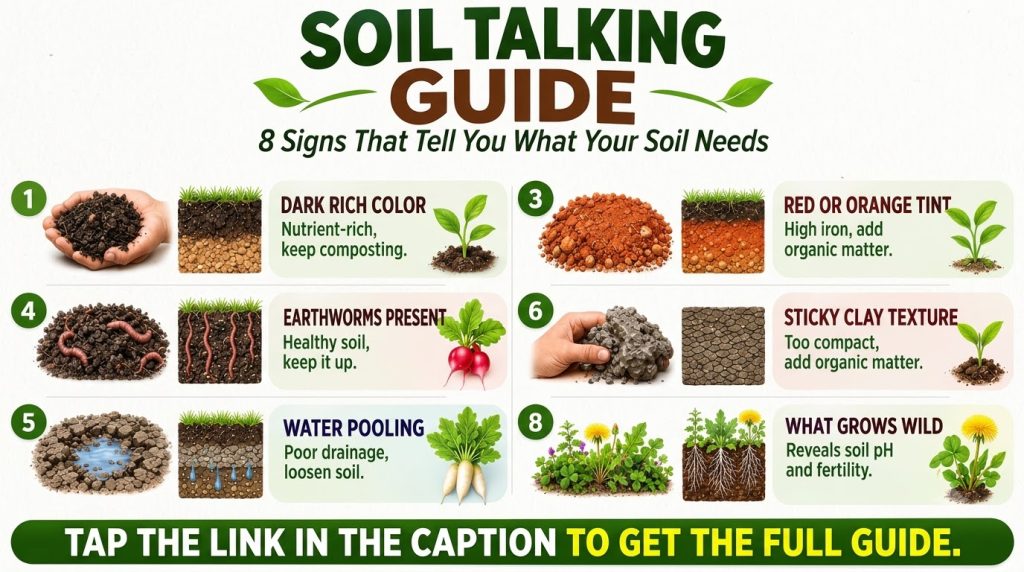
Every healthy garden starts below the surface. Soil is constantly sending signals about its moisture, nutrients, structure, and life, and once you learn to read them, planning your planting becomes much easier. This guide walks through eight practical signs that help you understand what your garden soil needs.
Why Soil Health Matters
Healthy soil supports strong roots, steady water movement, and a balanced community of microbes and insects. Many common plant problems, such as yellowing leaves, slow growth, or wilting in dry weather, can be traced back to soil conditions rather than the plant itself. Learning to observe your soil is one of the most useful habits any gardener can build.
The Eight Signs to Watch
- Crumbly texture: Soil that breaks apart easily in your hand usually has good structure and air pockets for roots.
- Earthy smell: A fresh, earthy scent after rain is a sign of active microbial life. A sour or rotten smell can point to poor drainage.
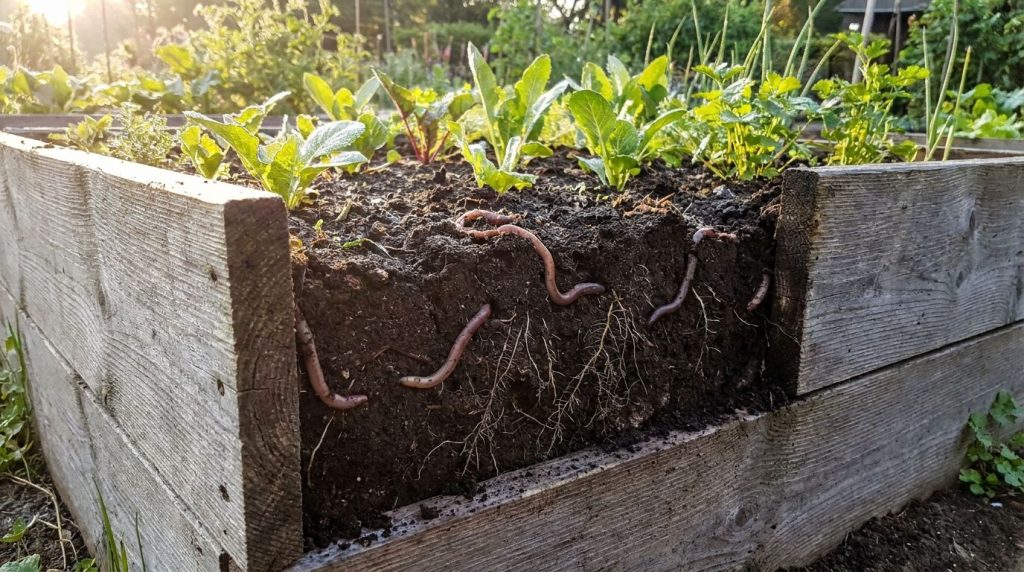
- Earthworms: Worms help mix organic matter into the soil and create channels for air and water. Finding several in a shovelful is a encouraging sign.
- Water drainage: Water should soak in within a reasonable time. If it puddles on the surface for long periods, the soil may be compacted or heavy with clay.
- Color: Darker soil often contains more organic matter, while very pale or grey soil may be low in nutrients or poorly drained.
- Plant growth: Stunted plants, pale leaves, or weak stems can signal a lack of nutrients or an imbalance in the soil.
- Root space: Roots that struggle to penetrate the soil suggest compaction. Loosening the soil gently can help roots spread.
- Surface cover: Bare, crusted ground dries out quickly and erodes easily. Mulch and living plant cover protect the soil and feed it over time.
Simple Ways to Improve Your Soil
You do not need expensive products to support your soil. Adding compost, rotating crops each season, and keeping the ground covered with mulch are gentle, organic methods that improve soil over time. Avoid walking on wet beds, since this compacts the soil and makes it harder for roots and worms to thrive.
Start Reading Your Soil Today
Begin with one simple test. Pick up a handful of moist soil, squeeze it, and see whether it holds its shape and then crumbles when you poke it. Compare what you observe with the signs above, and make small changes one at a time. Over a few seasons, you will notice your plants responding with stronger growth and more vibrant blooms or harvests.
If this guide helped you understand your garden a little better, save it for your next planting session and share it with a fellow gardener.