Transform Your Core: A Beginner-Friendly Belly Workout Plan
A stronger core is one of the most useful goals you can work toward. Your core is the group of muscles around your abdomen, lower back, hips, and pelvis, and it plays a big role in how you stand, sit, lift, and move every day. Research suggests that regular core training is associated with better posture and improved stability, which can make everyday activities feel easier and more comfortable.
This guide walks you through why core strength matters, how to build a simple routine, and how to stay consistent. It is written for general educational purposes and is not a substitute for medical advice. If you have back pain, a recent injury, or a health condition, speak with a qualified healthcare professional before starting a new exercise program.
Why Core Strength Matters
Many people think of the core as just the abs, but it includes several layers of muscle that work together. A well-conditioned core may help support:
- Better posture when sitting at a desk or standing for long periods
- Greater balance and stability during walking, climbing stairs, or sports
- Efficient movement when lifting objects from the floor
- Comfortable daily activities that rely on trunk control
It is important to remember that exercise alone does not target fat loss in one specific area of the body. A balanced routine combined with good nutrition, quality sleep, and regular movement offers the most well-rounded approach to overall wellness.
Six Beginner Exercises to Try
The exercises below are commonly included in core and lower-body routines. You can start with fewer repetitions and gradually increase as you feel stronger.
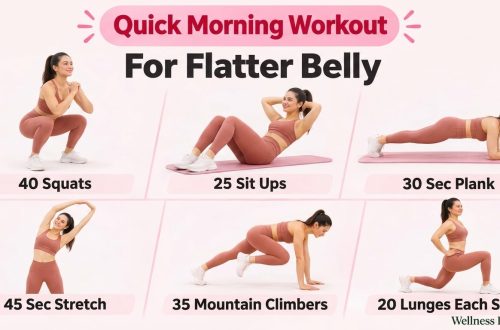
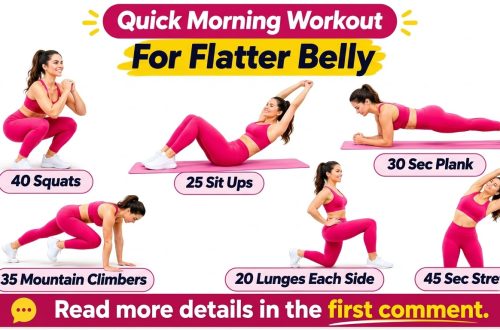
1. Crunches
Lie on your back with knees bent and feet flat. Gently lift your shoulders off the floor while keeping your neck relaxed. Lower with control. Focus on quality over speed.
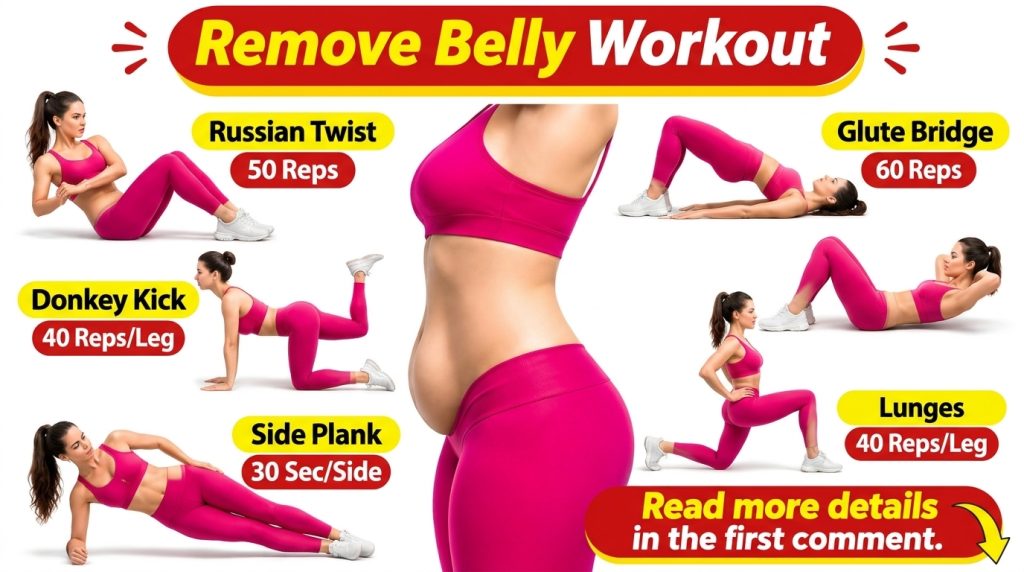
2. Russian Twist
Sit with knees bent and lean back slightly while keeping your back straight. Rotate your torso from side to side, engaging your obliques. Once you are comfortable, you can lift your feet slightly for an extra challenge.
3. Glute Bridge
Lie on your back with knees bent and feet flat on the floor. Lift your hips until your body forms a straight line from shoulders to knees, then lower slowly. This movement works the glutes and supports the lower back.
4. Donkey Kick
Start on your hands and knees. Lift one leg with the knee bent, keeping your core braced and your back neutral. Lower with control and repeat on the other side.
5. Side Plank
Lie on your side and prop yourself up on your forearm, lifting your hips so your body forms a straight line. Hold for a few seconds and rest. Try to build up gradually, and modify by bending your knees if needed.
6. Lunges
Step forward with one leg and lower your back knee toward the floor while keeping your front knee aligned over your ankle. Push back up to the starting position and switch sides. Lunges support leg strength, balance, and overall stability.
A Simple Beginner Weekly Routine
Consistency matters more than intensity when you are starting out. Research on physical activity generally supports spreading movement across the week. Here is one approach you can adapt:
- Choose three non-consecutive days per week for focused core training.
- Complete two to three rounds of the six exercises above, with about 8 to 12 controlled repetitions or a 15 to 30 second hold for each.
- Rest for 30 to 60 seconds between exercises and longer between rounds.
- Stop if you feel sharp pain, dizziness, or unusual discomfort.
- On other days, go for a gentle walk, stretch, or simply stay active.
Tips for Staying Consistent
Even a few minutes a day can add up over time. Consider these practical habits:
- Schedule workouts at the same time each day so they become part of your routine.
- Track your progress in a notebook or app to notice improvements in strength and endurance.
- Focus on proper form before adding more repetitions or holding positions longer.
- Pair your training with a balanced diet rich in vegetables, fruits, whole grains, and lean protein.
- Get enough rest, since muscles repair and adapt during recovery.
Final Thoughts
Building a stronger core is a gradual process that rewards patience and steady effort. By practicing these foundational movements with good form, you can support better posture, balance, and everyday movement. For more trustworthy information on physical activity, you may find the World Health Organization guidelines on physical activity at who.int helpful. Start small, stay consistent, and celebrate every step of your progress.