Feel empowered and build a stronger core with a focused routine designed to strengthen and tone your lower abdominal area. Whether you are back in the gym, training at home, or just starting your fitness journey, a well-structured core workout can improve your posture, support your everyday movements, and boost your confidence with every session.
Why Your Lower Core Matters
Your core is a group of muscles that wraps around your trunk, including the abdominals, obliques, and deep stabilizers along your lower back and pelvis. The lower abs work together with these muscles to keep your spine stable, support your pelvis, and help you move efficiently in everyday tasks and sports.
A stronger core can make lifting, running, cycling, and weight training feel more controlled. It can also help you hold better posture during long hours at a desk, which is a common concern for office workers and busy professionals.
What a Lower Belly Workout Can and Cannot Do
It is important to set realistic expectations. You cannot choose where your body burns fat, so no single exercise will melt fat from just your lower belly. What targeted core training can do is strengthen and tone the muscles underneath, which improves their shape and function over time. For visible changes, combine regular training with balanced nutrition, adequate sleep, and consistent movement throughout the week.
A Beginner-Friendly Lower Core Routine
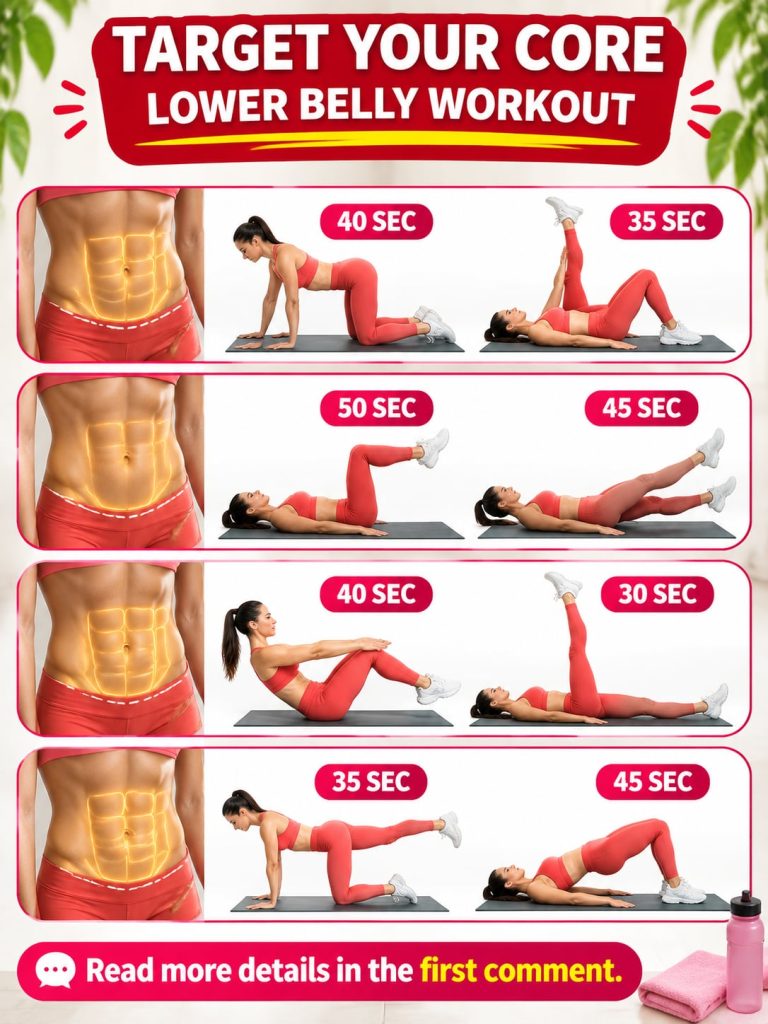
Aim to complete two to three rounds of the following exercises, two to three times per week. Rest for 30 to 60 seconds between exercises.
- Dead Bug: Lie on your back with arms reaching toward the ceiling and knees bent at 90 degrees. Slowly extend one arm and the opposite leg toward the floor while keeping your lower back gently pressed down. Return to the start and switch sides. Complete 8 to 10 reps per side.
- Reverse Crunch: Lie flat with hands by your sides and knees bent. Curl your hips off the floor by bringing your knees toward your chest, then lower with control. Complete 10 to 12 reps.
- Glute Bridge: Lie on your back with feet flat and knees bent. Squeeze your glutes and lift your hips until your body forms a straight line from shoulders to knees. Hold for two seconds, then lower slowly. Complete 12 to 15 reps.
- Bird Dog: Start on hands and knees. Extend one arm forward and the opposite leg back, keeping your hips level. Hold for three seconds, then switch sides. Complete 8 to 10 reps per side.
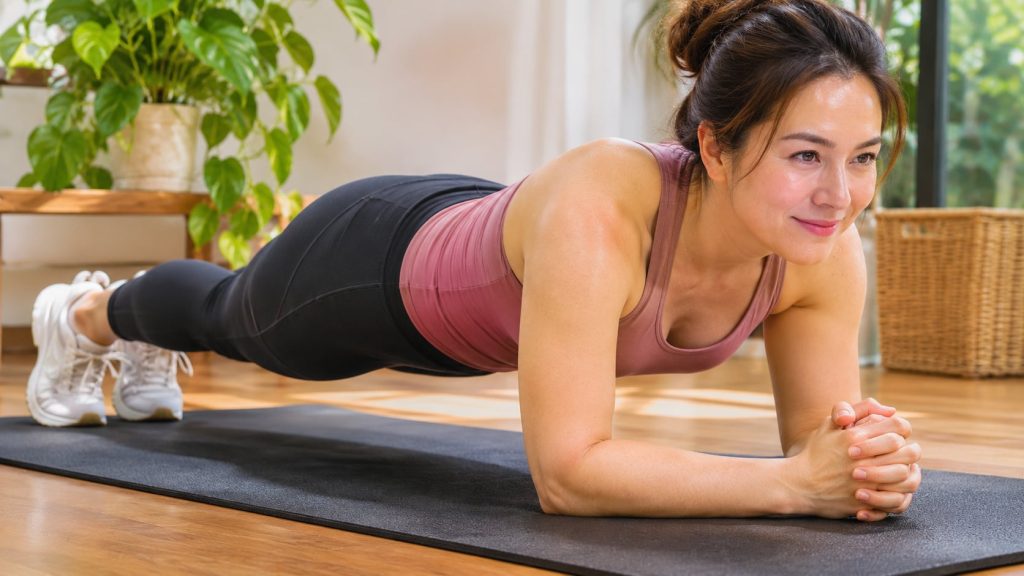
- Forearm Plank: Rest on your forearms and toes with your body in a straight line. Brace your abs and hold for 20 to 30 seconds. Build up gradually as your strength improves.
Tips for Better Form and Results
- Move slowly. Controlled reps build more strength than fast, swinging movements.
- Breathe steadily. Exhale as you contract your abs and inhale as you return to the start.
- Protect your lower back. If you feel strain, reduce your range of motion or choose an easier variation.
- Progress gradually. Add reps, hold times, or rounds only when the current version feels comfortable.
Support Your Core with Nutrition and Recovery
Muscles recover and grow stronger between workouts. Include a source of protein such as eggs, Greek yogurt, lean poultry, tofu, or legumes at each meal to support muscle repair. Add vegetables, fruits, and whole grains for fiber and energy, and drink enough water throughout the day. Prioritize quality sleep, since it plays a major role in recovery and motivation.
Consistency Is the Real Secret
Consistency matters more than intensity, especially when you are starting out. Three short sessions a week will do more for you than one exhausting workout followed by weeks of rest. Track your progress in a simple journal, noting the reps you complete and how you feel. Celebrate small wins, because every session brings you closer to a stronger, more confident version of yourself.
Safety Notes
If you have a back injury, pelvic floor concerns, recent surgery, pregnancy, or any medical condition, speak with a qualified healthcare provider or certified trainer before starting a new routine. Stop any exercise that causes sharp pain, dizziness, or discomfort.
Final Thoughts
A stronger core supports your body in everyday life, in the gym, and on the road. Start with the routine above, focus on clean form, and stay consistent. Your progress may be gradual, but with patience and smart habits, you will build a foundation of strength you can feel. You have got this!