Almost every gardener has heard it: sprinkle used coffee grounds around your tomatoes, crush a few eggshells into the planting hole, and watch your garden take off. The advice spreads quickly on social media because it sounds thrifty, eco-friendly, and easy. The problem is that many of these kitchen scrap tricks are more folklore than fertilizer. The good news is that both coffee grounds and eggshells can genuinely help your soil when you use them the right way. In this guide, you will learn what each scrap actually contributes, how to prepare it, where it fits into a sustainable garden, and which popular shortcuts are worth skipping.
Why Kitchen Scraps Get So Much Attention
Kitchen scraps feel like free treasure. Every morning you throw away grounds, every breakfast leaves shells behind, and the idea that these leftovers could replace store-bought fertilizer is appealing. Gardeners want healthier plants with less spending, and that hope makes simple claims very persuasive. Still, plants feed through their roots, and soil microbes must first break organic material down into forms roots can take up. That process takes time, moisture, warmth, and a balanced mix of materials. A single scrap sprinkled on the surface rarely acts like a quick dose of plant food.
Coffee Grounds: A Useful Ingredient, Not a Magic Fix
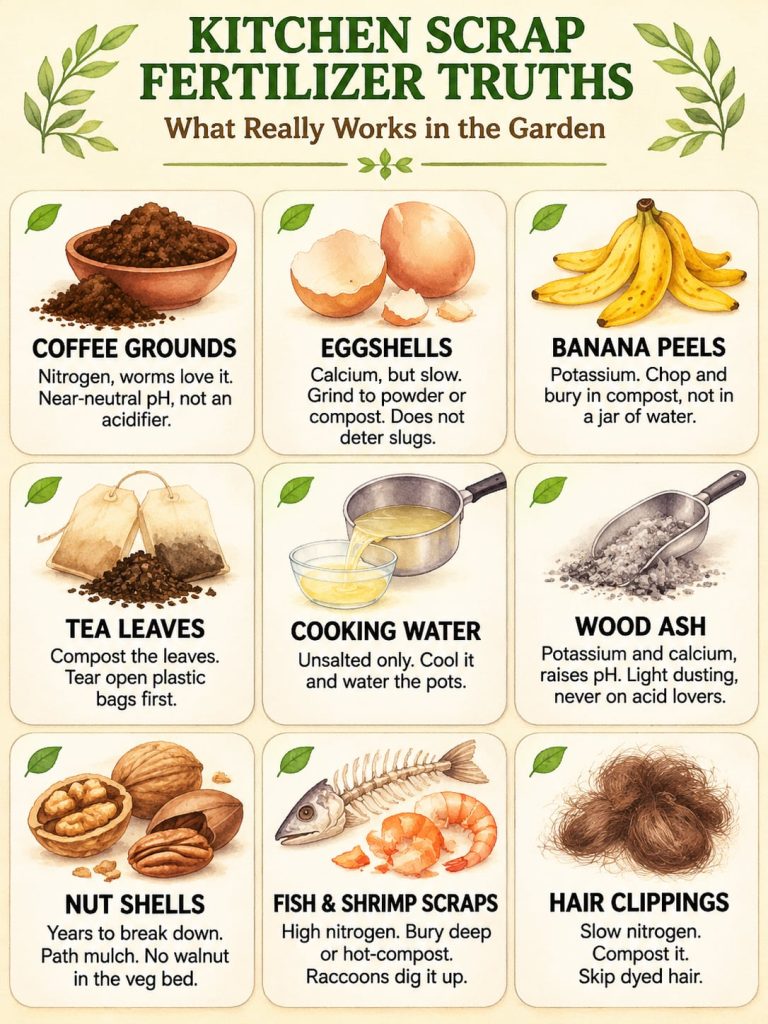
Used coffee grounds do contain some nitrogen, a nutrient that supports leafy growth, along with small amounts of other nutrients and organic matter. They can be a worthwhile addition to a compost pile. However, spent grounds are not strongly acidic once brewed. Their pH usually sits close to neutral, so they will not transform alkaline soil into a blueberry-friendly bed on their own. Acidity changes depend much more on your native soil, the amount of material you add, and the water you use.
What Coffee Grounds Actually Contribute
Grounds are fine-textured and break down relatively quickly when mixed with other materials. Their main value is as a compost ingredient that adds organic matter and some nitrogen. When you apply them directly as a thick layer, they can form a dense crust that sheds water, slows air movement into the soil, and encourages mold. Caffeine has also been studied for its effects on plants and soil organisms, but results vary, and it is not a reliable growth booster for home gardens.
How to Use Them Correctly
Add grounds to your compost pile in small amounts, ideally no more than about one part grounds to several parts of dry carbon-rich material such as shredded leaves, straw, or cardboard. If you apply grounds directly to the garden, spread a thin layer of no more than about a quarter inch, then mix it into the top two inches of soil. Keep the grounds away from the stems of seedlings, and water the area lightly so the grounds do not blow away. Avoid piling them against tree trunks or heavy mulch, where they can compact and hold excess moisture.
Eggshells: Slow Calcium, Not an Instant Cure
Eggshells are mostly calcium carbonate, which is a real source of calcium for the soil. The difficulty is speed. A large shell fragment can take many months to break down, and some pieces may remain visible for a long time. Tossing whole shells into a planting hole is unlikely to give a seedling a quick calcium boost. Whether your soil needs calcium at all depends on its current chemistry, and many garden soils already contain enough.
Understanding Blossom End Rot
Gardeners often add eggshells to prevent blossom end rot in tomatoes, peppers, and squash. This problem appears as a dark, leathery patch on the blossom end of the fruit. In most cases, it is caused by uneven watering that limits calcium movement within the plant, not by a simple lack of calcium in the soil. The most effective prevention is consistent moisture, a layer of mulch to stabilize soil temperature and moisture, and a soil test through your local extension service to see what your bed actually needs.
How to Prepare Eggshells
Rinse shells well to remove egg residue, which can attract pests and smell unpleasant. Dry them completely, then crush them into a fine powder with a mortar and pestle, a clean coffee grinder reserved for garden use, or a blender. The finer the particles, the faster they break down. Mix the powder into compost or work a light sprinkle into the top few inches of soil. Expect the effects to develop over a long season rather than within a few weeks.
Common Mistakes to Avoid
- Adding thick layers of coffee grounds, which can crust over and reduce water and air movement.
- Expecting whole eggshells to act as fast calcium for seedlings.
- Ignoring watering habits when treating blossom end rot.
- Adding scraps to the garden without a soil test, especially when the soil may already be rich in nutrients.
- Using unwashed shells or fresh food scraps that attract rodents, raccoons, and other pests.
- Mixing coffee grounds into a compost pile that is already wet and dense, which can slow decomposition and create odors.
Regional Differences Across the United States
Soil varies widely across the country, so the best use of kitchen scraps depends on where you garden. In the Southeast and Northeast, many soils tend to be naturally acidic, and lime is often needed to raise pH for vegetables and lawns. In parts of the arid West, soils are often alkaline and may already contain plenty of calcium, which makes eggshells less useful. Wet climates can cause grounds to mat and mold more quickly, while dry climates may make surface applications dry out and blow away. Your local cooperative extension service can help interpret soil tests and recommend amendments suited to your area and growing zone.
Your Next Steps
Start with a soil test so you know your pH and nutrient levels before adding anything new. Build a simple compost system where coffee grounds and crushed eggshells are mixed with leaves, straw, and kitchen vegetable scraps. Water consistently, mulch your beds, and watch your tomatoes and peppers for early signs of stress. When you apply scraps, do it thoughtfully: thin layers of grounds, finely powdered shells, and plenty of time for decomposition. Your garden will reward patience and good habits far more than any single shortcut, and you will be building healthier soil one season at a time.