Choosing the right cooking oil makes a real difference to how your food tastes, how it cooks, and how it fits into a balanced diet. Many home cooks reach for the same bottle every time, but the best oil for a stir-fry is not always the best oil for a salad dressing. The key factor is the smoke point, the temperature at which an oil begins to break down and produce smoke.
This guide walks through the oils shown in the cooking oil infographic, explains what their smoke points mean in the kitchen, and shows how to match each oil to your favorite recipes.
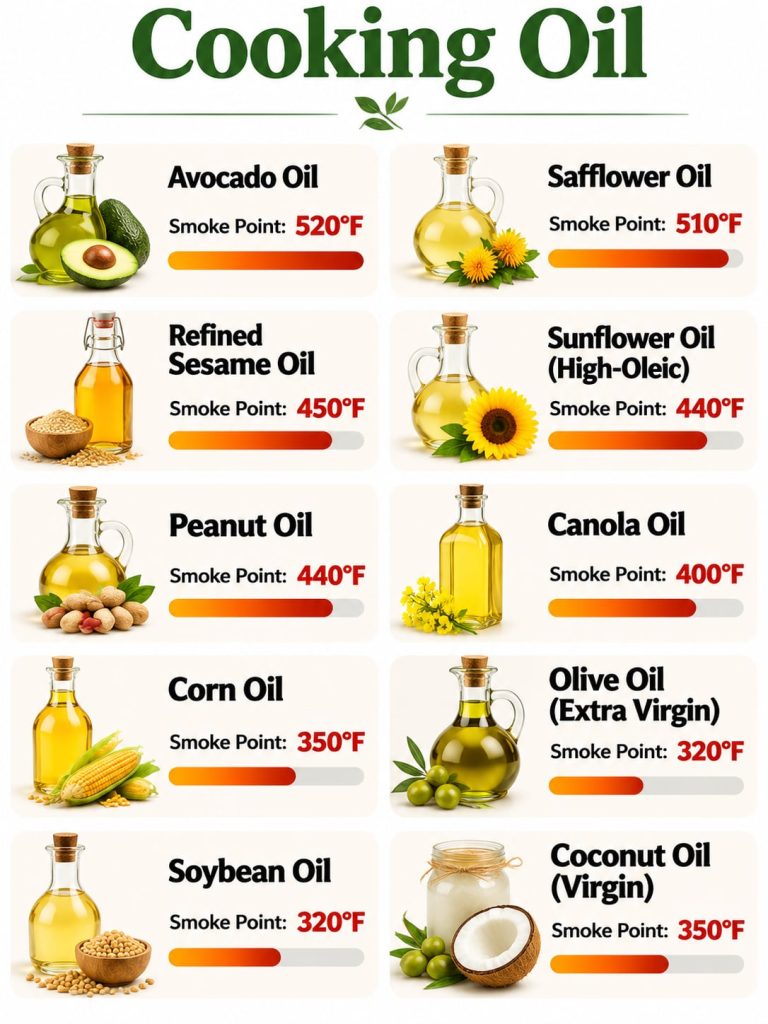 A quick visual guide to ten common cooking oils and their smoke points.
What Is a Smoke Point and Why Does It Matter?
The smoke point is the temperature at which an oil starts to visibly smoke when heated. Past this point, the oil begins to degrade, which can produce a bitter taste, an unpleasant smell, and compounds that you generally want to avoid. Choosing an oil with a smoke point above your cooking temperature helps keep your food tasting clean.
As a rough guide, high-heat methods such as searing, deep frying, and high-temperature stir-frying call for oils with higher smoke points. Gentler methods such as sautéing at moderate heat, baking, and dressing salads work well with oils that have lower smoke points.
High-Heat Oils for Searing and Stir-Frying
Some oils can handle intense heat, which makes them useful for dishes that need a hot pan.
- Refined avocado oil is one of the highest smoke point oils on the chart, which makes it a versatile choice for searing meat and roasting vegetables at high temperatures.
- Refined sesame oil has a relatively high smoke point compared with its unrefined counterpart. It is a practical option for stir-fries, though the unrefined version is better kept for finishing dishes because its flavor is much stronger.
- Sunflower oil (high-oleic) is more heat stable than many standard sunflower oils, so it suits frying and high-heat sautéing.
When you cook at high temperatures, keep the pan at a steady heat and avoid letting the oil sit and smoke. If you see smoke, lower the heat and let the pan cool slightly before adding food.
Medium-Heat Oils for Everyday Cooking
Many everyday recipes fall into the medium-heat range, including sautéed vegetables, pan-cooked chicken, and scrambled eggs. Oils in this group balance flavor with reasonable heat tolerance.
Refined olive oil and light-flavored plant oils are common choices here. They give you room to cook at a comfortable heat without the sharp flavor that some unrefined oils bring.
Extra Virgin Olive Oil: Best for Flavor and Low-Heat Cooking
Extra virgin olive oil is one of the most popular oils in healthy kitchens, and it earns its place for flavor. Its smoke point is lower than that of refined oils, so it is best used for sautéing at moderate heat, roasting at lower temperatures, drizzling over finished dishes, and making dressings. Using it for these tasks lets its fruity, peppery notes shine.
If you want to use extra virgin olive oil for a higher-heat task, keep the temperature moderate and watch the pan closely.
Quick Tips for Choosing the Right Oil
- Check the smoke point before you heat the pan, especially for frying and searing.
- Use refined oils for high-heat cooking and unrefined oils for flavor.
- Store oils in a cool, dark place to slow down oxidation, and keep the lids tightly closed.
- Smell an oil before using it. A rancid or stale odor means it should be replaced.
- Use a small amount of oil in the pan rather than a large pool, so it heats evenly.
Matching Oils to Your Favorite Recipes
- Stir-fries and searing: choose a high smoke point refined oil such as avocado or refined sesame oil.
- Sautéing vegetables: use a refined olive oil or a high-oleic sunflower oil.
- Salads and dressings: extra virgin olive oil is the best choice for its flavor.
- Finishing dishes: drizzle a small amount of unrefined oil, such as toasted sesame oil or extra virgin olive oil, over the food just before serving.
Frequently Asked Questions
Is it safe to cook with oil past its smoke point?
It is best to avoid it. Oil past its smoke point can taste bitter and may produce compounds you would rather not eat. Lowering the heat is the simplest fix.
Is extra virgin olive oil good for frying?
It can work for light pan cooking at moderate heat, but for deep frying or very hot searing, a refined oil with a higher smoke point is usually the better choice.
Does the smoke point tell me how healthy an oil is?
Not directly. The smoke point describes heat tolerance, while nutritional value depends on the oil’s fat profile and how much you use. Oils are energy-dense, so measure them and use them as part of a balanced diet.
Final Thoughts
The right cooking oil depends on the recipe, the temperature, and the flavor you want. Keep a high smoke point oil for searing and stir-frying, a medium-heat oil for everyday sautéing, and a flavorful extra virgin olive oil for dressings and finishing. Once you understand smoke points, choosing the best oil for your cooking becomes much easier.
Which oil is your go-to in the kitchen? Share your favorite in the comments and tell us which recipe it works best for.
Medical disclaimer: This article is for general information only and does not replace advice from a qualified healthcare professional or registered dietitian. If you have specific dietary needs or health conditions, please consult a professional before making changes to your diet.