Few shrubs earn a spot in as many landscapes as oleander. Drive along a highway median in Texas, walk past a hotel courtyard in Florida, or look over a backyard hedge in California, and you will likely spot its glossy, leathery leaves and clusters of showy flowers. It handles heat, drought, poor soil, and salty air with little complaint, which makes it a favorite of landscapers and busy homeowners alike.
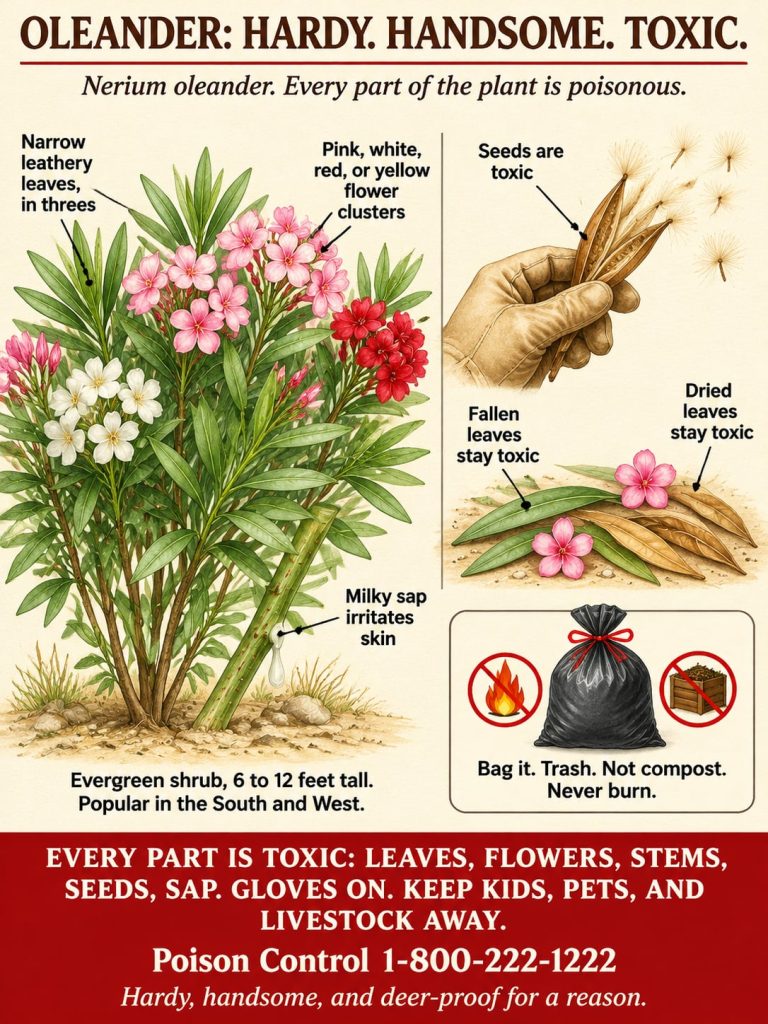
That toughness comes with a serious caveat. Oleander, Nerium oleander, is highly toxic. Every part of the plant contains compounds that can affect the heart, so it deserves the same respect you would give a medicine cabinet. This guide covers how to grow it well, where it belongs in your yard, and how to keep pets and family safe. Read on for practical steps you can use this week.
Why Oleander Thrives Where Other Shrubs Struggle
Oleander is native to the Mediterranean region and parts of Asia, where it is adapted to hot, dry summers. Its thick leaves reduce water loss, and its root system tolerates lean, fast-draining soil. In the United States it is typically grown as an outdoor landscape shrub in USDA hardiness zones 8 through 11, where it can stay evergreen year-round. Keep in mind that USDA zones measure winter cold tolerance only. Summer heat, humidity, rainfall, and local microclimates matter too. A sheltered courtyard in zone 8 can behave very differently from an exposed hillside in the same zone.
Oleander at a Glance
- Plant type: Evergreen flowering shrub in the dogbane family (Apocynaceae)
- Exposure: Full sun, ideally six or more hours of direct light daily
- Height: Typically 6 to 12 feet, sometimes taller in mild climates
- Spread: Usually 6 to 10 feet, with dwarf cultivars staying much smaller
- Bloom: Late spring through fall in warm climates, in white, pink, red, salmon, or yellow forms depending on the cultivar
Site Selection and Planting
Choose a spot with full sun and soil that drains freely. Dig a hole about twice the width of the root ball and no deeper than the root ball’s height. Set the plant so the top of the root ball sits level with or slightly above the surrounding soil. Water deeply at planting and keep the root zone evenly moist for the first few weeks while new roots establish. For a dense privacy hedge, space plants 4 to 6 feet apart. For a single specimen with room to grow, allow 8 feet or more.
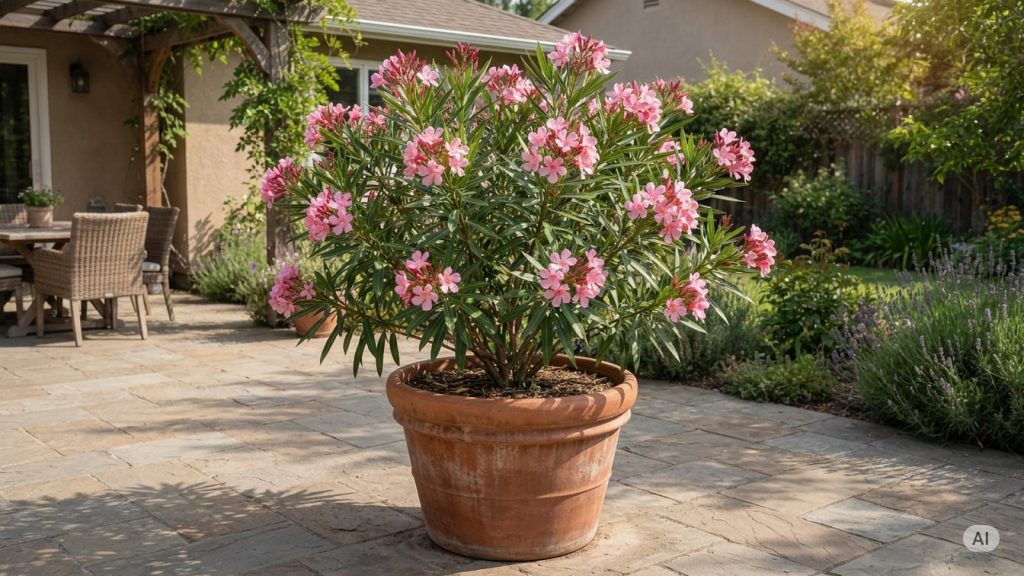
For containers, choose a pot at least 18 to 24 inches wide with several drainage holes. Use a gritty potting mix that holds some moisture but drains quickly. Avoid pots that are too small, because roots that stay crowded slow growth and reduce flowering.
Watering and Feeding
Established plants in the ground need deep watering only during extended dry spells. Check the soil 4 to 6 inches down before watering. If it is dry at that depth, water slowly until moisture reaches the root zone. Containers dry out much faster, so check them every few days in summer and water when the top two inches of mix feel dry. Soggy roots invite rot, which often shows up as yellowing, wilting leaves even when the soil is wet. Feed lightly in spring with a balanced slow-release fertilizer. Avoid heavy nitrogen, because it pushes leafy growth at the expense of flowers.
Pruning and Shaping
Prune after a major flush of flowers finishes, which usually means late summer in warm regions. Remove dead, crossing, or weak stems, and shorten overly long shoots to shape the plant. Remove no more than about one-third of the canopy in a single session. Avoid heavy pruning in late fall, since tender new growth can be damaged by an early frost. Always wear long sleeves and gloves, because the sap can irritate sensitive skin. Bag all cuttings and debris and keep them away from children and animals.
Handling Oleander Safely
Oleander contains cardiac glycosides that can disrupt normal heart rhythm. The toxins are present in the leaves, flowers, stems, roots, sap, and seeds, and they remain dangerous even when the plant material is dried. Smoke from burning prunings can also be harmful, and water in which cut stems have been placed can carry toxins. Never use oleander branches as skewers or roast food over its wood.
- Wear gloves when pruning, and wash hands and tools afterward.
- Keep plants out of reach of dogs, cats, horses, goats, and grazing livestock.
- Do not plant it near play areas, pet runs, or edible gardens.
- Do not burn prunings, compost them where animals can reach, or use the stems as garden stakes.
If a pet or person chews or swallows any part of the plant, contact a veterinarian, your local emergency number, or Poison Help at 1-800-222-1222 right away. Do not wait for symptoms to appear. In pets, warning signs can include drooling, vomiting, diarrhea, weakness, tremors, and an irregular heartbeat.
Pests, Deer, and Common Problems
Oleander is fairly pest-tolerant, but aphids, scale, and oleander caterpillars can appear. Check the undersides of leaves and new shoots weekly. Knock aphids off with a strong jet of water first, and use insecticidal soap for heavier infestations. Scale looks like small brown bumps on stems. Scrape them off, or treat with horticultural oil when temperatures are cool. Deer generally avoid oleander, which is one reason it appears so often in deer-prone areas. However, no plant is fully deer-proof when animals are hungry or food is scarce. Yellow leaves on a plant with firm stems often point to overwatering, while leaf drop after a cold snap usually reflects cold stress.
Propagating Oleander Safely
Stem cuttings are the most reliable propagation method. In late spring or summer, take 6 to 8 inch semi-hardwood cuttings from healthy, non-flowering growth. Remove the lower leaves, dip the cut end in rooting hormone if you have it, and insert the cutting into moist, well-drained mix. Keep it in bright, indirect light and maintain humidity with a clear bag or propagation dome. Under warm conditions, roots often form within several weeks, though timing varies with temperature and cultivar. After a month, gently tug the cutting. Resistance suggests roots are forming. Rooting in water also works, but move the cutting to soil once roots are a few inches long to reduce rot risk. Wear gloves throughout the process.
Regional Guidance Across the United States
In zones 9 through 11, including much of Florida, southern California, and South Texas, oleander can be a long-term landscape feature. In zone 8, such as parts of Texas, Georgia, and the Gulf Coast, it may freeze back during severe winters but often regrows from the base in spring. In zones below 8, grow it in a container and move it into a bright, cool indoor location before temperatures drop toward the mid-30s Fahrenheit. Some cultivars are sold as dwarf forms or with improved cold tolerance, so read plant labels carefully. Your local extension office can advise on freeze risk, recommended cultivars, and any local planting restrictions.
Common Mistakes to Avoid
- Planting too close to a play area, a pet run, or a vegetable bed.
- Assuming drought tolerance means no water during the first year.
- Tossing prunings where children or animals can reach them.
- Overfeeding with nitrogen, which reduces flowering.
- Leaving container plants sitting in saucers of standing water.
Final Thoughts
Oleander offers reliable color, tough performance, and low maintenance when you site it wisely. Choose a sunny, well-drained spot away from pets and children, wear gloves whenever you handle the plant, and keep an emergency number handy. With those steps, you can enjoy its blooms with confidence. Start this week by walking your property and marking the sunniest area that is safely away from play spaces. Then plan your planting from there.