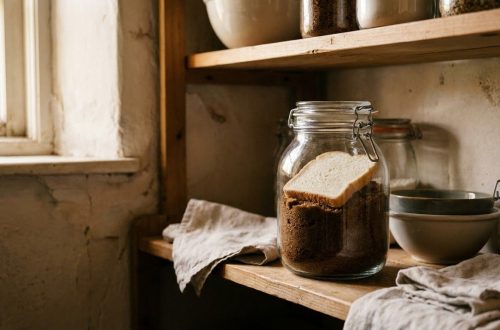
Hard, dry bread is one of the most common kitchen frustrations, and it is also one of the easiest to fix. Before you toss that half loaf, try a simple revival method that can bring back a crisp crust and a softer centre in just a few minutes. Reducing food waste is a practical habit that supports both your grocery budget and your everyday healthy eating goals.
Why Bread Turns Hard
Bread goes stale mainly because its starch molecules recrystallise as the loaf cools and ages. Moisture also moves out of the crumb and into the air, so the crust dries out and the inside becomes firm. This process happens faster in the refrigerator than at room temperature, which is why storing bread in the fridge is often a mistake for everyday loaves.
The Quick Tap-and-Bake Method
This method works well for crusty loaves, baguettes, rolls, and many rustic breads. It rehydrates the outside of the bread and then uses dry heat to crisp it again.
- Preheat your oven to 180°C (350°F).
- Run the whole loaf or the individual pieces under cold tap water for a few seconds. Do not soak them, because too much water can make the crumb gummy.
- Place the bread directly on the oven rack or on a baking sheet lined with parchment paper.
- Bake for about 8 minutes, checking near the end to avoid over-browning.
- Let the bread rest for a minute or two before slicing so the inside can settle.
The result is typically a crisp outside with a softer inside, especially when the bread is eaten within the next hour or two.
Tips for Different Types of Bread
Crusty Loaves and Baguettes
These respond best to the tap-and-bake method. You can also wrap the loaf loosely in foil for the first few minutes if you prefer a softer crust.
Sandwich Bread and Soft Rolls
Soft breads usually do not need water. Wrap them in a damp paper towel and warm them in the microwave for about 10 to 15 seconds, or toast them lightly for a quick snack.
Flatbreads and Pitas
Sprinkle a little water on the surface, then warm them in a dry pan or a hot oven for a short time until they become pliable again.
Ways to Use Bread That Is Past Its Best
If the bread is too far gone for a fresh-texture meal, there are still many practical options that keep it out of the bin.
- Make breadcrumbs by blitzing dry bread in a food processor and freezing them for later use.
- Use slices for French toast, bread pudding, or a savoury strata with vegetables and eggs.
- Toast cubes in the oven with a little olive oil and herbs to make homemade croutons for salads and soups.
- Add torn pieces to a vegetable soup or a tomato-based dish to thicken it naturally.
When Not to Revive Bread
Revival methods improve texture, but they cannot make spoiled bread safe to eat. If you notice visible mould, a sour or unusual smell, or a damp and slimy texture, discard the bread. Mould can spread through the loaf even when only one spot looks affected.
Storage Tips to Keep Bread Fresher for Longer
- Keep bread at room temperature in a paper bag or bread box for the first few days.
- Freeze bread you will not eat within two or three days, slicing it first so you can take out only what you need.
- Thaw slices at room temperature or toast them directly from frozen.
- Store crusty loaves cut side down on a board to slow moisture loss.
The Bottom Line
Stale bread does not have to go to waste. A quick splash of water and a short bake can restore much of its appeal, and creative uses can turn leftovers into satisfying meals. Save this guide for the next time your loaf turns hard, and enjoy the satisfaction of a simple kitchen fix that also supports a more sustainable routine.
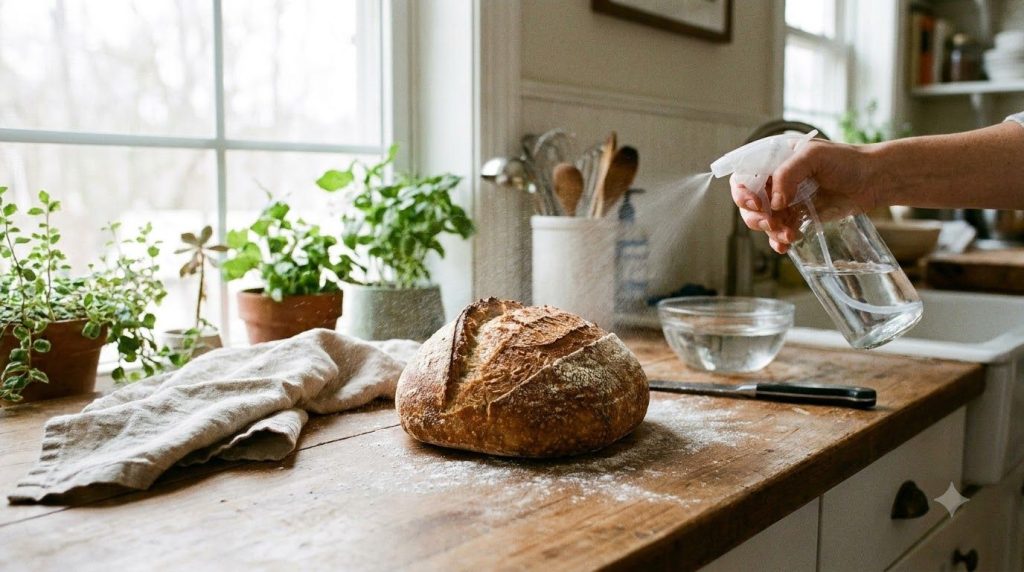 A crusty loaf ready to be refreshed in the oven.