Few kitchen moments are more frustrating than cutting into an avocado only to find hard, bitter flesh or a dark, stringy center. The good news is that you can check ripeness with a few simple tests before you slice. This guide walks you through the quickest methods, plus some storage tips to help your avocados last longer.
The Quick Stem Test
The fastest check takes only a few seconds. Gently flick off the small stem cap on top of the avocado. If the skin underneath is bright green, the fruit is ready to eat. If it is brown, the avocado is likely overripe, and if the stem does not come off at all, the fruit probably needs a few more days.
This method works well for many common varieties, but it is not perfect on its own. Use it alongside the other checks below for the most reliable result.
Other Signs of a Ripe Avocado
- Gentle give: Hold the avocado in your palm and press lightly with your thumb. A ripe fruit yields slightly, like a ripe peach, without feeling mushy.
- Skin color: Color depends on the variety. Hass avocados turn dark green to nearly black when ready, while Fuerte and other varieties stay green even when ripe, so rely on firmness more than color.
- Avoid soft spots: Deep dents, large dark patches, or a sour smell can signal overripe or damaged fruit.
What to Do If the Avocado Is Not Ready
If your avocado feels rock hard, leave it on the counter at room temperature. Most avocados soften within a few days. To speed things up, place it in a paper bag with a banana or an apple, since these fruits release ethylene gas that encourages ripening.
How to Store a Ripe Avocado
Once an avocado is perfectly ripe, you can slow it down by moving it to the refrigerator. This usually buys you a few more days of good texture. Cut avocado keeps better when you brush the exposed flesh with lemon or lime juice and press plastic wrap directly against the surface. Leaving the pit in the half can also help limit browning, though the effect is modest.
Why Avocados Are Worth the Effort
Avocados provide monounsaturated fats, fiber, potassium, and vitamin K, which makes them a satisfying addition to salads, sandwiches, eggs, and grain bowls. Including them in place of less nourishing spreads is an easy, practical swap for many everyday meals.
Quick Takeaways
- Flick off the stem cap. Bright green underneath means the avocado is ready.
- Press gently near the stem end. Slight give indicates ripeness.
- Ripen firm fruit at room temperature, using a paper bag with a banana to speed things up.
- Refrigerate ripe avocados and protect cut halves with citrus juice and plastic wrap.
Save this guide for your next grocery trip, and try the stem test the next time you are unsure. With a little practice, choosing the perfect avocado becomes second nature.
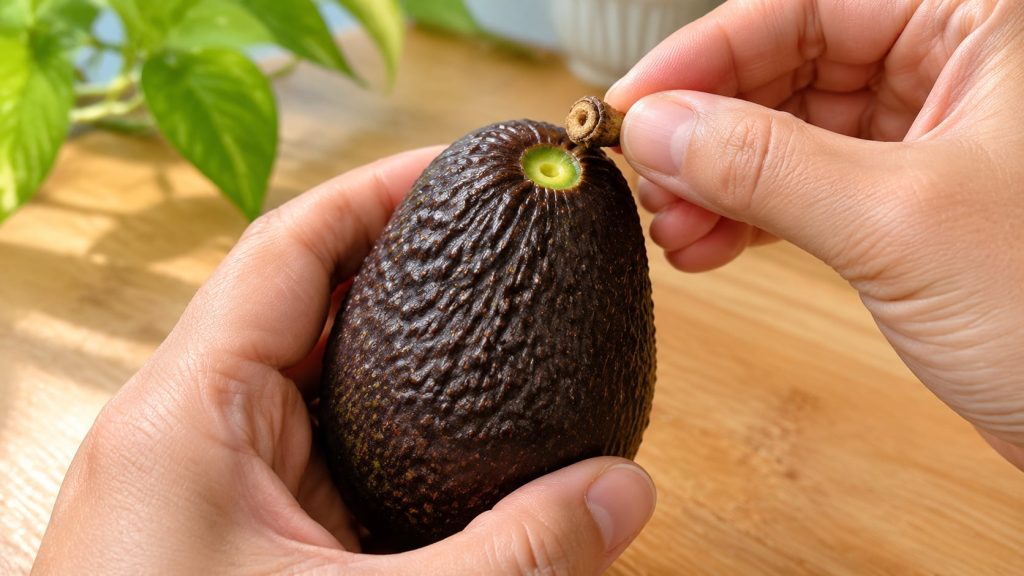 The stem test reveals ripeness in seconds.