25 Vegetables You Can Pickle at Home
Quick refrigerator pickles are one of the easiest ways to preserve fresh produce without any canning equipment. A short soak in a simple vinegar brine turns crisp vegetables into tangy, crunchy snacks that keep well in the fridge. Whether you have extra vegetables from the garden or a few leftovers in the crisper drawer, this guide gives you plenty of options.
Why You’ll Love Quick Refrigerator Pickles
- Minimal equipment: you only need a clean jar, a saucepan, and a refrigerator.
- Flexible: most firm vegetables work well with the same basic brine.
- Fast: many vegetables taste pickled within a few hours, and most improve after a day.
- Easy to customize with garlic, dill, peppercorns, mustard seed, or chile.
Basic Quick Pickling Brine
Most quick pickles start with the same simple brine. Use it as a starting point and adjust the flavor to your taste.
- 1 cup (240 ml) white vinegar or rice vinegar
- 1 cup (240 ml) water
- 1 tablespoon (about 15 g) kosher salt, or about half that amount of fine table salt
- 1 to 2 teaspoons (about 5 to 10 g) sugar, optional
- Spices of your choice, such as smashed garlic, fresh dill, black peppercorns, mustard seed, or red pepper flakes
Combine the vinegar, water, salt, and sugar in a small saucepan. Heat over medium heat, stirring, until the salt and sugar dissolve, which usually takes a few minutes. Do not let it boil hard for a long time. Let the brine cool for 5 to 10 minutes before pouring it over the vegetables.
25 Vegetables You Can Pickle at Home
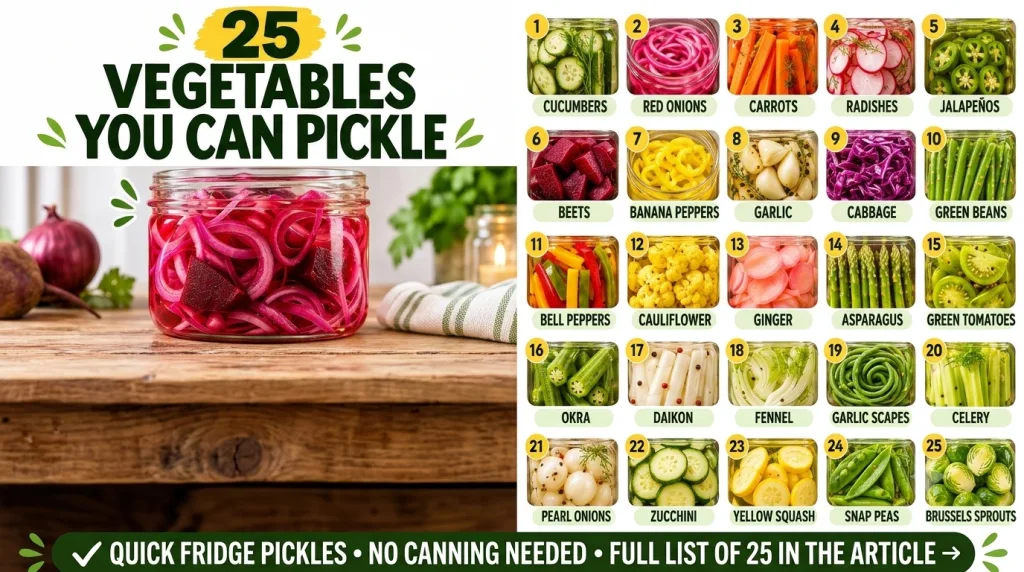
Nearly any firm, fresh vegetable can be quick pickled. Thin pieces pickle faster, while thicker pieces stay crunchier. Here are 25 vegetables to try.
Crunchy Favorites
- Cucumbers, sliced into spears or coins
- Carrots, cut into sticks or coins
- Radishes, thinly sliced
- Green beans, trimmed
- Asparagus, trimmed to fit your jar
- Cauliflower florets
- Snap peas, trimmed
- Celery, cut into sticks
- Fennel, thinly sliced
- Zucchini, cut into sticks or coins
- Bell peppers, cut into strips
- Jalapenos, sliced into rings
Onions and Alliums
- Red onions, thinly sliced
- Pearl onions, peeled
- Garlic cloves, peeled
- Shallots, halved or sliced
- Scallions, trimmed
Roots, Greens, and Others
- Beets, thinly sliced or cut into small cubes
- Red cabbage, cut into thin shreds
- Turnips, cut into sticks or thin slices
- Daikon radish, cut into sticks
- Okra, trimmed
- Green tomatoes, sliced
- Kohlrabi, cut into sticks
- Brussels sprouts, halved
How to Make Quick Refrigerator Pickles
- Wash the vegetables well and dry them. Trim the ends and peel any tough skin.
- Cut the vegetables into even pieces so they pickle at the same rate. Spears, coins, and thin slices work best for beginners.
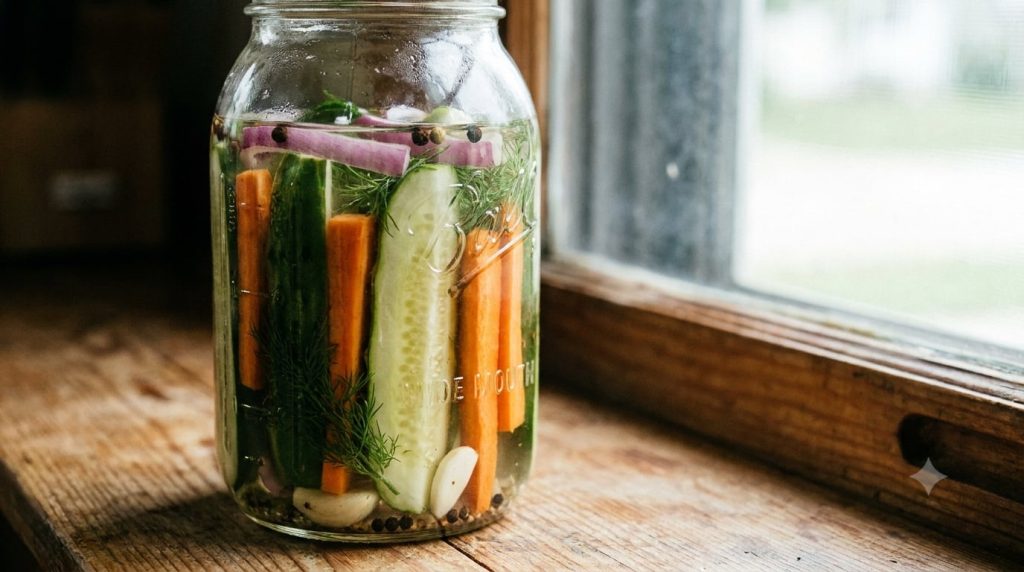
- Pack the vegetables into a clean glass jar. Add garlic, dill, peppercorns, or other spices as you go.
- Make the brine as described above, then let it cool for 5 to 10 minutes.
- Pour the brine over the vegetables until they are fully covered. Tap the jar gently on the counter to release air bubbles.
- Let the jar cool to room temperature, close the lid tightly, and refrigerate it. Many quick pickles are good after a few hours and taste best after about 24 hours. Denser vegetables such as beets, carrots, and turnips may need a day or more to reach the flavor you want.
Common Mistakes to Avoid
- Vegetables floating above the brine: keep everything submerged so the exposed pieces do not spoil. Add a small weight or extra brine if needed.
- Cutting pieces too thick: thick pieces take much longer to pickle. Slice them thinner for faster results.
- Overcooking the vegetables: pour the brine over raw vegetables rather than simmering them in the jar.
- Leaving the jar out: quick refrigerator pickles are not shelf-stable, so keep them in the fridge at all times.
- Using a dirty jar or utensils: wash the jar and use clean tongs or a clean fork to remove pickles.
Variations and Substitutions
- Sweet pickles: increase the sugar to taste and add a pinch of celery seed.
- Spicy pickles: add sliced chiles or red pepper flakes to the jar.
- Asian-style pickles: use rice vinegar, a little sugar, and slices of fresh ginger.
- Herb blends: try dill, thyme, bay leaves, or a few sprigs of fresh oregano.
- Mixed jars: combine two or three vegetables that have similar cutting sizes for a colorful jar.
Serving Suggestions
Quick pickles add crunch and brightness to many meals. Try them on sandwiches, burgers, and tacos, or add them to salads and grain bowls. They also pair well with cheese, cured meats, and rice dishes. Pickled red onions are a classic topping for beans, eggs, and grilled meats.
Storage and Reheating
Quick pickles do not need reheating. Keep the jar tightly closed in the refrigerator at all times. Use clean utensils each time you take a pickle out. Most quick refrigerator pickles are best enjoyed within about one month, and their texture softens gradually over time. Discard the jar if you notice mold, a foul smell, or a slimy texture. Pickles do not freeze well because freezing makes the vegetables mushy.
Frequently Asked Questions
Can I use iodized table salt?
You can, but use kosher salt when possible. Iodized salt can sometimes cause the brine to look cloudy, and it is also saltier by volume, so use less.
How long do quick pickles take?
Thin vegetables often taste pickled within a few hours, while thicker vegetables may need a day or more. Taste a piece after a few hours and let it rest longer if you want a stronger flavor.
Do I need to sterilize the jar?
For quick refrigerator pickles, a clean, thoroughly washed glass jar is sufficient. Sterilizing is more important for shelf-stable canning, which this method does not cover.
Can I reuse the brine?
It is best to make fresh brine for each batch. Reusing brine can introduce bacteria and affect the texture and flavor.
Why did my pickles turn soft?
Soft pickles are usually caused by slices that are too thin for the vegetable, a warm brine poured over raw produce for too long, or a jar stored too long. Use firm, fresh vegetables and keep them chilled.
What is your favorite vegetable to pickle at home? Tell us in the comments below.