Six Delicious Sauerkraut Recipes to Try
Sauerkraut is one of the easiest ways to start fermenting at home. All you need is cabbage and salt, but a few simple add-ins can change the flavor completely. Below are six combinations to try, from classic caraway to bright carrot and ginger.
The Basic Sauerkraut Method
Every recipe below starts with the same base. Use about 900 g (2 lb) of green cabbage, which is roughly one medium head, and about 18 g of fine sea salt. That is about 2 percent of the cabbage weight, a common starting point for sauerkraut.
- Remove the tough outer leaves and cut the cabbage into quarters. Remove the core and shred the cabbage thinly.
- Place the shredded cabbage in a large bowl and sprinkle the salt over it.
- Massage the cabbage with your hands for 5 to 10 minutes, until it softens and releases liquid that pools in the bowl.
- Add your chosen flavor ingredients and mix well.
- Pack the mixture firmly into a clean quart-size (about 1 L) glass jar. Press down until the brine rises over the cabbage.
- Keep the cabbage submerged under its brine. Cover loosely with a lid that allows gas to escape or use a fermentation weight.
- Ferment at cool room temperature, away from direct sunlight. Start tasting around day 7. Many batches are ready in about 1 to 4 weeks, depending on how warm your kitchen is and how sour you like it.
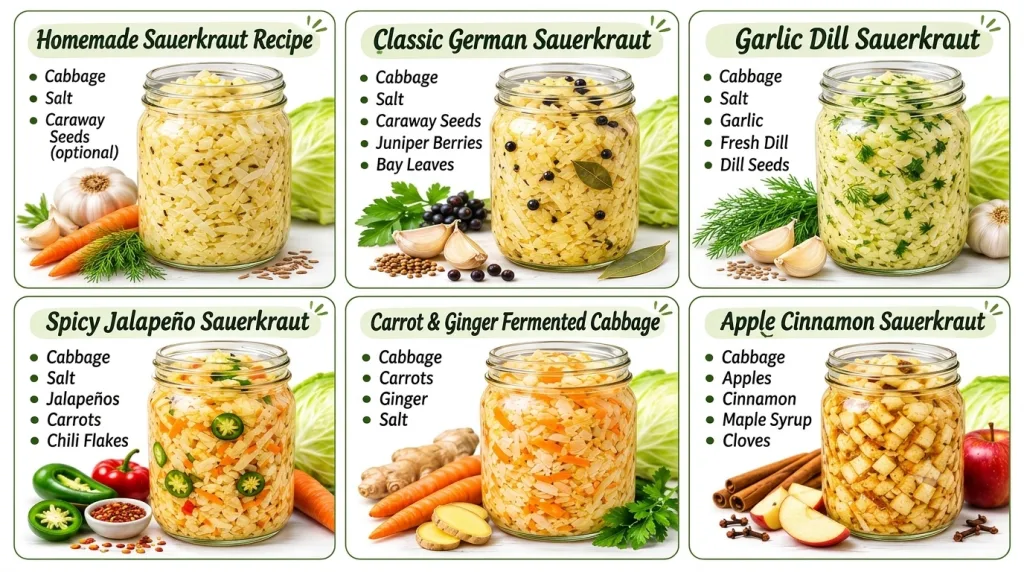
Six Sauerkraut Flavor Combinations
1. Classic Caraway Sauerkraut
This is the most traditional version, with a warm, earthy note that pairs well with pork and sausage.
- Base cabbage and salt (see method above)
- 1 tsp (about 3 g) caraway seeds
2. Carrot and Ginger Sauerkraut
Carrots add natural sweetness and color, while fresh ginger brings a bright, slightly spicy finish.
- Base cabbage and salt
- 2 medium carrots, grated (about 150 g)
- 1 tbsp (about 6 g) finely grated fresh ginger
3. Apple and Onion Sauerkraut
Grated apple softens the sourness of the ferment, and thinly sliced onion adds a mild savory flavor.
- Base cabbage and salt
- 1 small apple, grated (about 100 g)
- 1/2 small onion, thinly sliced
4. Dill and Garlic Sauerkraut
This version tastes like a fresh, herby pickle and works well on sandwiches and grain bowls.
- Base cabbage and salt
- 2 tbsp (about 8 g) chopped fresh dill
- 3 garlic cloves, thinly sliced
5. Beet and Horseradish Sauerkraut
Beets turn the cabbage a deep magenta, and horseradish adds a sharp kick. Use it in small amounts if you are new to horseradish.
- Base cabbage and salt
- 1 small beet, grated (about 100 g)
- 1 tbsp (about 15 g) freshly grated horseradish root
6. Chili and Black Pepper Sauerkraut
For a little heat, add sliced chili and whole peppercorns. Adjust the amount of chili to suit your tolerance.
- Base cabbage and salt
- 1 red chili, thinly sliced
- 1 tsp (about 3 g) black peppercorns, lightly crushed
Pro Tips for Better Sauerkraut
- Weigh your cabbage and salt if you can. Consistent salt levels help the ferment stay safe and balanced.
- Keep all vegetables fully submerged. Pieces that stick out above the brine are more likely to spoil.
- Use a clean jar and clean hands. Clean tools help the desired bacteria take over.
- Choose firm, heavy cabbage heads with tight leaves for the crispest texture.
- Taste your sauerkraut before you decide it is finished. Stop fermenting when the flavor is pleasantly sour to you.
Common Mistakes to Avoid
The most common issue is cabbage that floats above the brine. Press it down daily or use a weight. Another frequent problem is using too much or too little salt, so measure carefully. If you see fuzzy mold on the surface, remove it and check that the cabbage is still submerged. Mold that appears on the cabbage itself or a foul smell are signs to discard the batch.
Storage
Once the sauerkraut tastes right, move the jar to the refrigerator to slow fermentation. Keep it sealed and submerged. Refrigerated sauerkraut is typically best within a few months, though flavor and texture will gradually change over time.
Frequently Asked Questions
Can I use red cabbage?
Yes. Red cabbage makes a colorful sauerkraut with a slightly crisper texture. Use the same salt ratio.
Why is my sauerkraut not sour yet?
Fermentation is slower in cool kitchens. Give it more time and taste it every few days until it reaches the sourness you like.
Do I need a special starter?
No. Cabbage naturally carries the bacteria needed for sauerkraut when it is salted and kept submerged.
Which flavor combination would you try first?