Tomatoes are one of the most rewarding crops to grow at home, but they also tend to do better with good neighbors. Companion planting means placing plants side by side so they may support each other by attracting helpful insects, offering some pest deterrence, or simply making efficient use of garden space. Here are some of the best companion plants for tomatoes and how to use them in your own garden.
Why Companion Planting Matters for Tomatoes
Tomatoes are heavy feeders and often grow tall and dense, so they need healthy soil, good airflow, and thoughtful placement. Many gardeners choose companion plants to add variety to the bed, encourage pollinators, and create a more balanced ecosystem. While companion planting is not a substitute for good watering, sunlight, and soil care, it can be a helpful part of a well-planned vegetable garden.
Basil: A Classic Tomato Partner
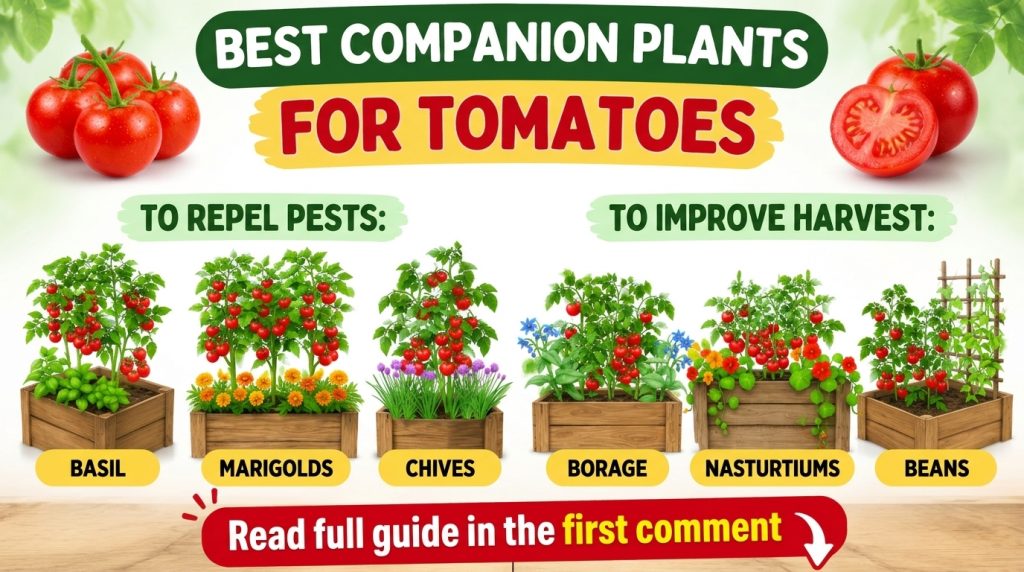
Basil is probably the most famous tomato companion. Many home cooks love growing the two together because the herb is easy to harvest for fresh sauces, salads, and sandwiches. Gardeners often plant basil around the base of tomato plants to make efficient use of space and keep fresh leaves within reach. Pinch basil regularly to encourage bushy growth.
Marigolds for Color and Pest Interest
Marigolds bring bright color to the vegetable patch and are widely grown near tomatoes. Their blooms attract beneficial insects, and many gardeners plant them along borders to add cheerful flowers to a practical garden. Choose compact varieties if you have limited space.
Chives for Light, Tidy Growth
Chives are a low-maintenance herb that grows in small clusters and takes up little room. They pair nicely with tomatoes and add a mild onion flavor to your kitchen. Their purple flowers also attract pollinators, which can be useful when tomatoes are in bloom.
Borage for Pollinators
Borage produces star-shaped blue flowers that bees love. Gardeners often plant it near tomatoes to encourage pollinator visits during the growing season. Because borage can grow quite large, give it enough room so it does not crowd your tomato plants.
Nasturtiums as a Trap Crop
Nasturtiums are cheerful, edible flowers with peppery leaves. Many gardeners plant them near vegetables to draw certain pests away from their main crops. Nasturtiums also add color and can be used in salads, which makes them a fun addition to a tomato bed.
Beans Near Tomatoes
Bush beans are a popular choice for mixed vegetable beds. Beans add nutrients to the soil through their root partnerships with beneficial bacteria, which supports a healthy growing environment. Keep beans spaced so they receive enough sunlight and airflow.
Tips for Planting Tomato Companions
- Plan your layout before planting so each companion has enough room to grow.
- Water consistently, since tomatoes and companions often have similar moisture needs.
- Rotate crops each season to help reduce soil-borne problems.
- Watch plants closely and adjust placement if one species crowds another.
- Combine companion planting with mulching and healthy compost for the best results.
Final Thoughts
Choosing the right companions can make your tomato garden more productive, colorful, and enjoyable. Start with one or two easy partners like basil or marigolds, observe how your plants respond, and expand your layout over time. Which companion plant are you planning to try first in your garden?