Mulch is one of the simplest tools a vegetable gardener can use. A good layer can keep soil moist, hold back weeds, and protect roots from temperature swings. Choosing the right material, however, depends on what you are growing, your climate, and how much time you want to spend maintaining your beds. This guide walks through the most common mulch options and explains when each one works best.
Why Mulch Matters for Vegetable Gardens
Vegetables grow best in soil that stays evenly moist and warm enough during the growing season. Mulch helps in several ways:
- It slows moisture loss, so you water less often.
- It suppresses weeds that compete with your crops for nutrients.
- It moderates soil temperature, keeping roots cooler in summer and warmer in early spring.
- As organic materials break down, they gradually add nutrients and improve soil structure.
Mulch also keeps soft fruits like strawberries and tomatoes off damp soil, which can reduce rot and splashed soil diseases.
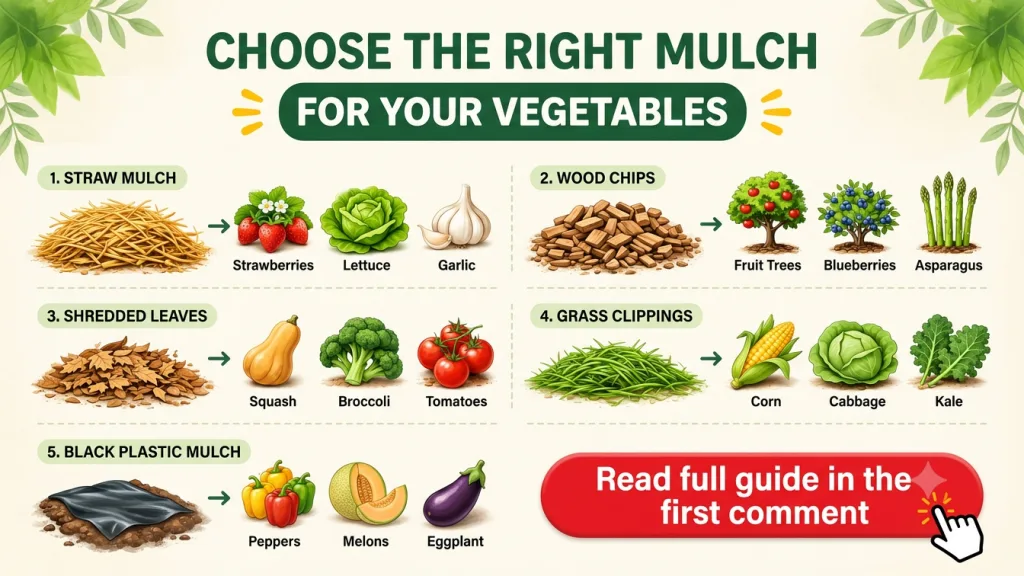
Straw Mulch
Straw is a favorite for tomatoes, squash, cucumbers, and potatoes. It is lightweight, breathable, and easy to spread around plants. Use clean straw rather than hay, since hay often contains weed seeds. Apply a layer about 5 to 8 centimeters deep once the soil has warmed up, and keep it a little away from plant stems.
Wood Chips
Wood chips work well in pathways and around perennial vegetables such as asparagus or rhubarb. They last a long time and break down slowly. Because they can tie up some nitrogen in the topsoil as they decompose, it is a good idea to mix them into the soil or use them mainly on paths rather than directly on fast-growing annual beds.
Shredded Leaves
Shredded leaves are free, abundant in autumn, and excellent for building soil over time. They suit leafy greens, root vegetables, and beds that will be planted again the next season. Shredding helps leaves stay in place and break down faster, so they do not mat together and block water.
Grass Clippings
Grass clippings add nitrogen and break down quickly, which makes them useful for vegetable beds that need a nutrient boost. Use only a thin layer, roughly 2 to 3 centimeters, and let clippings dry first. Thick, wet piles can smell and form a dense mat. Make sure the grass has not been treated with herbicides, as these can harm sensitive crops.
Black Plastic Mulch
Black plastic is widely used by growers who want to warm the soil early and control weeds with minimal effort. It is especially helpful for melons, peppers, and eggplant in cooler climates. Its main drawback is that it does not add organic matter to the soil and can overheat beds in very hot weather. Many gardeners choose biodegradable or reusable options when they want a more sustainable approach.
How to Choose the Right Mulch
Think about your priorities. If you want to build soil and save money, shredded leaves and grass clippings are great choices. If you want long-lasting paths, wood chips are practical. For fast weed control and warmer soil in spring, black plastic may be the best fit. For most home vegetable beds, straw offers a balanced mix of convenience and benefits.
Tips for Applying Mulch Successfully
- Weed the bed and water the soil thoroughly before mulching.
- Spread mulch evenly, leaving a small gap around plant stems to prevent rot.
- Refresh organic mulch as it breaks down, usually once or twice a season.
- Check moisture under the mulch occasionally to make sure water is reaching the roots.
Final Thoughts
There is no single best mulch for every vegetable garden. The right choice depends on your crops, your soil, and your local climate. Start with one bed, observe how your plants respond, and adjust over time. With a little experimentation, mulching becomes one of the easiest ways to grow healthier vegetables and enjoy a more productive garden.