Master the Art of Pickling at Home: Four Easy Homemade Pickle Recipes
Homemade pickles are one of the most rewarding weekend kitchen projects. With a few cucumbers, a jar of vinegar brine, and a handful of spices, you can make crisp, tangy pickles that taste far better than most store-bought jars. This guide walks you through four popular styles: sweet and tangy bread and butter pickles, classic dill pickles, spicy jalapeno pickles, and garlic dill pickles.
Each recipe below makes about one quart (about 950 ml) of refrigerator pickles. Save this guide so you can come back to it on your next pickling day.
Why You’ll Love These Homemade Pickle Recipes
- Simple ingredients: Most of what you need is probably already in your pantry, including vinegar, salt, sugar, and common spices.
- No special equipment: A saucepan, a few clean glass jars, and a sharp knife are enough for all four recipes.
- Flexible flavors: You can make everything from mild and sweet to hot and garlicky, so there is a style for every household.
- Great for gifts and snacks: Jars of homemade pickles make thoughtful gifts and an easy addition to sandwiches, burgers, and snack boards.
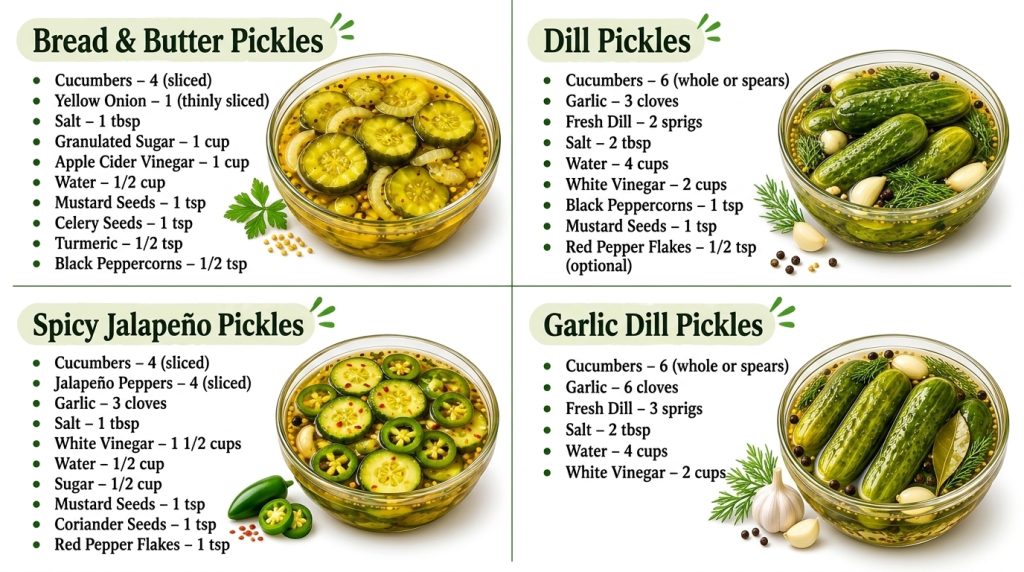
Bread and Butter Pickles
Bread and butter pickles are sweet, tangy, and lightly spiced, with thinly sliced cucumbers and onions. They are a favorite on sandwiches and burgers.
Ingredients (about 1 quart)
- 1 lb (450 g) pickling cucumbers, sliced about 1/4 inch (6 mm) thick
- 1 small onion (about 4 oz / 115 g), thinly sliced
- 1 cup (240 ml) white vinegar
- 1/2 cup (100 g) granulated sugar
- 1 tsp (about 6 g) kosher salt
- 1 tbsp (about 9 g) yellow mustard seed
- 1 tsp (about 2 g) celery seed
- 1/2 tsp (about 1 g) ground turmeric
How to make them
- Wash the cucumbers well and slice them evenly. Thin, even slices help them pickle uniformly.
- Place the cucumber and onion slices in a clean heatproof bowl or jar.
- In a small saucepan, combine the vinegar, sugar, salt, mustard seed, celery seed, and turmeric. Warm over medium heat, stirring, until the sugar dissolves. The liquid should look clear and smell tangy, and it should not come to a hard boil for long.
- Pour the warm brine over the cucumbers and onions so they are fully covered. Let the jar cool to room temperature.
- Cover and refrigerate. The flavors develop over time, so let the pickles rest for at least 24 hours before eating. They are usually best after two to three days.
Classic Dill Pickles
These dill pickles have a clean, salty, garlicky flavor with a bright herb note. Choose small pickling cucumbers for the crispest result.
Ingredients (about 1 quart)
- 1 lb (450 g) small pickling cucumbers, whole or cut into spears
- 2 cups (480 ml) water
- 1 cup (240 ml) white vinegar
- 1 1/2 tbsp (about 20 g) kosher salt, adjusted for your brand
- 3 garlic cloves, peeled and lightly smashed
- 2 sprigs fresh dill
- 1 tsp (about 3 g) black peppercorns
How to make them
- Trim a thin slice off the blossom end of each cucumber. This end contains enzymes that can soften pickles, so removing it helps keep them crisp.
- Pack the cucumbers, garlic, dill, and peppercorns tightly into a clean quart jar.
- In a saucepan, heat the water, vinegar, and salt until the salt dissolves completely. You do not need to bring it to a full boil.
- Pour the warm brine over the cucumbers, leaving about 1/2 inch (1 cm) of headspace at the top. Make sure everything is submerged.
- Let the jar cool, then refrigerate. Taste after about 2 days. The pickles are ready when they taste fully seasoned, though they continue to improve for several more days.
Spicy Jalapeno Pickles
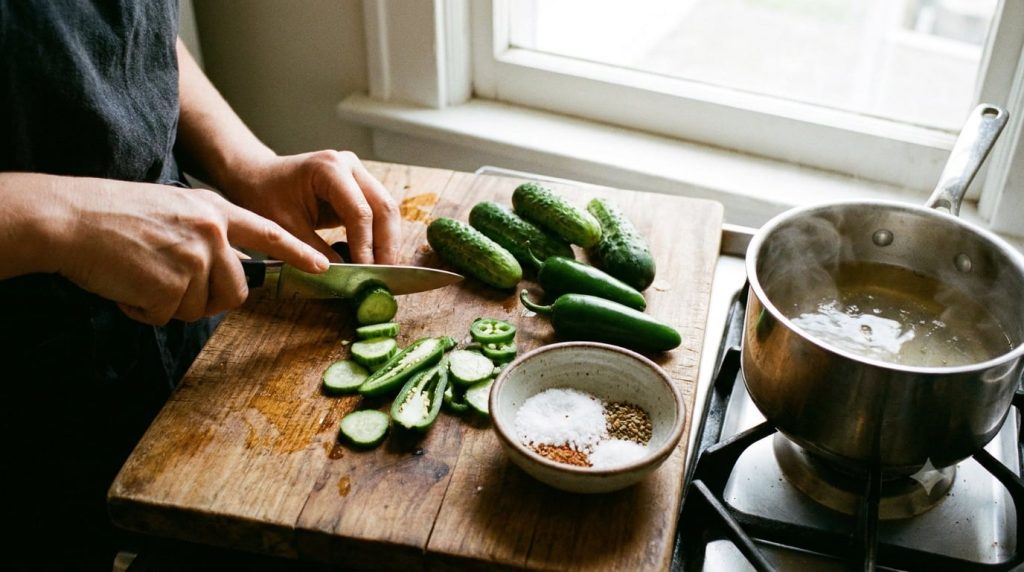
Spicy jalapeno pickles bring heat and bright acidity to the table. Use fresh, firm peppers and adjust the amount to match your tolerance for heat.
Ingredients (about 1 quart)
- 8 oz (225 g) pickling cucumbers, sliced into rounds or spears
- 3 fresh jalapeno peppers (about 6 oz / 170 g), sliced into rings
- 1 cup (240 ml) white vinegar
- 1 cup (240 ml) water
- 1 tbsp (about 15 g) kosher salt, adjusted for your brand
- 1 tbsp (12 g) granulated sugar, optional
- 2 garlic cloves, peeled and lightly smashed
- 1 tsp (about 2 g) yellow mustard seed
How to make them
- Wear gloves when handling jalapenos, or wash your hands thoroughly afterward. The oils can irritate your skin and eyes.
- Pack the cucumbers, jalapeno rings, and garlic into a clean quart jar.
- In a saucepan, combine the vinegar, water, salt, sugar if using, and mustard seed. Heat until the salt and sugar dissolve.
- Pour the warm brine over the vegetables until fully covered. Cool to room temperature, then refrigerate.
- Let the jar rest for at least 2 days before eating. Heat levels build over time, so taste a ring after a day or two before deciding if you want more.
Garlic Dill Pickles
Garlic dill pickles are a bold, savory take on the classic. The garlic mellows during pickling, giving the brine a rich, rounded flavor.
Ingredients (about 1 quart)
- 1 lb (450 g) pickling cucumbers, whole or cut into spears
- 6 garlic cloves, peeled and lightly smashed
- 2 sprigs fresh dill or 1 tbsp (about 2 g) dried dill
- 2 cups (480 ml) water
- 1 cup (240 ml) white vinegar
- 1 1/2 tbsp (about 20 g) kosher salt, adjusted for your brand
- 1 tsp (about 3 g) black peppercorns
How to make them
- Trim the blossom end of each cucumber and rinse off any dirt.
- Layer the cucumbers, garlic, dill, and peppercorns in a clean quart jar.
- Heat the water, vinegar, and salt in a saucepan until the salt dissolves.
- Pour the brine over the cucumbers, making sure they are fully submerged. Cool, cover, and refrigerate.
- Wait at least 2 to 3 days for the garlic and dill flavors to develop before serving.
Pro Tips for Crisp, Flavorful Pickles
- Use fresh cucumbers picked as close to the day you pickle as possible. Softer or older cucumbers will taste limp.
- Choose pickling cucumbers when you can. They have thinner skin and firmer flesh than standard slicing cucumbers.
- Stick to kosher or pickling salt. Table salt often contains anti-caking agents that can cloud the brine.
- Keep the cucumbers fully submerged under the brine. Anything exposed to air can spoil or develop an off flavor.
- Label each jar with the recipe name and the date you made it so you can track flavors and freshness.
- Start with a small batch the first time you make a recipe, so you can adjust salt, sugar, or heat to your taste.
Common Mistakes to Avoid
- Soft pickles: Skipping the blossom end trim or using old cucumbers is the most common cause. Start with fresh, firm produce.
- Cloudy brine: Table salt, hard tap water, or spices that have been ground too finely can all cloud the brine. Use kosher or pickling salt and whole spices when possible.
- Impatience: Many people taste pickles too early. Most recipes need at least a day or two in the refrigerator to develop full flavor.
- Exposed vegetables: Pieces poking above the brine can discolor or spoil. Use a small weight or pack the jar tightly to keep everything submerged.
- Overly hot peppers: Heat intensifies as pickles sit. Start with fewer jalapeno slices and add more later if you want extra spice.
Variations and Substitutions
- Vinegar swaps: Apple cider vinegar works well in place of white vinegar and gives a mellower, fruitier flavor. Expect a slightly darker color.
- Sugar-free option: You can reduce or omit the sugar in bread and butter or jalapeno pickles. The pickles will be tangier and less sweet.
- Add-ins: Try a few red pepper flakes in the garlic dill version, or a pinch of coriander seed in the dill version for a warm, citrusy note.
- Mixed jar: Combine cucumbers with sliced carrots, cauliflower florets, or green beans for a colorful vegetable pickle mix. Pack them the same way and check the texture after a few days.
Serving Suggestions
Dill and garlic dill pickles are classic on burgers, deli sandwiches, and grilled cheese. Bread and butter pickles pair well with pulled pork, potato salad, and cheese boards. Spicy jalapeno pickles add a kick to tacos, nachos, sandwiches, and scrambled eggs. Serve a small dish of pickles alongside a simple snack platter for an easy party addition.
Storage and Reheating Notes
These are refrigerator pickles, so they must be kept cold at all times. Store them in their sealed jars in the refrigerator. Estimated storage time is several weeks, though quality and crispness decline gradually. Discard any jar that shows mold, a bad smell, or unusual slime. Pickles are not suited to freezing because the texture becomes soft. Shelf-stable canning requires tested, verified processing guidelines, which are not covered in these refrigerator recipes.
Frequently Asked Questions
How long do homemade refrigerator pickles last?
Refrigerator pickles usually stay good for several weeks when kept sealed and cold. Their crispness fades over time, so eat them within the first month or two for the best texture.
Can I use table salt instead of kosher salt?
You can, but use less because table salt is denser by volume. Table salt can also make the brine look cloudy, so kosher or pickling salt is the better choice.
Why did my pickles turn soft?
Soft pickles are usually caused by older cucumbers or leaving the blossom end on. Use fresh pickling cucumbers and trim off the blossom end before packing the jar.
Do I need to process these pickles in a water bath?
These recipes are designed for refrigerator storage. For shelf-stable jars, follow a tested canning recipe and processing guidelines from a trusted food preservation source.
How do I know when the pickles are ready?
Taste one after a day or two. Pickles are ready when they taste well seasoned and crisp, and they generally improve over the next several days.
Can I reuse the brine?
It is best to make fresh brine for each batch. Reusing brine can introduce bacteria and reduce flavor and crispness.