Choosing the right garden cover can make the difference between a thriving harvest and a disappointing season. Covers protect plants from frost, pests, harsh sun, and wind, but each type works best for specific crops and conditions. This guide walks you through the most common options so you can match the right cover to the right plant.
Why Garden Covers Matter
Garden covers extend your growing season, shield tender seedlings, and reduce stress on plants during weather swings. They also help you manage common problems like insect damage and bird pecking without relying on harsh chemicals. Using the correct cover keeps plants healthy and helps you get more from your space.
Floating Row Covers
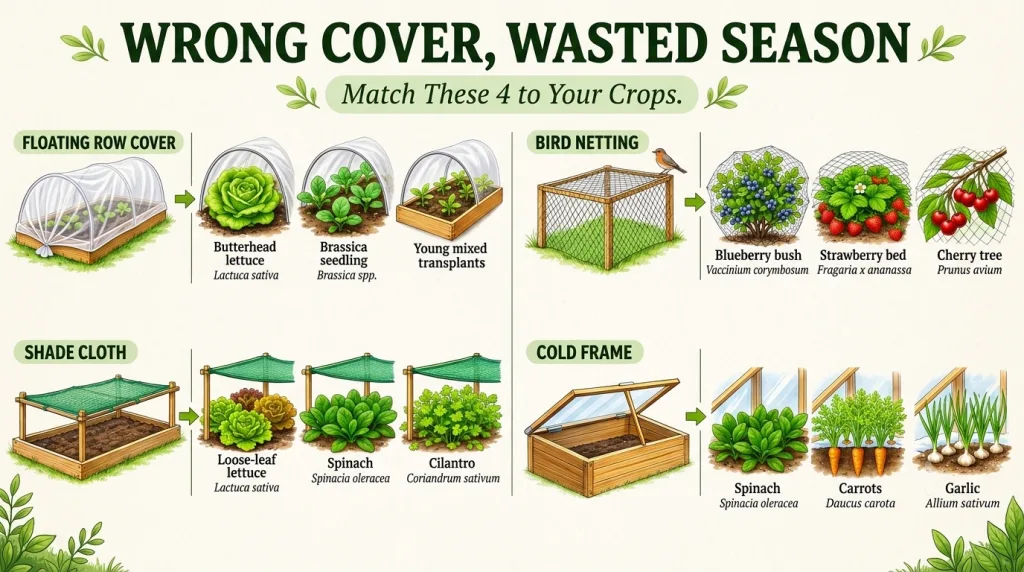
Floating row covers are lightweight fabrics laid directly over plants. They trap a little warmth, protect against light frost, and act as a barrier against many flying insects. They suit leafy greens, young brassicas, carrots, and newly transplanted seedlings. Lay the fabric loosely so plants have room to grow, and anchor the edges well so wind does not lift it.
Bird Netting
Bird netting is a practical choice when birds target berries, seedlings, or ripening fruit. It is less about warmth and more about keeping wildlife away from your harvest. Strawberries, blueberries, cherries, and sprouting peas often benefit from it. Pull netting taut over hoops or a frame so birds cannot get tangled, and check it regularly for gaps.
Shade Cloth
Shade cloth reduces intense sunlight and heat. It is especially helpful for lettuce, spinach, and other cool-season crops that bolt in hot weather, as well as for delicate seedlings and some herbs. Choose a shade level that matches your climate, and remember that too much shade can slow growth for sun-loving vegetables like tomatoes and peppers.
Cold Frames
Cold frames are low, box-like structures with a transparent lid. They capture solar heat during the day and protect plants overnight. They are ideal for hardening off seedlings, growing salad greens into cooler months, and starting early crops in spring. Open the lid on mild days to prevent overheating and to allow fresh air in.
Matching Covers to Your Crops
- Use floating row covers for young greens, brassicas, and carrots that need light frost protection and pest barriers.
- Use bird netting for berries, fruiting plants, and peas that attract wildlife.
- Use shade cloth for lettuce, spinach, and heat-stressed seedlings during summer.
- Use cold frames for early spring starts, seedling hardening, and cool-season salads.
Tips for Using Covers Well
- Check plants daily for moisture, since covers can trap humidity.
- Remove covers when flowers need pollinators, unless you are hand-pollinating.
- Secure edges firmly so wind does not damage fabric or plants.
- Store covers clean and dry to extend their life.
Final Thoughts
The right cover protects your plants and saves your season. Start by identifying your main challenge, whether it is cold, heat, pests, or birds, then choose the cover that solves it. With a little planning, your garden will grow stronger and produce more.