Composting is one of the most rewarding habits a gardener can build. It turns kitchen scraps and garden trimmings into dark, crumbly soil that feeds plants naturally, improves drainage, and helps your vegetables and flowers thrive. The best part is that composting is not a one-time task. It follows the seasons, and knowing what to do in each month will keep your pile active all year long.
Why Year-Round Composting Matters
Many gardeners only think about compost in spring, when it is time to plant. However, a steady routine across the year produces better results. Your compost pile needs a balance of green materials, such as vegetable peelings and fresh grass clippings, and brown materials, such as dry leaves and cardboard. It also needs air, moisture, and time. When you adjust your care to the weather, you get richer compost with less effort.
Winter: Plan and Protect Your Pile
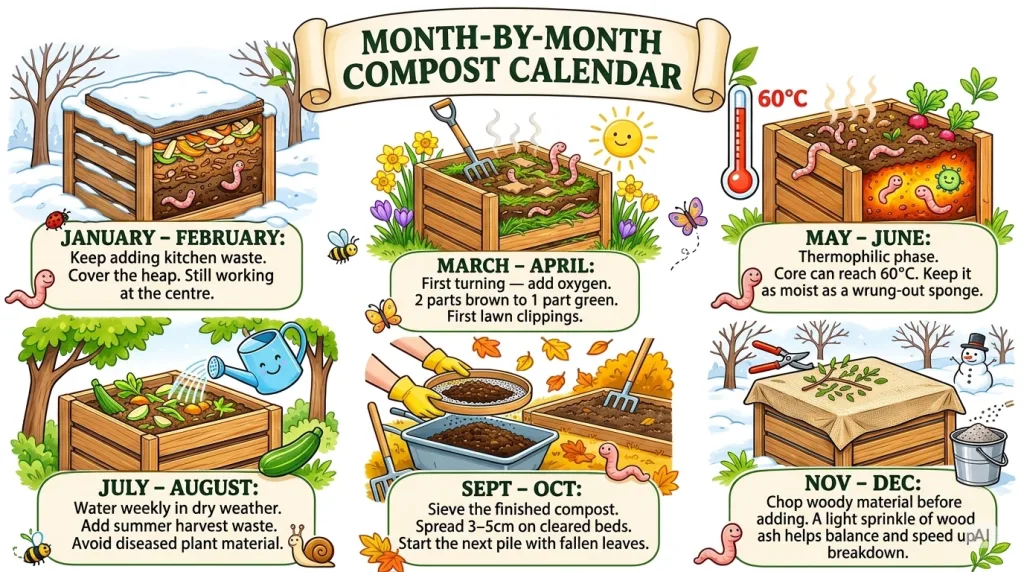
In January and February, most outdoor activity slows down. Focus on planning. Collect kitchen scraps in a sealed container indoors, and keep your compost bin covered with a tarp or old carpet to prevent it from freezing solid. A small amount of dry leaves stored nearby will be useful when the weather warms up.
Spring: Restart Decomposition
In March, April, and May, temperatures rise and microbes become active again. Turn the pile with a garden fork to add air, and check moisture levels. The mix should feel like a wrung-out sponge. Add fresh green materials gradually, and watch for earthworms, which are a sign of healthy compost.
Summer: Keep It Moist
During June, July, and August, heat can dry out your pile quickly. Water lightly when the materials look pale or dusty, and cover the bin to hold in moisture. Chop large scraps into smaller pieces so they break down faster. Finished compost from earlier in the year can be spread around vegetable beds and container plants during this busy season.
Autumn: Gather and Layer
In September, October, and November, falling leaves offer a generous supply of brown material. Shred them if you can, since smaller pieces decompose more quickly. Layer leaves with kitchen scraps and garden waste, then turn the pile occasionally. This is an excellent time to build up your compost supply for the coming year.
December: Rest and Review
In December, the pile will slow down, and that is perfectly normal. Keep it covered, avoid adding large amounts of wet material, and take time to review what worked well during the year. Make notes about which bin location, materials, and watering habits gave you the best results.
Simple Tips for Better Compost
- Balance greens and browns, roughly in equal parts by volume.
- Keep the pile about as moist as a wrung-out sponge.
- Turn the pile regularly to introduce oxygen.
- Avoid meat, dairy, and oily foods, which can attract pests.
- Chop scraps into small pieces to speed up breakdown.
Using Your Finished Compost
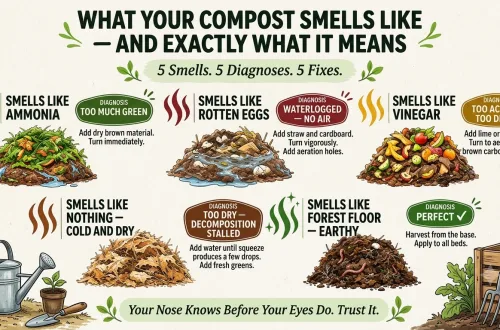
When your compost is dark, crumbly, and smells like forest soil, it is ready to use. Mix it into vegetable beds, spread it around flowers, or add it to potting mix for indoor plants. Healthy compost improves soil structure and supports strong roots, which helps your garden stay productive across every season.
With a simple monthly routine, your compost pile can become a reliable source of nourishment for your garden. Start where you are this month, and enjoy watching your plants grow stronger with each season.