Pests are a normal part of every garden, but you do not have to rely on harsh products to keep them in check. Nature has its own balancing system. Many common garden pests have natural predators, and many of those predators are drawn to specific flowers. This approach, known as companion planting for pest control, is one of the most practical ways to build a healthier, more resilient garden.
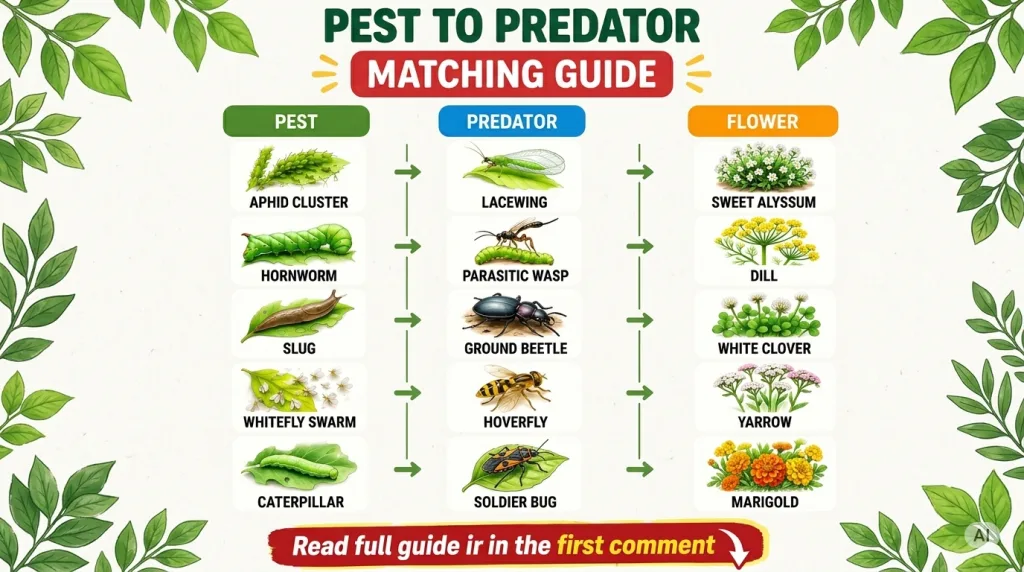
How Companion Planting Supports Natural Pest Control
Companion planting means growing plants together so that they support each other. In pest control, the goal is to create a habitat that welcomes beneficial insects, birds, and other wildlife. These helpers feed on pests such as aphids, caterpillars, and whiteflies, which keeps populations in balance without the need for heavy intervention.
Many beneficial insects need more than prey to survive. They also need nectar and pollen, especially in the early and late parts of the season. Flowering plants provide that food, so planting them alongside your vegetables and ornamentals gives predators a reason to stay nearby.
Flowers That Attract Helpful Predators
Some flowers are especially popular with beneficial insects. Adding a few of the following to your garden can make a noticeable difference over time.
- Marigolds are widely grown for their bright blooms and are often planted near tomatoes and peppers to attract a range of beneficial insects.
- Nasturtiums are easy to grow and can draw aphids away from more valuable crops while also attracting predatory insects.
- Sweet alyssum produces small, fragrant flowers that are a favorite of hoverflies, whose larvae feed on aphids.
- Dill, fennel, and cosmos offer open blossoms that support lacewings, parasitic wasps, and other helpful insects.
- Calendula is a cheerful annual that brings pollinators and predators into vegetable beds.
Matching Common Pests With Their Natural Predators
Knowing which pest you are dealing with makes it easier to choose the right helpers. Here are a few common pairings that many gardeners find useful.
- Aphids are often managed by ladybugs, lacewing larvae, and hoverfly larvae.
- Caterpillars can be reduced by parasitic wasps and birds, so planting shelter and water sources for birds can be helpful.
- Spider mites may be controlled by predatory mites and ground-dwelling spiders, which benefit from mulch and ground cover.
- Whiteflies can be kept in check by certain parasitic wasps and predatory insects that visit flowering herbs.
Keep in mind that a beneficial insect population takes time to build. Results vary with climate, season, and garden size, so patience and regular observation are important.
Tips for Building a Pest-Friendly Garden
- Plan your garden with flowers placed among vegetables, not only along the edges.
- Allow a few plants to flower instead of cutting everything back, since blooms are the food source for many helpers.
- Provide shallow water, such as a dish with pebbles, for insects and birds.
- Reduce broad-spectrum sprays, which can harm the beneficial insects you are trying to attract.
- Check the undersides of leaves weekly so you can spot pests early and see which predators are present.
Organic Habits That Make a Difference
Companion planting works best as part of a broader organic approach. Healthy soil, diverse plantings, mulch, and crop rotation all reduce stress on plants and make them less attractive to pests. Good garden hygiene, such as removing heavily infested leaves, also helps keep problems from spreading.
Start small with one or two pest-attracting flowers this season, observe what visits your garden, and expand from there. Over time, your garden can become a lively ecosystem where pests are managed naturally and your plants have room to thrive.