Oatmeal is one of the most common breakfasts in the world, yet not all oats are processed the same way. Those small differences in processing can affect how oats cook, how they feel in your bowl, and how they fit into your daily nutrition and energy levels. If you have ever wondered which oats are actually healthiest, the answer starts with understanding how each variety is made.
In this guide, you will learn how the most common oat varieties differ, what processing changes, and how to choose the option that fits your routine best.
Why Oat Processing Matters for Your Nutrition
Oats begin as whole grains. Processing changes how much the grain is cut, steamed, flattened, or pre-cooked before it reaches your kitchen. These steps can influence cooking time, texture, and how quickly your body may digest the finished bowl. Because the grain itself is the same, the differences often come down to how much the oat has been handled.
Less processed oats generally take longer to cook and keep a chewier texture. More processed oats cook faster but may feel softer and digest more quickly. Neither style is automatically better for everyone, so it helps to match the oat to your schedule and your preferences.
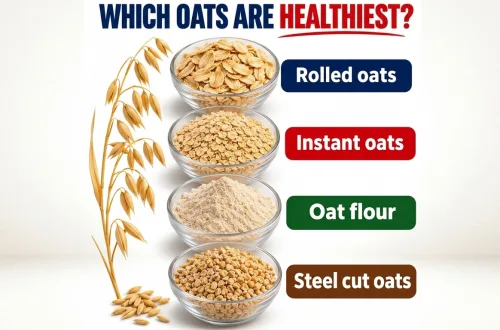
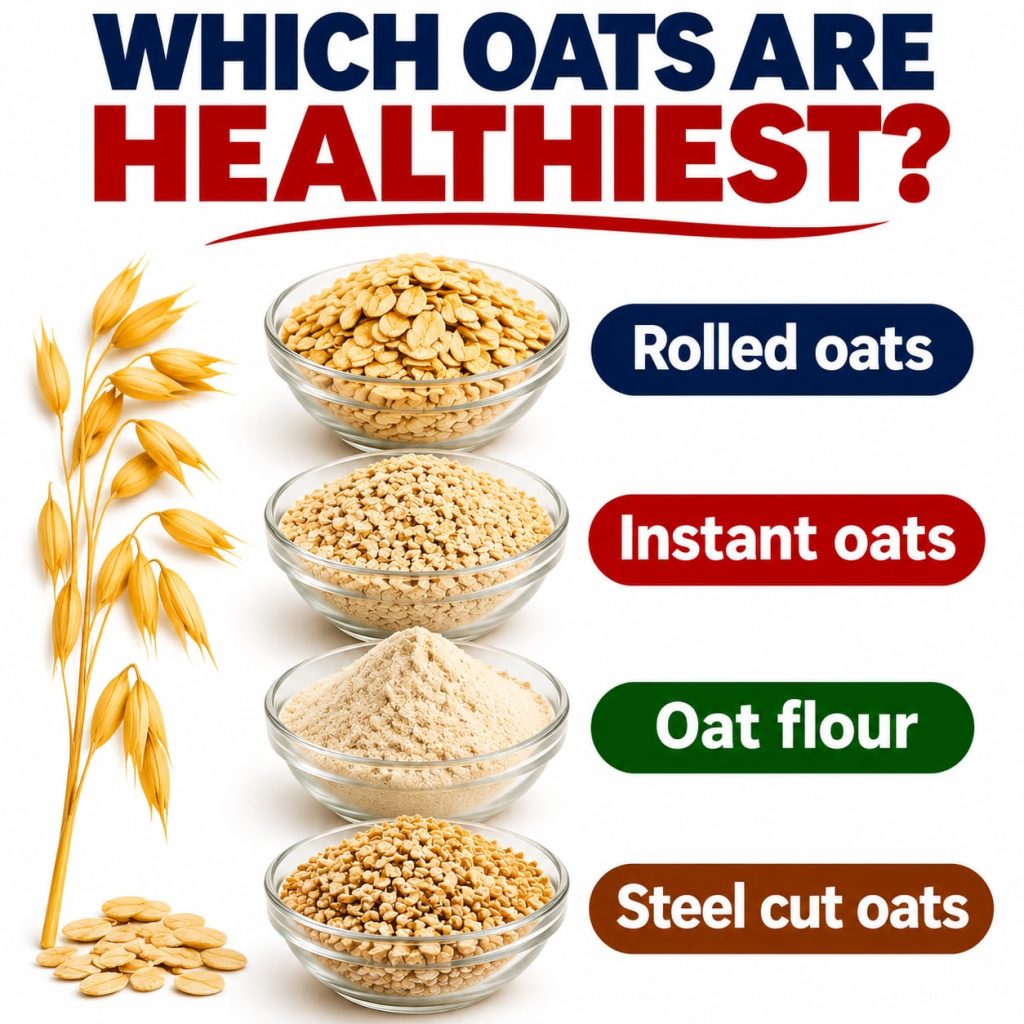
The Main Oat Varieties Explained
Steel-Cut Oats
Steel-cut oats are whole oat groats chopped into small pieces. Because they are cut rather than flattened, they keep a dense, nutty bite and take the longest to cook. Many people enjoy them as a slow-simmered breakfast, often prepared the night before and reheated.
Rolled Oats
Rolled oats are steamed and then flattened into flakes. They cook in a few minutes and have a softer texture than steel-cut oats while still holding their shape. Rolled oats are a popular everyday choice for overnight oats, baked oatmeal, and classic porridge.
Quick Oats
Quick oats are rolled oats that are cut more finely and flattened more thinly. This shortens cooking time and gives a smoother, softer result. They are convenient on busy mornings, though the texture is less chewy than rolled or steel-cut oats.
Instant Oats
Instant oats are pre-cooked, very thinly flattened, and often sold in single-serve packets, sometimes with added flavors or sugar. They are the fastest option, but flavored packets can contain more added sugar than plain oats. Checking the label is a simple way to keep your breakfast closer to what you intended.
How to Choose the Right Oat for Your Routine
- For a slow, hearty breakfast: steel-cut oats suit weekend mornings or batch cooking.
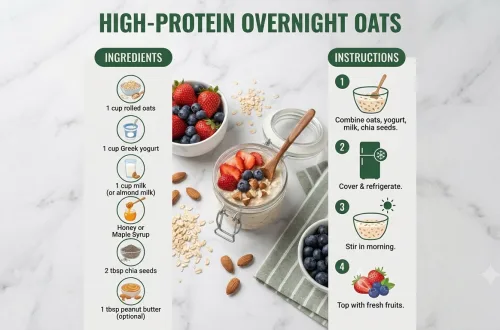
- For overnight oats and everyday bowls: rolled oats offer a good balance of texture and convenience.
- For a quick weekday start: quick oats can save time without a big change in basic nutrition.
- For the fastest option on the go: plain instant oats work well, while flavored packets deserve a closer look at the label.
Simple Tips to Get More From Your Oats
- Choose plain oats over flavored packets when you want more control over sugar.
- Add protein or healthy fats, such as nuts, seeds, Greek yogurt, or milk, to help your bowl feel more filling.
- Pair oats with fresh fruit or berries for extra fiber and flavor.
- Store dry oats in an airtight container in a cool, dry place to keep them fresh.
Frequently Asked Questions
Are steel-cut oats healthier than rolled oats?
Steel-cut oats are less processed, which is why many people prefer their texture. Rolled oats are also a whole grain choice and can be a healthy part of a balanced diet. The best option is usually the one you will actually eat regularly.
Do quick oats lose their nutrition?
Quick oats are still whole grain oats that have been cut and flattened more finely. Their basic nutritional profile is generally similar to rolled oats, though the label is the best place to check specific values.
Who should talk to a professional before changing their diet?
If you have a medical condition, such as diabetes or a digestive concern, or you follow a special diet, speak with a qualified healthcare professional or registered dietitian before making major changes to your breakfast routine.
Final Thoughts
Knowing how oats are processed helps you choose the variety that matches your schedule, texture preferences, and nutrition goals. Steel-cut, rolled, quick, and instant oats all have a place in a balanced diet. Start with the option that fits your routine, read labels on flavored products, and build from there.
Medical disclaimer: This article is for general information only and is not a substitute for professional medical advice. Consult a qualified healthcare professional for personalized guidance.