Easy Skillet Chocolate Cake (No Oven Needed)
Craving a rich chocolate cake but don’t have an oven, or don’t want to heat up the kitchen? This easy skillet chocolate cake cooks right on the stovetop in a covered pan. The result is a moist, fudgy cake with a deep cocoa flavor and a tender crumb, ready in about an hour from start to finish.
It’s a good choice for a weeknight dessert, a small get-together, or a sweet treat when you want something homemade without a lot of cleanup.
Why You’ll Love This Skillet Chocolate Cake
- No oven required. A covered skillet on the stove does the job.
- Simple pantry ingredients. Most of what you need is likely already in your kitchen.
- One pan. You mix, cook, and serve in the same skillet.
- Moist texture. The oil and vinegar keep the crumb soft.
- Easy to customize. Add frosting, chocolate chips, or a scoop of ice cream.
Ingredients
- 1 1/2 cups (190 g) all-purpose flour
- 1/3 cup (35 g) unsweetened cocoa powder
- 1 cup (200 g) granulated sugar
- 1 teaspoon baking soda
- 1/2 teaspoon fine salt
- 1 cup (240 ml) cold water
- 1/3 cup (80 ml) vegetable oil
- 1 tablespoon (15 ml) white vinegar
- 1 teaspoon pure vanilla extract
- Butter or nonstick spray, for greasing the skillet
Ingredient Notes
Baking soda reacts with the vinegar to help the cake rise, so add the vinegar right before you pour the batter into the skillet. Unsweetened cocoa powder gives the cake its deep chocolate flavor. Vegetable oil keeps the cake moist for longer than butter would. Measure flour by spooning it into the cup and leveling it off, rather than scooping directly from the bag.
Equipment You’ll Need
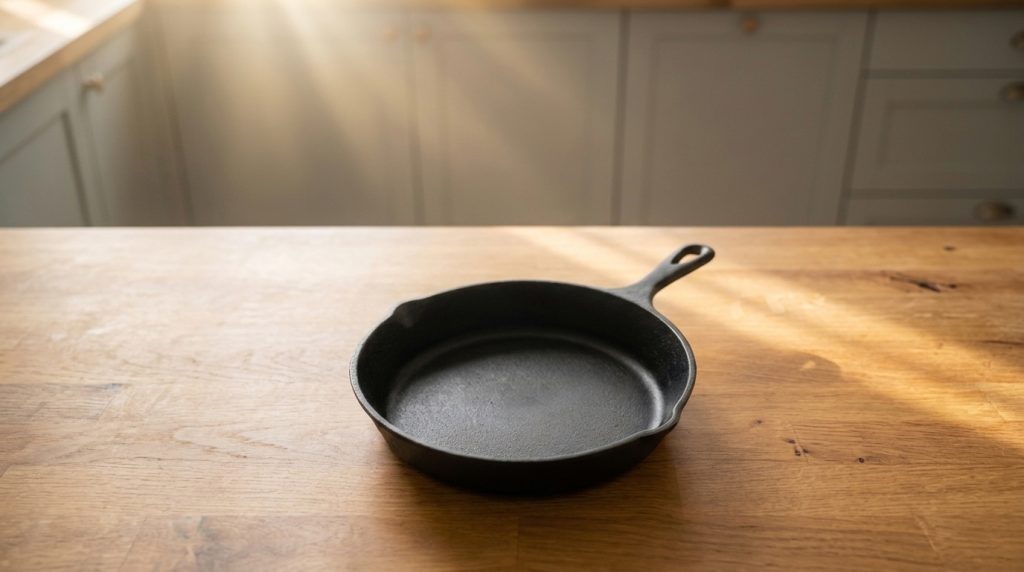
- A 10-inch (25 cm) skillet with a tight-fitting lid
- A mixing bowl and whisk
- Measuring cups and spoons
- A toothpick or cake tester
- A wire rack for cooling
How to Make Easy Skillet Chocolate Cake
- Preheat and prepare the pan. Set the skillet over low heat and let it warm for about 2 minutes. Grease the bottom and sides lightly with butter or nonstick spray.
- Mix the dry ingredients. In a large bowl, whisk together the flour, cocoa powder, sugar, baking soda, and salt. Break up any lumps in the cocoa with your fingers or the whisk. The mixture should look uniform, with no streaks of cocoa.
- Add the wet ingredients. Pour in the water, oil, and vanilla. Whisk until the batter is smooth and no dry flour is visible, about 1 to 2 minutes. The batter should be thin, similar to pancake batter.
- Add the vinegar. Stir in the vinegar quickly. You may see small bubbles, which is normal.
- Pour the batter. Pour the batter into the greased skillet and gently tap the pan on the counter to release air bubbles.
- Cover and cook. Cover the skillet with a tight lid and cook over low heat for about 25 to 30 minutes. Cooking time is an estimate and depends on your skillet and burner. Avoid lifting the lid too often, since that releases heat and can cause the cake to sink.
- Check for doneness. The cake is ready when the top looks set and a toothpick inserted into the center comes out with a few moist crumbs and no wet batter.
- Cool before serving. Turn off the heat and let the cake rest in the skillet for about 10 minutes. Then transfer it to a wire rack to cool further. Cooling helps the crumb set so the slices hold together.
Pro Tips for the Best Results
- Use low heat. High heat can scorch the bottom before the center cooks through.
- Choose a heavy skillet, such as cast iron or heavy stainless steel, for more even heat.
- Make sure your lid fits well so steam doesn’t escape. A loose lid can dry out the top.
- Check the cake early, around the 20-minute mark, and then check every few minutes.
- Let the batter sit for a moment after adding the vinegar, then pour it into the pan so the bubbles stay active while the cake cooks.
Common Mistakes to Avoid
- Burnt bottom. Cook on low heat and consider a heat diffuser if your burner runs hot.
- Raw center. Make sure the lid seals and check the middle with a toothpick before removing the cake.
- Sunken middle. Avoid lifting the lid during cooking. Sudden temperature changes can cause the center to collapse.
- Dense or gummy texture. Mix only until the batter is smooth. Overmixing can make the cake tough.
Variations and Substitutions
- Chocolate ganache topping. Heat 1/2 cup (120 ml) heavy cream until steaming, pour it over 1/2 cup (85 g) chopped chocolate, let it sit for 2 minutes, then stir until smooth.
- Chocolate chip cake. Fold in 1/2 cup (85 g) mini chocolate chips before pouring the batter.
- Dairy-free option. The recipe is already dairy-free as written, provided your cocoa and chocolate are dairy-free.
- Coffee flavor. Replace 1/4 cup of the water with cooled brewed coffee for a deeper chocolate taste.
Serving Suggestions
Serve the cake warm or at room temperature, straight from the skillet or cut into wedges. Vanilla ice cream, whipped cream, or a spoonful of fresh berries pairs nicely with the rich chocolate. A cup of coffee or milk makes a classic match.
Storage and Reheating
Store leftover cake covered at room temperature for up to 2 days, or refrigerate it in an airtight container for up to 4 days. Refrigerated cake may dry out slightly, so bring slices to room temperature before serving or warm them briefly in a microwave. This cake can be frozen, wrapped tightly, for up to 2 months. Thaw it in the refrigerator overnight before serving.
Frequently Asked Questions
Can I make this cake without a lid?
A tight lid works best because it traps steam and helps the cake cook through. If you don’t have one, cover the skillet with a baking sheet or a larger pot lid, but check the cake more often.
Can I use a different size skillet?
A 10-inch skillet is ideal. A smaller pan will make a thicker cake that needs more time, while a larger pan will make a thinner cake that cooks faster. Check for doneness early.
How do I know when the cake is done?
Insert a toothpick into the center. It should come out with moist crumbs but no wet batter. The top should also look set and spring back lightly when touched.
Can I make the batter ahead of time?
It’s best to mix the batter right before cooking because the baking soda and vinegar react quickly. Mix the dry ingredients ahead of time, then add the wet ingredients when you’re ready to cook.
Why did my skillet cake turn out dry?
Dryness is often caused by cooking too long or lifting the lid frequently. Check the cake a few minutes early, and make sure you measured the flour correctly.
Can I use butter instead of oil?
You can, but the cake may be a little firmer and less moist. Melted butter works in place of the oil in equal amounts.
Would you try making this cake in a skillet? Let me know in the comments how it turned out!