There is something special about snipping fresh greens for dinner in the middle of winter. When the garden is dormant and grocery store produce looks tired, a small indoor setup can fill that gap with crisp, homegrown food. The good news is that many vegetables mature quickly enough to make indoor growing rewarding within a few weeks. With the right light, containers, and watering habits, you can enjoy a steady harvest from a windowsill or a simple shelf. This guide walks through 11 fast-growing vegetables that suit winter indoor growing, with practical steps for sowing, light, and harvesting so you can start with confidence.
Why Winter Indoor Growing Works (and Where It Struggles)
The biggest challenge in December is light. Even a south-facing window provides much less usable light in winter than in spring, and the sun sits low, so plants may stretch and grow pale. Cool-season crops handle lower temperatures well, which is why greens and radishes are such good choices. Aim for a room between 60 and 70 degrees Fahrenheit during the day, and keep seedlings away from cold drafts near glass at night. If your windowsill is not bright enough, a basic LED grow light placed 6 to 12 inches above the plants for 14 to 16 hours a day makes a large difference.
The 11 Best Quick-Growing Vegetables for Indoor Winter Harvests
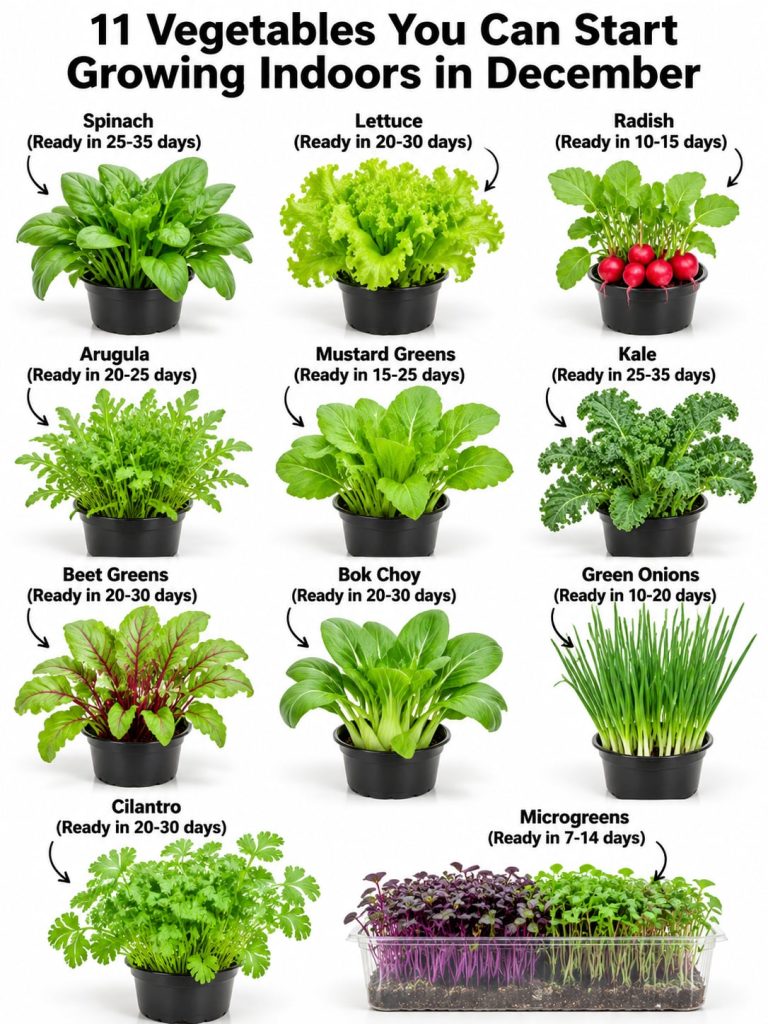
1. Microgreens (Broccoli, Radish, and Pea Shoots)
Microgreens are young seedlings harvested after the first true leaves appear, usually within 7 to 14 days. Sow seed thickly on moistened potting mix in a shallow tray, cover lightly, and keep them moist until sprouting. Remove the cover once seeds sprout and water from below to avoid damping off, a fungal problem that kills seedlings at soil level.
2. Radishes
Radishes are among the fastest vegetables to harvest, with many varieties ready in about 3 to 4 weeks. Use a container at least 6 inches deep, sow seeds half an inch deep and about an inch apart, and keep the soil evenly moist. Thin crowded seedlings so roots have room to swell. Harvest promptly once roots are about an inch across, since overgrown radishes turn woody and hot.
3. Loose-Leaf Lettuce
Loose-leaf lettuce is ideal for indoor growing because you can harvest outer leaves and let the plant keep producing. Baby leaves are typically ready in about 25 to 35 days. Use a container with good drainage and keep it cool. Lettuce can turn bitter if temperatures get too warm, so keep it away from heat vents.
4. Baby Spinach
Spinach prefers cool conditions and grows best in winter light when temperatures stay moderate. Harvest baby leaves in roughly 30 to 40 days by snipping outer leaves and leaving the center to regrow. Avoid overwatering, since soggy soil quickly causes root rot.
5. Arugula
Arugula is one of the quickest leafy greens, often ready for baby harvest in 20 to 30 days. It has a peppery flavor that becomes stronger in warmer conditions, so keep it cool for the mildest taste. Sow in succession every two weeks to keep a continuous supply.
6. Baby Bok Choy
Baby bok choy matures in about 25 to 35 days when harvested young. Give each plant a few inches of space in a pot at least 6 inches deep. Cut the whole plant at the base for a single harvest, or pick outer leaves for a longer supply.
7. Mustard Greens
Mustard greens grow quickly and tolerate cool indoor conditions well. Baby leaves are ready in about 25 to 30 days. They are sharper in flavor than lettuce, so mix them with milder greens. Grow them in a sunny spot and harvest before flowering stems form.
8. Scallions (Green Onions)
Scallions are slower from seed but quick to regrow from grocery-store roots. Place the white root ends in a shallow dish of water with the roots just touching, change the water every few days, and move them to a bright window. New green shoots typically appear within a week, and you can clip them repeatedly as needed.
9. Pea Shoots
Pea shoots are the tender tips of pea plants, ready about 10 to 14 days after sowing. Soak pea seeds overnight, sow them densely in a tray, and keep them moist. Harvest the top 3 to 4 inches once the stems are sturdy and the tendrils begin to form.
10. Swiss Chard (Baby Leaves)
Swiss chard can produce tender baby leaves in roughly 30 to 40 days. Sow a few seeds per pot, thin to the strongest seedling, and use a container at least 8 inches deep. Chard tolerates cool indoor temperatures well and produces colorful stems that brighten a winter windowsill.
11. Baby Kale
Kale can be harvested young in about 30 to 40 days. Sow in a deep container, thin to one plant per 4 inches, and harvest outer leaves while leaving the central growing point intact. Kale tends to be slower in low light, so it does best with a grow light.
Practical Setup for Success
Use containers with drainage holes and a light, peat-free potting mix or seed-starting mix. Water when the top half inch of soil feels dry, and water from below if possible. Overwatering is the most common mistake: yellowing leaves, a sour smell, or soil that stays wet for days all point to too much water. Underwatering shows up as wilting and crispy leaf edges. Rotate trays a quarter turn every few days to prevent plants from leaning toward the light. Good airflow also helps prevent mold, so run a small fan on low if the room is humid.
Common Mistakes to Avoid
- Relying on a window that receives only weak winter sun.
- Planting too densely, which leads to weak, leggy growth.
- Letting radishes and lettuce get too warm, causing bitterness or bolting.
- Using containers without drainage holes.
- Waiting too long to harvest, which reduces flavor and tenderness.
Adjusting for Your Climate and Home
Indoor conditions vary widely. Homes in colder northern regions often have drier air and cooler windows, while homes in milder southern areas may stay warm enough that greens bolt sooner. Check your local extension service for guidance on indoor growing and winter light. Remember that USDA zones describe outdoor winter cold tolerance, so they are less useful for predicting indoor results. Focus instead on your room temperature, daily light hours, and humidity.
Start Small and Harvest Often
You do not need a large setup to enjoy fresh winter vegetables. Start with one tray of radishes or loose-leaf lettuce and one pot of scallions. Track how many hours of usable light your space gets each day, note what grows well, and expand from there. Within a few weeks, you can be snipping greens for salads, sandwiches, and stir-fries. Pick one or two crops from this list this December, sow them this week, and enjoy the satisfaction of a winter harvest from your own home.