Most people walk past evergreen trees all winter without realizing their needles can be brewed into a bright, resinous tea. The catch is that not every evergreen is safe, so identification always comes before the kettle.
What Pine Needle Tea Is
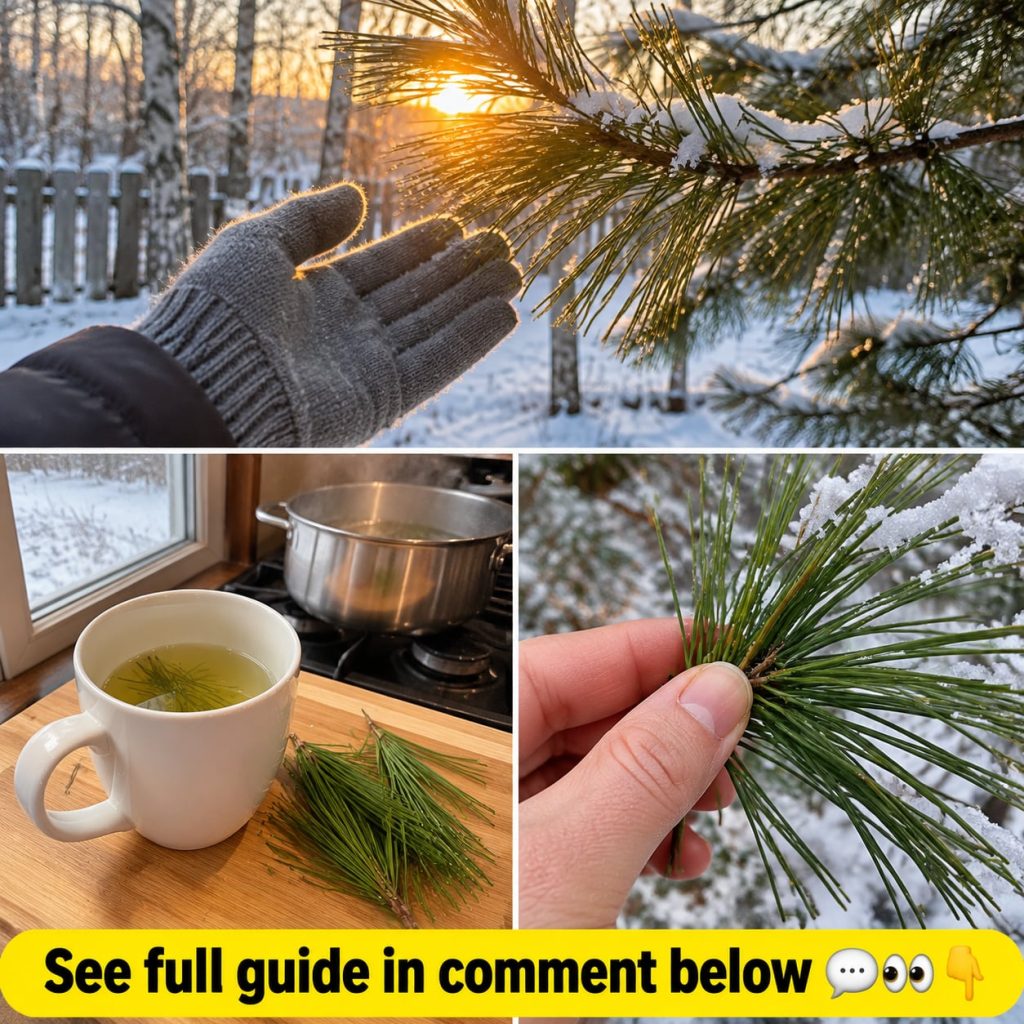
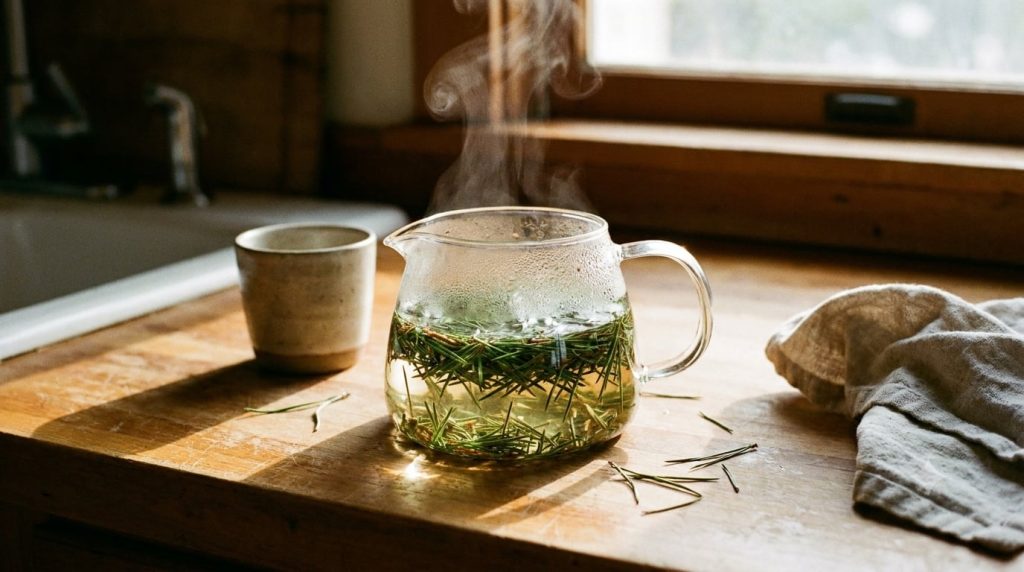
Pine needle tea is a simple infusion made from the needles of true pine trees, which belong to the genus Pinus. It has been prepared for generations as a warm winter drink. Its flavor is sharp and fresh, with notes of citrus and resin. It is best treated as a traditional seasonal drink rather than a treatment for any health condition.
Safe Identification Comes First
Here is the part most people skip: many conifers look similar from a distance, and some are toxic. Only use a branch when you can confirm it is a true pine.
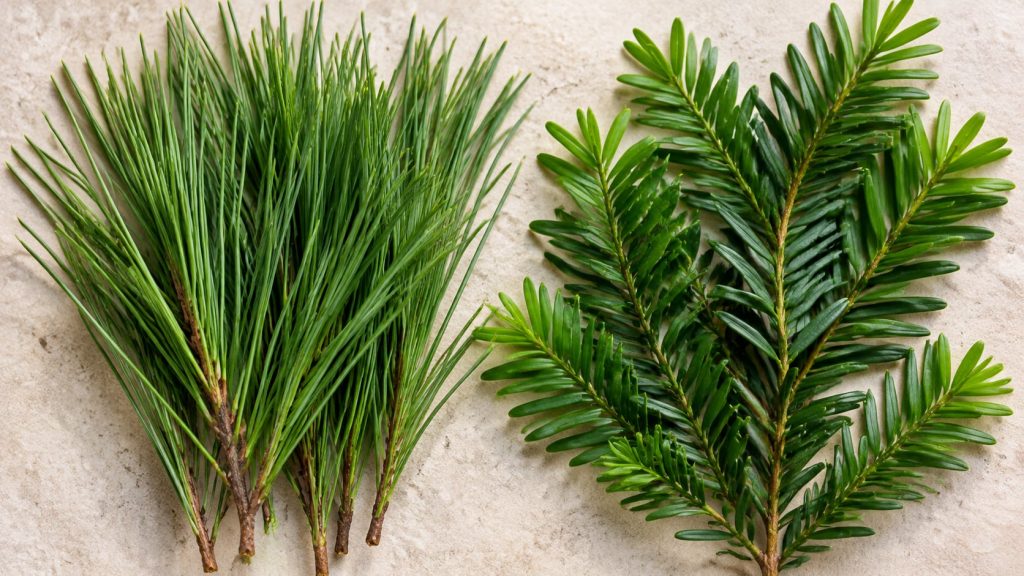
- True pines have needles growing in bundles (fascicles) of two, three, or five, attached to a small papery sheath at the base.
- Needles are usually long, often several centimeters or more, and most are flexible rather than flat and scale-like.
- Cones are woody and typically distinct, with clearly visible scales.
Yew (Taxus) is the most important lookalike to avoid. Its needles are flat, grow singly rather than in bundles, and have no papery sheath. All parts of yew are toxic.
Quick Identification Reference
| Feature | True Pine (Pinus) | Yew (Taxus) |
|---|---|---|
| Needle arrangement | Bundles of 2, 3, or 5 | Single, spiral or flat |
| Base of needle | Papery sheath | No sheath |
| Cones | Woody cones | Red fleshy arils, no cone |
| Use for tea | Suitable after confirmation | Do not use |
If you are unsure at any point, skip the branch. A tea is never worth a wrong identification.
Ingredients and Approximate Measurements
- 1 small handful of fresh pine needles (about 1 cup, loosely packed, chopped)
- 2 cups of water
- Optional: 1 teaspoon of raw honey or a thin slice of fresh ginger
Step-by-Step Method
- Rinse the needles under cool water to remove dust and insects.
- Chop the needles into small pieces, about 1 centimeter long. Smaller pieces release flavor faster.
- Bring the water to a gentle boil in a small pot.
- Add the chopped needles, turn off the heat, and cover the pot.
- Steep for 10 to 15 minutes. Do not boil the needles, because boiling can make the tea harsh and bitter.
- Strain through a fine sieve and sweeten lightly if you like.
How to Use and How Often
Drink one cup at a time, once a day, as an occasional winter drink. Let it cool slightly before drinking. Do not make it a daily habit for weeks without a break, and stop if you notice any discomfort.
Fresh vs Dried Needles
| Version | Flavor | Shelf Life | Best Use |
|---|---|---|---|
| Fresh needles | Bright and resinous | Use within 2 days | Same-day tea |
| Air-dried needles | Mellow and earthy | Up to 6 months in a sealed jar | Stored winter supply |
How to Choose and Gather Needles
Pick branches from healthy trees away from roads, fertilizer, and pesticide spraying. Avoid trees that look diseased, bare, or covered in fungus. Gather only what you need, and never strip a tree bare.
Storage
Keep fresh needles in a breathable bag in the refrigerator for up to two days. For longer storage, spread clean needles on a tray in a dry, shaded room for one to two weeks until brittle, then store them in a sealed glass jar away from light.
Practical Tips
Quick Tip: Use a bit more needle material for a stronger tea, but never more than about two tablespoons of chopped needles per cup. Did You Know? Shorter steeping times produce a lighter, more pleasant cup.
Common Mistakes
- Using yew or any unidentified conifer.
- Boiling the needles, which makes the flavor harsh.
- Harvesting from roadside trees or sprayed areas.
- Storing damp needles in a closed jar, which encourages mold.
- Drinking large amounts every day.
Cautions and Who Should Avoid It
Do not drink pine needle tea if you are pregnant or breastfeeding unless a qualified healthcare provider has approved it. Some pine species are discouraged during pregnancy, and the safety of many herbal preparations is not well studied. Avoid it if you have a known allergy to pine or resin, and check with a professional if you take medication or have a medical condition.
Quick Summary
- Best preparation: Fresh, chopped true pine needles steeped in hot water for 10 to 15 minutes.
- Best use case: An occasional warm winter drink.
- Storage: Fresh needles for up to 2 days; dried needles in a sealed jar for up to 6 months.
- When to use: Once a day at most, with breaks between uses.
- What to avoid: Yew, unidentified conifers, sprayed trees, boiling, and use during pregnancy without medical approval.
Frequently Asked Questions
Can I use fresh or dried needles?
Yes. Fresh needles give a brighter flavor, while dried needles keep well and are easier to store for winter.
How long does dried pine needle tea material last?
Stored in a sealed, dry glass jar away from light, dried needles stay usable for about six months.
Can I refrigerate brewed tea?
Yes, a cooled cup can be refrigerated for up to 24 hours, but fresh brewing is best for flavor.
Can I freeze the needles?
Freezing is possible in a sealed bag, but it can dull the aroma. Drying is the more reliable method.
Can I reuse the needles?
A second, weaker steep is possible, though the flavor will be much lighter.
Which part of the tree is used?
Only the needles are used. Bark, cones, and seeds are not part of this preparation.
Conclusion
Pine needle tea can be a simple, rewarding winter ritual when you start with confident identification and gentle brewing. Take your time with the first harvest, keep your portions modest, and read more about safe foraging to build your skills.
You may also like: Read more about identifying common winter foraging plants safely.
Related remedy: See the full guide to making homemade herbal winter syrups.
Continue with: Learn how to make a simple dried herb storage jar.