Stronger arms and shoulders are a popular fitness goal, and for good reason. Upper body strength supports everyday movements such as carrying groceries, lifting bags, and reaching for items on a high shelf. Research suggests that regular resistance training is associated with better muscle strength and overall physical function.
Why Upper Body Strength Matters
Your arms, shoulders, and upper back work together in nearly every daily task. Consistent strength training may help support muscle tone, improve posture, and contribute to a healthy metabolism, especially when combined with regular movement and balanced eating. The Centers for Disease Control and Prevention recommends muscle-strengthening activities for all major muscle groups at least two days per week for adults. You can read more in the CDC physical activity guidelines.
Five Dumbbell Movements to Try
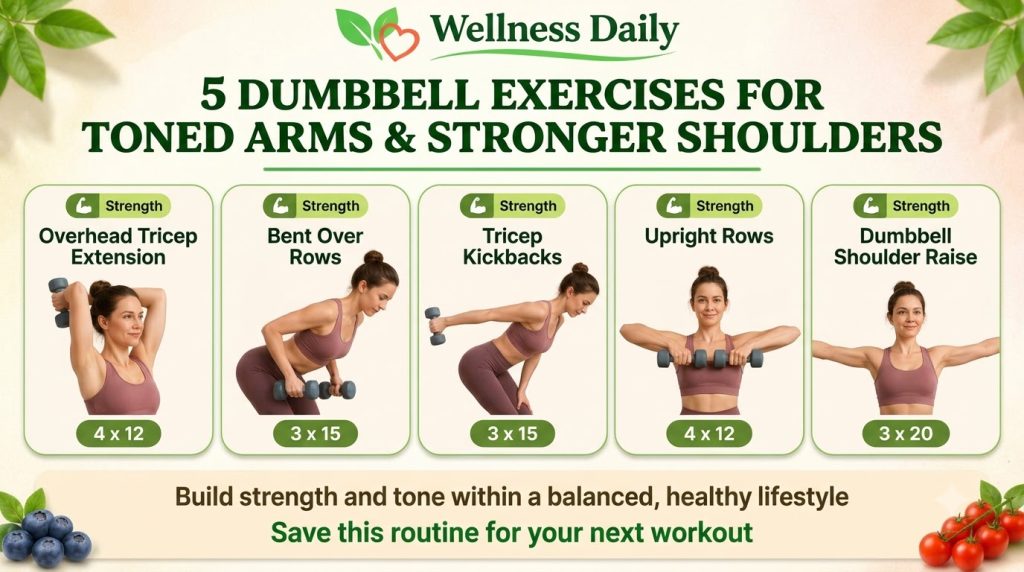
The following exercises are commonly used to target the arms and shoulders. Start with a weight you can control with good form, and choose a set and rep range that feels challenging but manageable.
- Overhead Tricep Extension: Hold one dumbbell with both hands above your head, then slowly lower it behind your head by bending the elbows. Extend the arms back up to the starting position. This movement focuses on the back of the upper arms. A common starting point is 2 to 4 sets of 10 to 12 repetitions.
- Bent Over Rows: Hinge forward at the hips with a flat back, then pull the dumbbells toward your lower ribs while squeezing the shoulder blades together. This exercise works the upper back and supports better posture. A common starting point is 3 sets of 12 to 15 repetitions.
- Tricep Kickbacks: Hinge forward, keep the upper arm close to the body, and extend the forearm backward until the arm is straight. Lower with control. A common starting point is 3 sets of 12 to 15 repetitions.
- Upright Rows: Hold the dumbbells in front of the thighs and lift them toward chin height, keeping them close to the body. Some people experience shoulder discomfort with this movement, so use a light weight and stop if you feel pain. A common starting point is 3 sets of 10 to 12 repetitions.
- Dumbbell Shoulder Raise: Lift the dumbbells out to the sides or in front of the body to about shoulder height, then lower slowly. This movement targets the shoulder muscles. A common starting point is 3 sets of 12 to 15 repetitions.
A Note on Fat Loss and Spot Reduction
It is a common belief that exercising one area of the body can burn fat in that specific spot. Current research does not support this idea, often called spot reduction. Strength exercises can build and tone muscle in the arms and shoulders, but overall body fat is influenced by total daily energy balance, sleep, stress, and general activity levels. Think of these exercises as a way to build strength and shape your muscles, rather than a method to reduce fat in one area.
How to Start Safely
- Warm up for five to ten minutes with light cardio or gentle arm circles.
- Choose a weight that allows you to complete your reps with steady, controlled form.
- Focus on slow lowering phases rather than swinging the weights.
- Rest for about 60 to 90 seconds between sets, or longer if needed.
- Allow at least one day of recovery between strength sessions for the same muscle groups.
- Consider speaking with a qualified fitness professional or healthcare provider if you have existing shoulder, elbow, or back concerns.
Building a Balanced Routine
Arm and shoulder work is most effective as part of a well-rounded plan. Pair these movements with leg exercises, core work, and regular walking or cardio. Nutrition also plays an important role, since adequate protein supports muscle repair. For practical meal ideas, explore our healthy recipes and our guide to everyday wellness habits.
Final Thoughts
Building stronger arms and shoulders can be a rewarding part of a healthy lifestyle. Start with a manageable routine, focus on good form, and progress gradually as your strength improves. Consistency over weeks and months is what typically makes the difference.
This article is for general educational purposes only and is not a substitute for medical advice, diagnosis, or treatment. Please consult a qualified healthcare professional before starting a new exercise program, especially if you have an existing health condition or injury.