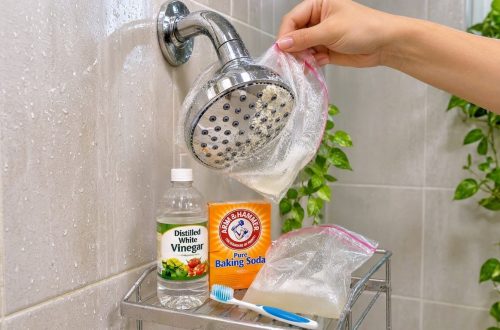
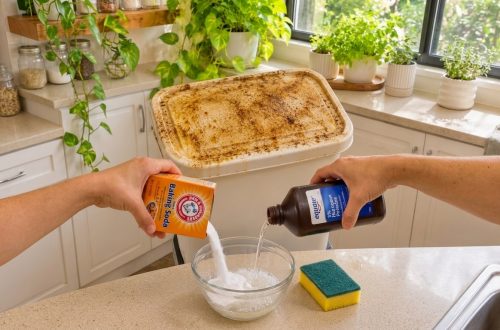
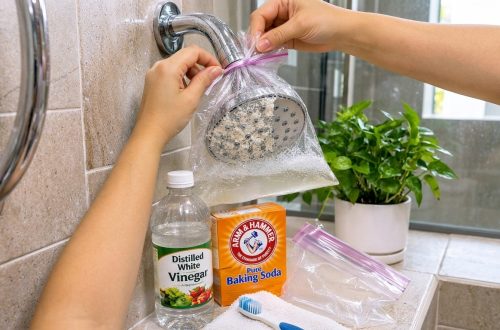
Weak shower pressure and crusty mineral deposits are a common household annoyance. Hard water leaves limescale inside the nozzles, and over time that buildup can make water spray unevenly. A scorched clothes iron has its own frustrations, since brown marks and burnt residue on the soleplate can transfer onto your clothes. This guide covers two simple pantry-based cleaning methods: a soak-and-scrub routine for your shower head, and a gentle baking soda paste for cleaning a burnt iron.
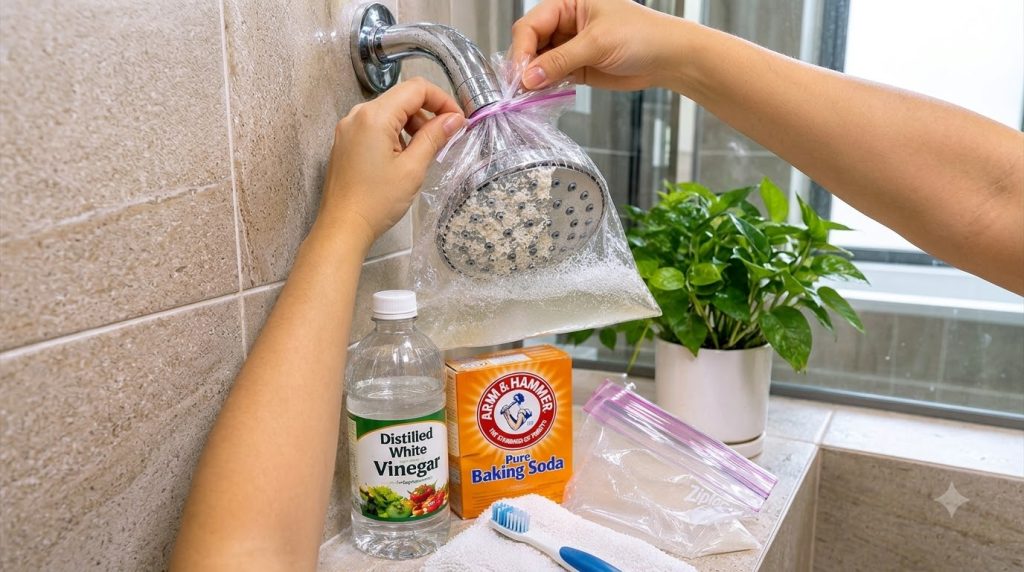
Tip 1: Shower Head Deep Clean
Limescale is mostly mineral deposits, usually calcium and magnesium left behind when hard water evaporates. White vinegar is mildly acidic, which helps dissolve many of these deposits over time. Baking soda adds gentle fizzing and mild abrasion that can help lift loosened residue from the nozzle area. Soaking keeps the solution in direct contact with the buildup, so you do not have to scrub hard right away.
What You’ll Need
- 1 cup white distilled vinegar
- 2 to 3 tablespoons baking soda
- A sturdy plastic bag large enough to fully cover the shower head
- A rubber band or twist tie
- An old toothbrush
- A dry microfiber cloth
How to Do It
- Remove the shower head if it unscrews easily by hand. If it is fixed to the pipe, leave it attached and work carefully.
- Pour about 1 cup of white vinegar into the plastic bag.
- Add 2 to 3 tablespoons of baking soda to the bag slowly, since it will fizz. Do not seal the bag yet.
- Place the bag over the shower head so the nozzle face sits fully in the liquid, then secure it loosely with a rubber band or twist tie.
- Let the shower head soak for at least 1 hour. For heavier buildup, soak it for 2 to 3 hours or leave it overnight if the bag can stay stable.
- Remove the bag and rinse the shower head with warm water.
- Gently scrub the nozzle holes and face with an old toothbrush. Focus on the small openings where mineral deposits collect.
- Rinse thoroughly, then run the water for about 30 seconds to flush out any loosened debris.
- Wipe the chrome surface dry with a microfiber cloth.
How the Soak Works
The soak gives the vinegar time to work on the mineral layer that has hardened inside the nozzles. Once that layer softens, a quick brush can remove it far more easily than trying to scrub dry buildup. This is why soaking works better than a quick spray and wipe.
What to Expect
Light buildup often comes off with a single soak and a light brushing. Stubborn deposits, especially in older shower heads, may need a second soak or extra gentle scrubbing. Water pressure and spray pattern usually improve as the holes open up, and the chrome should look cleaner, though very old or heavily pitted finishes may not look brand new. If some nozzle holes still look blocked, you can repeat the process rather than pushing hard with a pin or metal tool.
Important Safety Notes
- Vinegar and baking soda will fizz, so add the baking soda slowly and avoid sealing the bag tightly.
- Never mix vinegar with bleach or other cleaning products. This can release harmful fumes.
- Check that the shower head finish can handle vinegar. Some brass, lacquered, or natural stone finishes can be damaged by acidic cleaners, so test a small hidden area first.
- Avoid harsh metal scrubbers, which can scratch chrome.
- Rinse well so no vinegar residue is left on fixtures or in your shower.
Tip 2: Burnt Iron Soleplate Cleaning
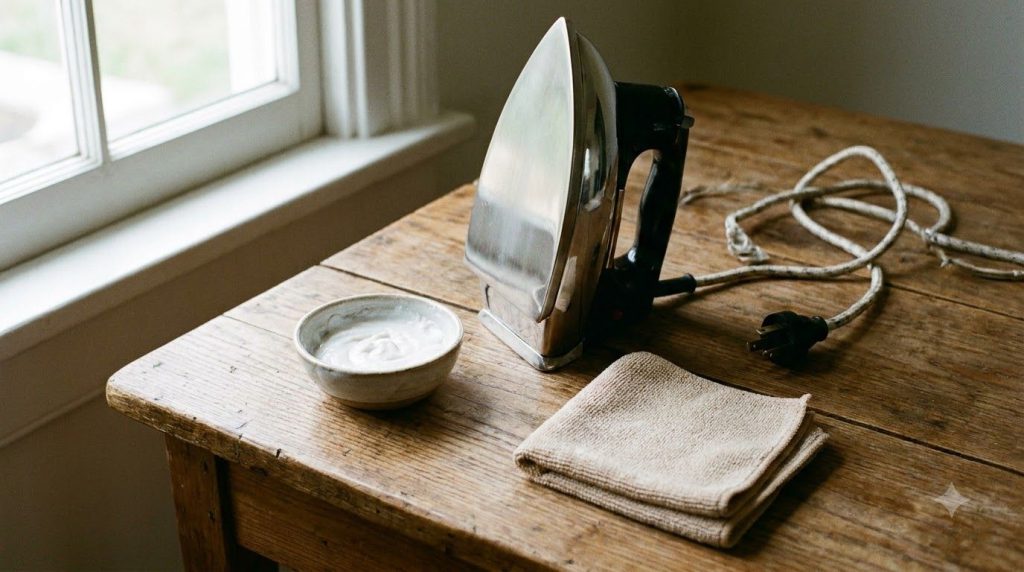
Scorch marks and burnt residue on an iron usually form when fabric sugars, starch, or fibers overheat and stick to the metal. A gentle baking soda paste can lift many of these marks without harsh chemicals. The key is patience and light pressure, since aggressive scrubbing can damage the soleplate coating.
What You’ll Need
- 1 tablespoon baking soda
- A few drops of water
- A soft, damp microfiber cloth
- A dry microfiber cloth
- An old soft toothbrush or cotton swab
How to Do It
- Unplug the iron and let it cool down completely. Never clean a hot or plugged-in iron.
- Mix 1 tablespoon of baking soda with just enough water to form a thick, spreadable paste.
- Dip a damp microfiber cloth into the paste and rub the stained areas of the soleplate in small, gentle circles.
- For tight spots or edges, use a soft toothbrush or cotton swab with a little paste.
- Let the paste sit on stubborn marks for about 5 to 10 minutes.
- Wipe away the paste with a clean, damp microfiber cloth until no gritty residue remains.
- Buff the soleplate dry with a separate dry microfiber cloth.
What to Expect
Light scorch marks and sticky residue often fade after one or two cleaning sessions. Deep, set-in stains may only lighten rather than disappear completely. The goal is a smoother soleplate that glides more easily, so your clothes are less likely to catch on old residue.
Important Safety Notes
- Always unplug the iron and let it cool completely before cleaning.
- Do not use steel wool, abrasive pads, or harsh powders, which can scratch the soleplate.
- Check your iron manual first if it has a special nonstick coating, and test a small area before cleaning the full surface.
- Keep water away from the electrical parts and never submerge the iron.
Final Thoughts
Both methods rely on simple pantry items and a little patience. Soaking loosens the shower head buildup, while a gentle baking soda paste helps lift burnt iron residue without harsh scrubbing. Start with the gentlest approach, test a small area first, and repeat as needed for the best results.