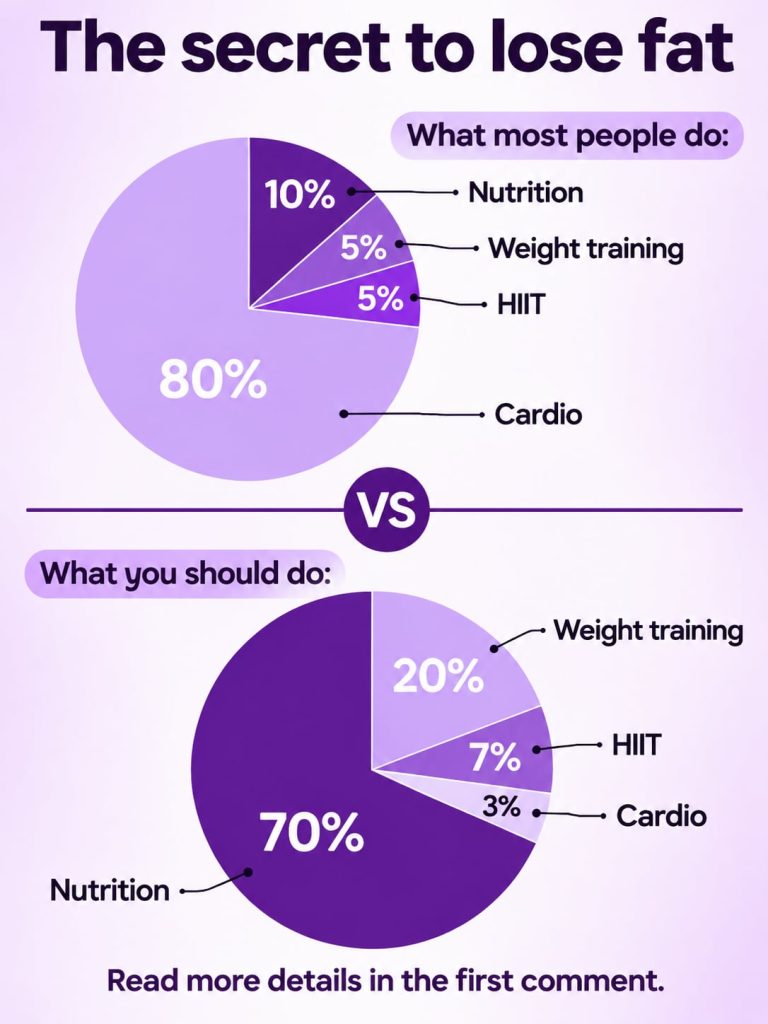
If you have spent months on the treadmill hoping the scale would finally move, you are not alone. Many people believe that the longer the cardio session, the faster the fat will disappear. The reality is more balanced. Cardio has real benefits for heart health and fitness, but sustainable fat loss is built on two pillars: smart nutrition and consistent strength training.
Why Cardio Alone Falls Short
Cardio burns calories in the moment, but it is easy to overestimate how much it contributes to your overall results. Long sessions can make you hungry, leading you to eat more than you planned. Over time, this creates a cycle of exhausting workouts with slow progress.
A better approach is to use cardio as a supporting tool rather than the main strategy. Walking, cycling, or a few short intervals each week can improve endurance and recovery without taking over your entire schedule.
Nutrition: The Foundation of Fat Loss
Fat loss depends heavily on your overall eating pattern. Most people do best with a moderate calorie deficit, meaning they eat slightly less energy than their body uses, while still getting enough nutrients to feel energized.
- Prioritize lean protein such as chicken, fish, eggs, tofu, or Greek yogurt to support muscle and keep you full.
- Fill half your plate with vegetables for fiber, vitamins, and volume without excess calories.
- Choose whole grains, fruits, and healthy fats like olive oil, nuts, and avocado for steady energy.
- Stay hydrated, since thirst is sometimes mistaken for hunger.
Consistency matters more than perfection. A balanced plate you can repeat for weeks will outperform a strict plan you abandon after five days.
Strength Training: Build the Engine
Strength training is one of the most effective ways to change how your body looks and functions. Lifting weights helps you build and maintain lean muscle, and muscle tissue requires more energy at rest than fat tissue. That means a stronger body can be a more efficient body over time.
Beginners do not need complicated routines. Focus on fundamental movements such as squats, lunges, push-ups, rows, hinges like deadlifts, and carries. Aim for two to four sessions per week, gradually increasing weight or reps as you improve.

Habits Make the Difference
Your daily habits shape your results far more than any single workout. Sleep, stress management, meal timing, and consistent training all influence how well your body recovers and adapts. Tracking your workouts and meals for a few weeks can reveal patterns you can improve.
Small wins add up. Prepping a few protein-rich meals on the weekend, scheduling strength sessions like important appointments, and taking a daily walk can make your progress feel natural rather than forced.
A Simple Starting Plan
- Choose two or three strength training days each week and focus on full-body movements.
- Add two short cardio sessions or daily walks for heart health and recovery.
- Build each meal around a protein source, vegetables, and a smart carbohydrate or healthy fat.
- Review your progress every four weeks and adjust portions or training volume as needed.
Final Thoughts
Fat loss does not have to mean endless cardio. When you combine balanced nutrition with consistent strength training, you support a leaner, stronger body and a healthier lifestyle. Start with one habit this week, build on it, and let steady progress guide you. Share this article with a training partner who needs a smarter approach to fat loss.