 A simple visual guide to carbs, protein, and fats
Building a balanced plate gets easier when you know where your carbs, protein, and fats come from. Many people eat the same meals on repeat without thinking about how each part of the plate works together. Once you see the basic groups, it becomes much simpler to put together meals that feel satisfying.
The idea is straightforward: mix one food from each group. A carbohydrate source, a protein source, and a fat source together can help a meal feel more complete. Below, you will find the foods that belong in each category and some practical ways to combine them.
Carbs: The Everyday Energy Base
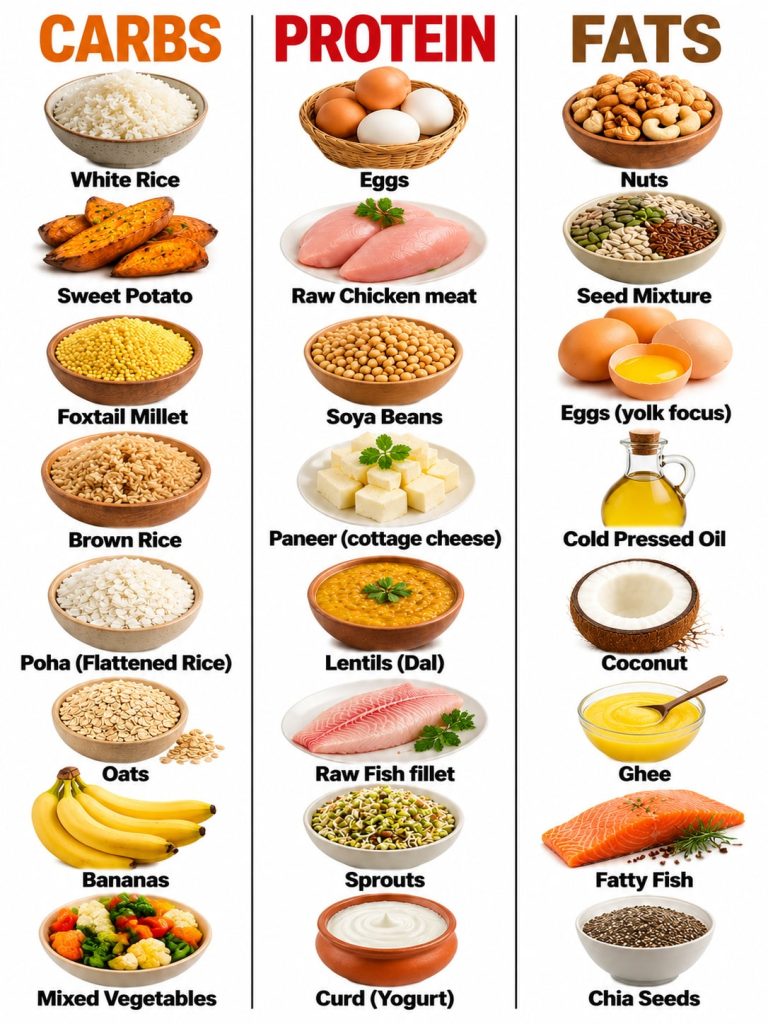
Carbohydrate foods are often the starting point of a meal. The infographic highlights these options:
- White rice
- Brown rice
- Foxtail millet
- Poha (flattened rice)
- Oats
- Sweet potato
- Bananas
- Mixed vegetables
Whole and minimally processed options such as brown rice, foxtail millet, oats, and sweet potato keep the carb group interesting. Bananas and mixed vegetables add natural sweetness and extra variety. You can rotate between these foods across the week so your meals do not feel repetitive.
Protein: Building Blocks for Your Meals
Protein foods help round out a plate and make meals feel more filling. The protein group in the infographic includes:
- Eggs
- Raw chicken meat
- Raw fish fillet
- Soya beans
- Paneer (cottage cheese)
- Lentils (dal)
- Sprouts
- Curd (yogurt)
Plant-based options such as lentils, soya beans, sprouts, and dal sit alongside animal sources like eggs, chicken, fish, paneer, and curd. Mixing both kinds across the week is an easy way to add variety to your plate.
Fats: Small Amounts, Big Role
Fat foods are easy to underestimate because a small portion goes a long way. The infographic lists these fat sources:
- Nuts
- Seed mixture
- Chia seeds
- Eggs (yolk)
- Fatty fish
- Cold pressed oil
- Coconut
- Ghee
Nuts, seeds, and chia seeds are easy to sprinkle over breakfast bowls or salads. Cold pressed oil and ghee are common cooking fats, so a little goes a long way in a pan. Fatty fish and the egg yolk are also listed in the fat column, which shows that some foods belong to more than one group depending on the part you eat.
How to Put the Three Groups Together
The simplest approach is to pick one item from each column for every meal. Here are a few examples you can adapt:
- Oats, curd, and a spoonful of mixed nuts for breakfast
- Brown rice, lentils, and a little ghee with mixed vegetables for lunch
- Sweet potato, eggs, and chia seeds for a warm, filling meal
- Poha, sprouts, and cold pressed oil for a light breakfast
Portions matter as much as choices. Many people find that a modest serving from each group feels more satisfying than a large plate of one food alone.
Final Thoughts
A balanced plate does not require complicated recipes. Choosing one carb, one protein, and one fat from the groups above can make everyday meals more satisfying and varied. Try it for a week and notice which combinations you enjoy most.
Medical disclaimer: This article is for general educational purposes only and is not a substitute for professional medical advice. If you have a health condition or dietary restrictions, please consult a qualified healthcare professional before making changes to your diet.