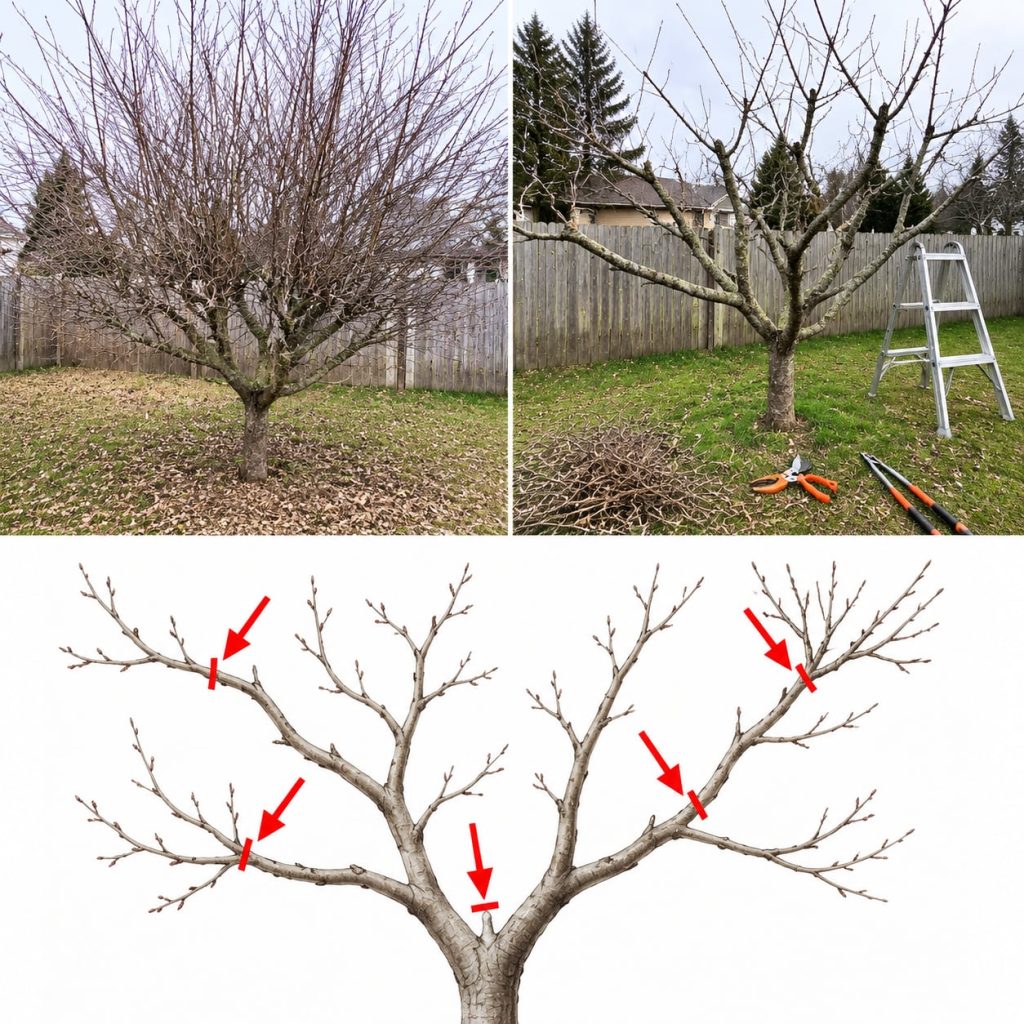
Most people assume a fruit tree with lots of branches is a healthy one, but a dense, tangled canopy often means smaller fruit and fewer harvests. The fix is not a hard chop. It is a handful of precise cuts made in late winter, while the tree is still dormant.
What Late Winter Pruning Does
Late winter pruning, done while the tree is dormant and before buds swell, lets you see the branch structure clearly. Removing weak, crossing, and shaded wood sends energy toward the branches that will carry fruit. It also lets sunlight and air move through the canopy, which helps fruit ripen more evenly and lowers the chance of disease in damp, crowded growth.
Tools and Preparation
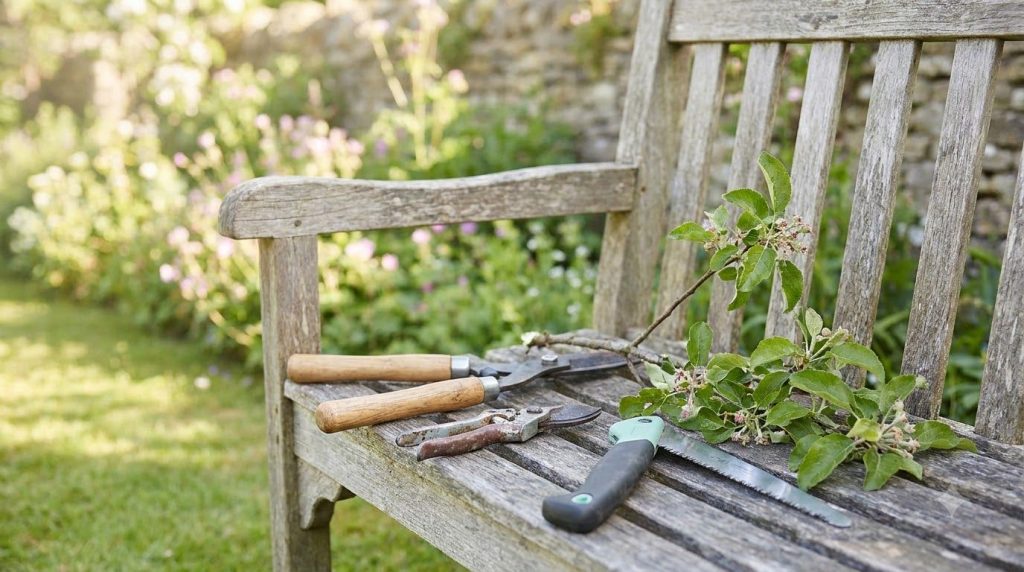
- Bypass hand pruners for branches up to about 2 cm (3/4 inch) thick
- Lopping shears for branches up to about 4 cm (1.5 inches) thick
- A pruning saw for anything thicker
- Rubbing alcohol or diluted household bleach to clean blades between trees
- Gloves and eye protection
Sharp, clean tools matter. Dull blades crush bark and leave ragged wounds that take longer to heal.
The Five Essential Cuts
- Remove dead, damaged, or diseased wood. Cut back to healthy tissue. When you scratch the bark, healthy wood is usually pale green or white.
- Thin crossing branches. Where two branches rub together, remove the weaker one at its base.
- Open the center. Remove a few upright shoots that grow straight up through the middle so light can reach the inner canopy.
- Shorten overly tall leaders. Cut the tallest shoots back to a side branch that points outward. This keeps the tree at a reachable height.
- Remove water sprouts and suckers. Clear the fast, vertical shoots from the trunk and the base, since they rarely produce useful fruiting wood.
Quick Tip: Make each cut just outside the branch collar, the slightly swollen ring where a branch meets the trunk. Leave no long stubs, and do not flush-cut into the collar.
Approximate Measurements and Pacing
A good rule is to remove no more than about one quarter of the canopy in a single season. For a heavily overgrown tree, spread the work over two or three late winters rather than cutting everything at once. Aim to remove roughly 10 to 15 percent of the total branches on the first pass, then reassess after the growing season.
Step-by-Step Method
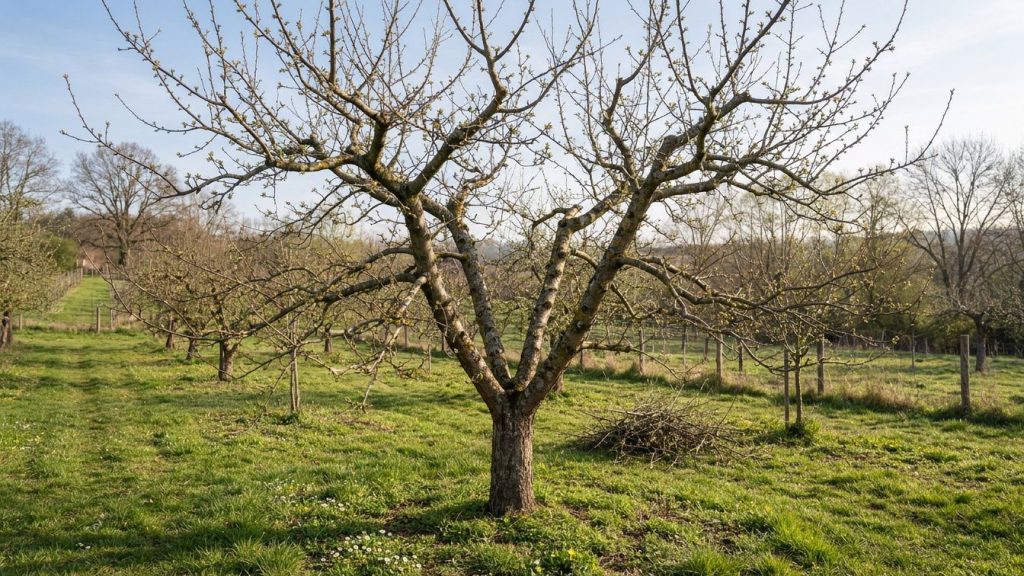
- Walk around the tree and note dead wood, crossing branches, and shoots growing into the center.
- Start with dead and damaged wood, then move to crossing branches.
- Step back every few cuts to check the overall shape. Stop if the tree looks balanced.
- Trim the leaders and remove suckers last.
- Clean up the fallen branches and clear debris from around the base.
How Often to Prune
Light annual pruning works better than a heavy cut every five years. Once the tree is under control, a yearly session of 20 to 40 minutes is usually enough. Avoid pruning in freezing weather, since frozen wood can split. Also avoid cutting in late spring or summer, when wounds are more open to pests and disease.
Comparison: Pruning Timing at a Glance
| Timing | Best For | Risk Level |
|---|---|---|
| Late winter, dormant | Structural cuts and opening the canopy | Low |
| Early spring, buds swelling | Light corrections only | Medium |
| Summer | Removing water sprouts | Medium to high |
| Late fall | Avoid unless removing hazards | High |
Practical Aftercare
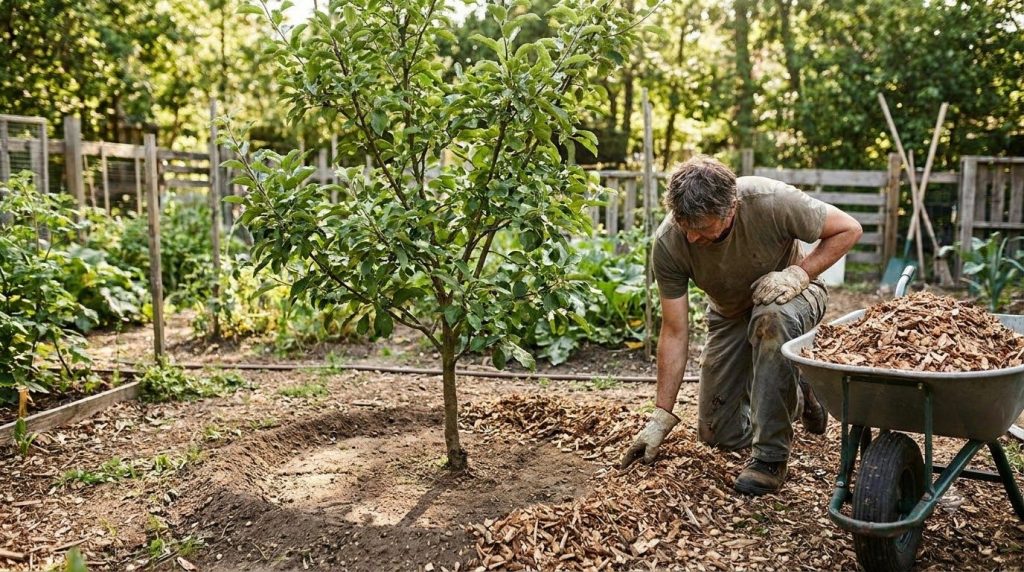
After pruning, rake up cut material and remove any diseased branches from the property. Do not pile prunings near the trunk. Water the tree during dry spells in spring, and consider a light layer of mulch about 5 to 8 cm deep, kept clear of the trunk. Expect the tree to respond with new growth over the following months, not overnight.
Common Mistakes
- Cutting too much at once. Heavy removal can trigger a flush of weak water sprouts.
- Leaving stubs. Stubs rot and invite pests.
- Using dull or dirty blades. Clean them between trees to avoid spreading disease.
- Pruning in wet or freezing weather. Wet wounds stay open longer, and frozen wood can crack.
- Ignoring the tree shape. Removing too much from one side can make the tree lopsided.
Cautions and Who Should Be Careful
Work on a stable ladder or use a pole pruner for high branches. Never prune near power lines. If a branch is large or hanging over a structure, consider a certified arborist. Older trees with large hollow areas may need professional advice before major removal.
Quick Summary
Best timing: late winter while the tree is dormant. Best use: opening overcrowded trees and improving fruit size. Core cuts: dead wood, crossing branches, center opening, leader shortening, and sucker removal. Storage: not applicable, but keep prunings out of the root zone. When to avoid: freezing weather, wet days, or late summer. Avoid: heavy one-season cuts and flush cuts.
FAQ
Can I prune a fruit tree in winter? Yes, late winter is ideal when the tree is dormant, as long as temperatures are above freezing.
How much can I remove in one year? A common guideline is up to about a quarter of the canopy, though lighter cuts are safer for overgrown trees.
Should I paint the cut wounds? For most home trees, a wound paint is not required. Clean, correct cuts usually heal on their own.
Why is my tree producing lots of water sprouts? Water sprouts often follow heavy pruning or stress. Remove them and prune more gently next year.
Can I prune when the tree is in bloom? It is better to wait. Flowering removes fruit potential, and late spring cuts expose wounds to pests.
How long before I see results? Many trees show more light penetration and better fruiting within one or two growing seasons.
What if the tree is very old? Spread the work over several years and consider a professional for major structural decisions.
You may also like: Read more about choosing the right garden tools for seasonal care.
Continue with: See the full guide to planting and caring for backyard fruit trees.
Related guide: Learn how to make a simple mulch layer that protects young tree roots.
Conclusion
Late winter pruning is one of the most effective ways to turn a crowded, underperforming fruit tree into a productive one. Start small, cut with clean tools, and focus on the five essential cuts. Your tree will reward patient, deliberate work with better light, stronger branches, and a fuller harvest in the seasons ahead.