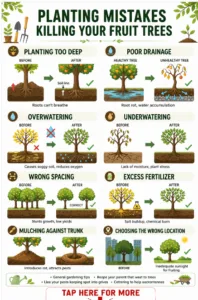
Growing fruit trees can be incredibly rewarding, but many gardeners unknowingly make simple planting mistakes that weaken their trees, reduce harvests, or even cause them to die prematurely. The good news? Most of these problems are easy to prevent once you know what to look for.
In this guide, we’ll cover the 8 most common fruit tree planting mistakes, explain why they happen, and show you how to grow healthier, stronger, and more productive fruit trees.
1. Planting the Tree Too Deep
One of the biggest mistakes gardeners make is burying the tree deeper than it was growing in the nursery.
Why it’s a problem
Tree roots need oxygen to survive. When the trunk flare (where the trunk meets the roots) is buried under soil, the roots struggle to breathe.
This often leads to:
- Slow growth
- Yellow leaves
- Poor fruit production
- Root diseases
- Early tree decline
How to plant correctly
- Keep the root flare slightly above soil level.
- The original soil line should remain visible.
- Backfill gently without piling extra soil around the trunk.
Pro Tip: You should always be able to see where the trunk widens into the roots.
2. Poor Drainage
Fruit trees hate standing water.
Even trees that love regular watering cannot survive if their roots remain constantly soaked.
Signs of poor drainage
- Water stays around the tree after rain
- Leaves turn yellow
- New growth stops
- Tree begins dying from the top
Why it happens
Excess water removes oxygen from the soil and encourages fungi that cause root rot.
How to fix it
- Plant in well-drained soil.
- Improve heavy clay soil with organic matter.
- Build raised beds if drainage is poor.
- Avoid low spots where water collects.
3. Overwatering
Many people believe more water equals faster growth.
Unfortunately, that’s not true.
Too much water causes:
- Root suffocation
- Fungal diseases
- Leaf yellowing
- Weak root systems
- Fruit drop
Healthy roots need both water and oxygen.
Watering correctly
Instead of watering every day:
- Water deeply.
- Water less frequently.
- Let the top few inches of soil dry slightly before watering again.
Deep watering encourages roots to grow downward where they’re stronger and more drought-resistant.
4. Underwatering
While too much water is dangerous, too little water is equally harmful.
Symptoms
- Wilted leaves
- Dry soil
- Premature fruit drop
- Curled leaves
- Stunted growth
Young fruit trees are especially vulnerable because their root systems haven’t spread very far.
Best practice
Water deeply whenever the soil several inches below the surface feels dry.
During hot summers, newly planted trees may need watering several times per week.
5. Planting Trees Too Close Together
It’s tempting to fit as many fruit trees as possible into your garden.
However, overcrowding creates long-term problems.
Why spacing matters
Trees compete for:
- Water
- Nutrients
- Sunlight
- Air circulation
Crowded trees often produce:
- Smaller fruit
- Lower yields
- More diseases
- Poor airflow
- Difficult harvesting
Recommended spacing
Different species require different spacing, but always follow the mature canopy size—not the size of the young tree.
Giving trees room to grow means healthier harvests for years to come.
6. Using Too Much Fertilizer
Fertilizer is helpful—but only in moderation.
Applying excessive fertilizer can actually burn roots instead of helping the tree grow.
Common problems
- Salt buildup
- Leaf burn
- Weak branches
- Excessive leafy growth
- Reduced fruit production
Better approach
Choose a balanced fertilizer designed for fruit trees.
Follow the recommended application rate rather than assuming more is better.
Healthy soil rich in compost often reduces the need for heavy fertilization.
7. Mulching Against the Trunk
Mulch is excellent for conserving moisture and suppressing weeds.
But piling mulch directly against the trunk creates what’s often called a “mulch volcano.”
Problems caused by mulch touching the trunk
- Bark rot
- Fungal infections
- Insect infestations
- Rodent damage
- Root diseases
Correct mulching method
Spread mulch in a wide circle around the tree while leaving a 2–4 inch (5–10 cm) gap around the trunk.
Think of it like a doughnut—not a volcano.
8. Choosing the Wrong Location
Even perfectly planted trees struggle if they’re growing in the wrong place.
Common location mistakes
- Too much shade
- Poor airflow
- Constant strong wind
- Frost pockets
- Near large competing trees
Why sunlight matters
Most fruit trees require 6–8 hours of direct sunlight every day to produce abundant flowers and sweet fruit.
Without enough sunlight, trees may:
- Produce few flowers
- Grow slowly
- Develop fewer fruits
- Become more susceptible to disease
Whenever possible, choose an open, sunny location with good air circulation.
Bonus Tips for Healthy Fruit Trees
Besides avoiding these common mistakes, remember these simple habits:
- Water deeply instead of frequently.
- Inspect trees regularly for pests and diseases.
- Prune annually to improve airflow.
- Add compost each year to improve soil health.
- Remove damaged branches promptly.
- Keep weeds away from the base of the tree.
Small maintenance tasks throughout the year make a huge difference over time.
Final Thoughts
Growing healthy fruit trees isn’t about doing everything perfectly—it’s about avoiding the most common mistakes.
By planting at the correct depth, improving drainage, watering wisely, spacing trees properly, fertilizing carefully, mulching correctly, and selecting the right location, you’ll give your trees the best chance to thrive.
Healthy roots lead to healthy branches, beautiful blossoms, and abundant harvests season after season.
Whether you’re planting your very first apple tree or expanding your backyard orchard, these simple practices can help your fruit trees stay vigorous for many years to come.
FAQs
How deep should I plant a fruit tree?
Plant the tree so that the root flare remains slightly above the surrounding soil level. Never bury the trunk.
How often should I water newly planted fruit trees?
Typically 1–3 deep waterings per week, depending on weather, soil type, and rainfall. Always check soil moisture before watering.
Is mulch good for fruit trees?
Yes. Mulch conserves moisture and suppresses weeds, but keep it 2–4 inches away from the trunk to prevent rot.
What’s the biggest mistake when planting fruit trees?
Planting too deeply is one of the most common and damaging mistakes because it limits oxygen to the roots.
Do fruit trees need full sun?
Yes. Most fruit trees perform best with at least 6–8 hours of direct sunlight every day for healthy growth and high fruit production.