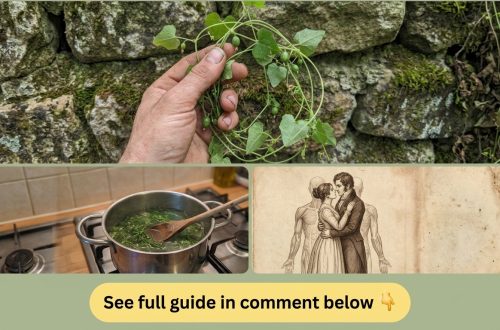
I walked past this plant thousands of times and never noticed it. You probably have too.
It sprawls over fences, clings to your clothes, and grows in empty lots, by roadsides, even between cracks in the pavement. Most people call it a weed and keep walking.
Older generations didn’t.
They used it for stubborn coughs, lung irritation, red itchy skin, and that “hot,” inflamed feeling in the body.
The plant? Cleavers (Galium aparine) — the sticky, star‑shaped herb that quietly does more than it looks.

Why Traditional Healers Loved Cleavers
-
Lymphatic support
Cleavers has long been used as a gentle lymph tonic — helping the body move and clear inflammatory waste more efficiently. That’s why it was given for puffiness, swollen tissues, and lingering congestion. -
Cooling, soothing action
Its “cooling” nature made it a go‑to for hot, irritated lungs and red, itchy skin. Instead of stimulating, it calms and eases. -
Mild diuretic effect
By slightly increasing urine flow and fluid movement, it helps reduce internal “stagnation” and puffiness without feeling harsh or draining. -
Very gentle on the system
Cleavers is considered one of the mildest herbs in traditional practice, which is why it was often used in children, older adults, and those who “don’t tolerate strong remedies.”
Because of this mix — lymph support, cooling relief, gentle fluid movement — many cultures quietly used cleavers for coughs that lingered after a cold, bronchial irritation, skin flare‑ups, and general heat or irritation in the body.
Cleavers Lung‑Soothing Tea (Traditional Fresh Method)
Cleavers works best fresh, not dried — that’s one secret many people don’t know.
How to make it:
-
Rinse a small handful of fresh cleavers thoroughly.
-
Chop or bruise it lightly to release the juices.
-
Place in a mug and pour over hot (not boiling) water.
-
Cover and steep for 10–15 minutes.
-
Strain and sip slowly while warm.
Traditionally, this tea is used 1–2 times a day to:
-
Ease lung tightness
-
Soothe cough irritation after illness
-
Cool internal “heat” when the chest feels raw or irritated
The effect isn’t dramatic — it’s more like a soft “quieting” of the airways.

Cleavers Skin Rinse for Red, Itchy, or Hot Skin
For hands, arms, or areas that feel hot and reactive (after gardening, detergents, or mild irritants), cleavers can be used externally.
Simple skin rinse:
-
Boil a small pot of water, then remove from heat.
-
Add a handful of fresh cleavers.
-
Let it cool completely and strain.
-
Use the infused water as a rinse or soak, or apply with a cloth as a compress.
People traditionally used this to calm:
-
Red, warm skin after work outdoors
-
Itchy or tight patches after contact with irritants
-
General “heat” and discomfort in the hands and forearms
Relief is often described as fast and quietly noticeable.
The Moment It “Clicked” for Me
A neighbor once watched me cough through an entire conversation, then smiled and said,
“You’re surrounded by medicine, but you don’t see it.”
She bent down, gathered a few sticky, star‑shaped stems from the yard, made the simple tea above — and within an hour my chest didn’t feel cured, but it felt lighter, calmer, less scratchy. No harsh sensation, no dramatic effect. Just quiet relief.
That’s the real power of cleavers:
It’s not flashy.
It’s not trendy.
It’s just a humble wild plant that has earned its place in traditional remedies because it keeps doing the same thing, generation after generation — cooling, soothing, and helping the body clear what it no longer needs.
Always consult a professional before using new herbs if you have chronic conditions, take medication, or are pregnant or breastfeeding.