What Is Companion Planting?
Companion planting is the practice of growing certain plants side by side because they support each other. Some companions help deter common pests, some attract helpful insects such as pollinators and predatory beneficials, and others make better use of space, light, or soil nutrients. It is a gentle, organic approach that fits well into home vegetable gardens of any size.
Classic Companion Pairings to Try
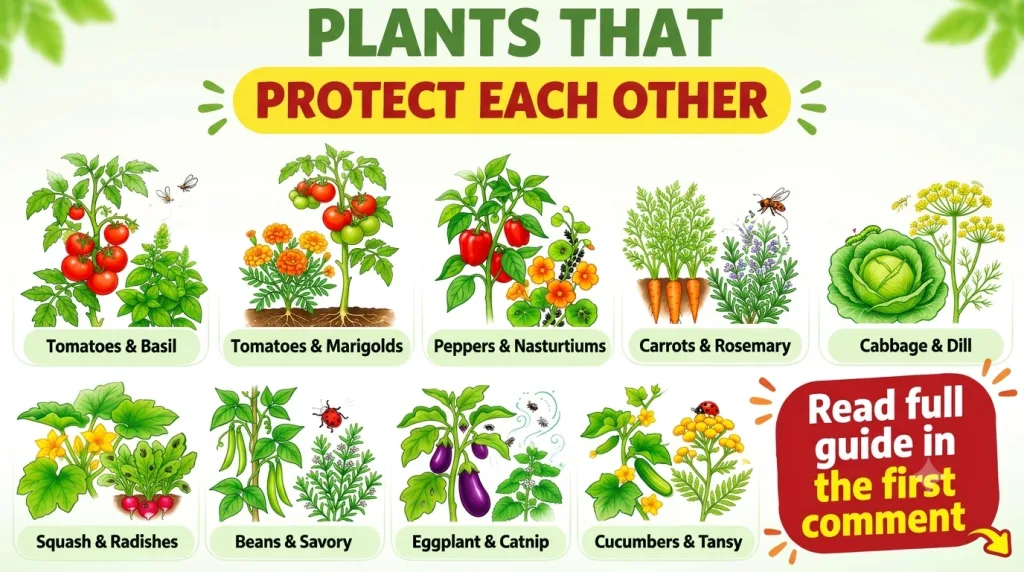
Many gardeners start with a few well-documented pairings. These combinations are popular because they are easy to arrange and fit naturally into most beds and containers.
Tomatoes and Basil
Basil is a favorite partner for tomatoes in the kitchen and in the garden. Many gardeners plant them together because basil is said to help keep some pests away, and the two plants are happy in similar warm, sunny conditions. Planting basil near the base of tomato plants also makes harvesting for fresh salads and sauces convenient.
Peppers and Nasturtiums
Nasturtiums are cheerful flowers that work well as a living border or ground cover around pepper plants. Their bright blooms draw in pollinators, and many gardeners use them as a trap crop that can attract aphids away from more valuable plants. Adding flowers also makes the vegetable bed more attractive.
Carrots and Rosemary
Rosemary has a strong aroma that many gardeners find helpful for confusing certain pests that target carrots. Planting rosemary at the edges of a carrot bed is a simple way to add a fragrant herb to the garden while giving your root vegetables a supportive neighbor.
How to Plan Your Companion Planting
A little planning goes a long way. Consider these practical steps before you dig:
- Sketch your bed or container layout and note the mature size of each plant.
- Group plants with similar water and sunlight needs together.
- Place tall plants so they do not shade shorter companions.
- Leave room for air circulation to help reduce disease risk.
- Rotate crops from season to season to keep soil healthier over time.
Common Mistakes to Avoid
Companion planting works best as one part of a broader garden routine. Avoid expecting a single pairing to solve every problem. Healthy soil, regular watering, good spacing, and careful observation remain the foundation of a productive garden. Also keep in mind that some plants compete for the same nutrients, so it helps to research a pairing before committing a full bed to it.
Final Thoughts
Companion planting is a rewarding, low-cost way to build a more balanced vegetable patch. Start with one or two classic pairings, observe how your plants respond, and expand your layout as you learn what works in your own climate and soil. Over time, your garden will become a more resilient and enjoyable space to grow fresh food.